article Pop-up Exhibition:
Designing with Texture
Pop-up Exhibition:
Designing with Texture
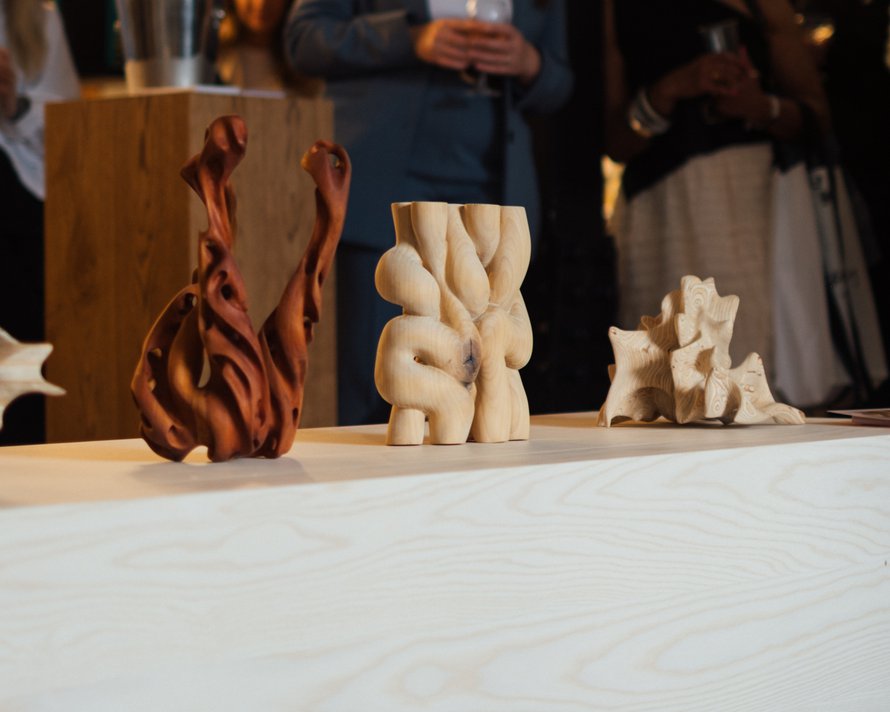
Insights into our exhibition in
partnership with Boen
for Clerkenwell Design Week.
partnership with Boen
for Clerkenwell Design Week.
Insights into our exhibition in
partnership with Boen
for Clerkenwell Design Week.
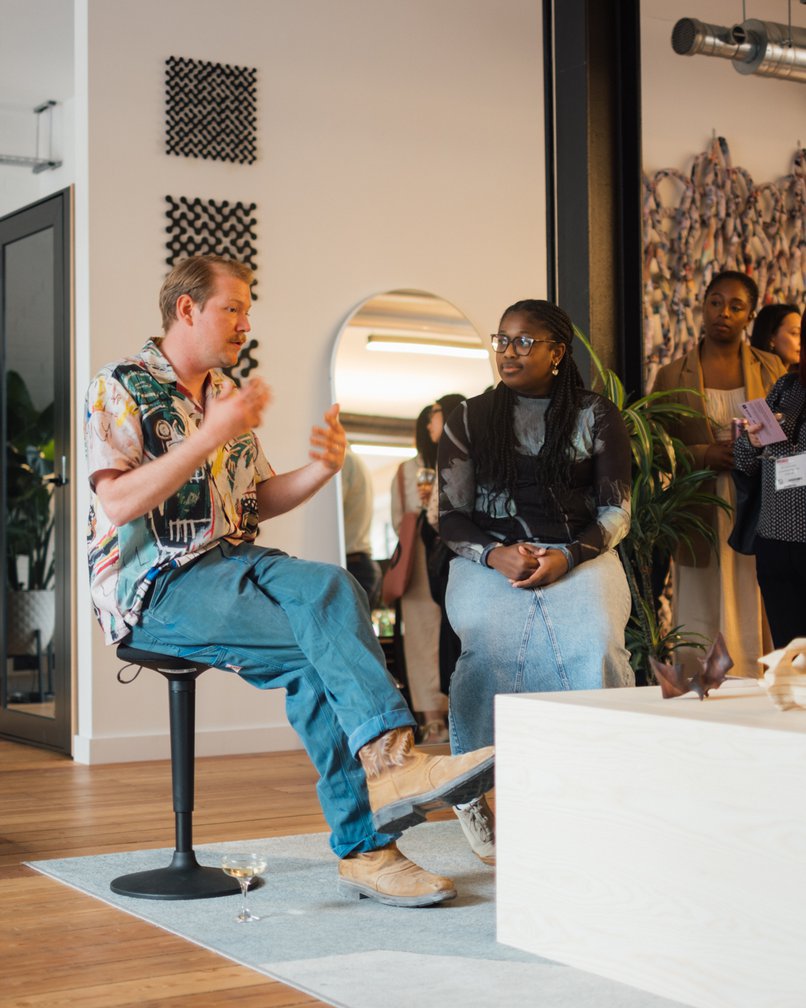
Presented by Artiq in partnership with Boen as part of Clerkenwell Design Week 2025 — the UK’s largest design festival, taking place just outside the doors of Artiq’s London office — Designing with Texture offered a rare opportunity to reflect on how art can both inhabit and invigorate the spaces we work in. The event brought together artists, designers, and workplace visionaries to explore the exhibition’s central provocation: what happens when design engages the hand as much as the eye?
In an era of hybrid work and evolving professional environments, the exhibition considers how tactile design can transform everyday spaces into experiences that inspire, engage, and support wellbeing. Featuring works by Betty Leung, James Grossman, Makiko Harris, and Ben Graham, Designing with Texture reimagines texture not as ornamentation but as a vital design language, one that shapes how we feel, think, and interact at work.
Artist Ben Graham spoke with striking clarity in conversation Alexandra Vanburen Callender, Art Researcher at Artiq, about transformation as a throughline in his practice: “Taking what’s ultimately destined for an unpleasant and inconvenient future, I try to make something people don’t want to ignore, something they want to touch and enquire about.” With a background in both sculpture and furniture-making, Ben described how his training in traditional woodcraft allowed him to bring ideas from head to hand more fluently. “To improve my sculpture, I went to furniture school to really understand the methods we’ve been honing since 8000 BC.”
In an era of hybrid work and evolving professional environments, the exhibition considers how tactile design can transform everyday spaces into experiences that inspire, engage, and support wellbeing. Featuring works by Betty Leung, James Grossman, Makiko Harris, and Ben Graham, Designing with Texture reimagines texture not as ornamentation but as a vital design language, one that shapes how we feel, think, and interact at work.
Artist Ben Graham spoke with striking clarity in conversation Alexandra Vanburen Callender, Art Researcher at Artiq, about transformation as a throughline in his practice: “Taking what’s ultimately destined for an unpleasant and inconvenient future, I try to make something people don’t want to ignore, something they want to touch and enquire about.” With a background in both sculpture and furniture-making, Ben described how his training in traditional woodcraft allowed him to bring ideas from head to hand more fluently. “To improve my sculpture, I went to furniture school to really understand the methods we’ve been honing since 8000 BC.”
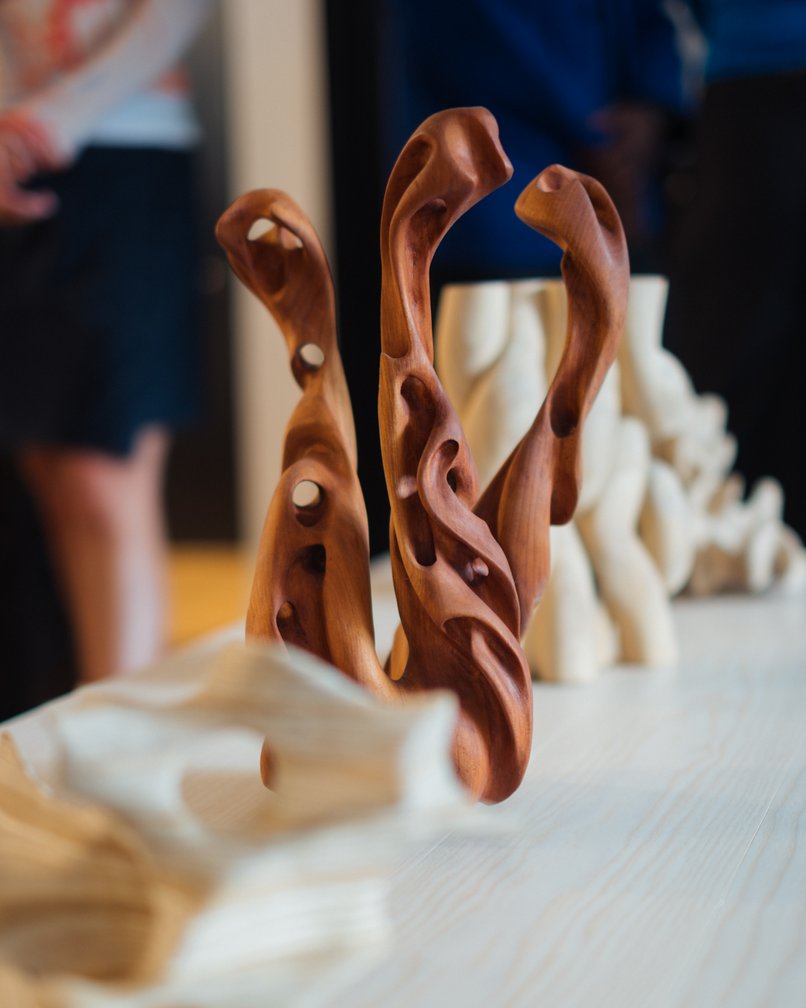
His process is grounded in intuitive, material-led exploration: “Sometimes the shape is determined by the piece of wood, sometimes the piece of wood determines the shape.” The result is a body of work defined by curiosity and tactility — pieces that demand to be seen from every angle, inviting close attention.
The conversation turned to the role of art in the built environment. Alexandra framed the question by reflecting on Artiq’s ethos: “At Artiq, we champion artists and believe wholeheartedly in the power of art to spark inspiration, conversation, tell stories and create impact across workplace, public and hospitality sectors. The installation of art in these spaces is transformative, often visually embodying a client’s character and uplifting the energy of the environments they inhabit. Before working with Artiq, had you considered the workplace as a canvas for your practice?”
Ben responded thoughtfully: “Working with Artiq has been great. It’s meant to work with a wider range of clients and be able to create some larger works.” For a sculptor, space is everything, and workplace environments offer a welcome shift. “Sculptures demand space: space to walk around them, to let them breathe, and workplaces are often the perfect backdrop. I know from my own life behind a desk how much difference a good environment can make. It makes me happy to think my art might brighten the space where people spend a third of their lives.”
The conversation turned to the role of art in the built environment. Alexandra framed the question by reflecting on Artiq’s ethos: “At Artiq, we champion artists and believe wholeheartedly in the power of art to spark inspiration, conversation, tell stories and create impact across workplace, public and hospitality sectors. The installation of art in these spaces is transformative, often visually embodying a client’s character and uplifting the energy of the environments they inhabit. Before working with Artiq, had you considered the workplace as a canvas for your practice?”
Ben responded thoughtfully: “Working with Artiq has been great. It’s meant to work with a wider range of clients and be able to create some larger works.” For a sculptor, space is everything, and workplace environments offer a welcome shift. “Sculptures demand space: space to walk around them, to let them breathe, and workplaces are often the perfect backdrop. I know from my own life behind a desk how much difference a good environment can make. It makes me happy to think my art might brighten the space where people spend a third of their lives.”
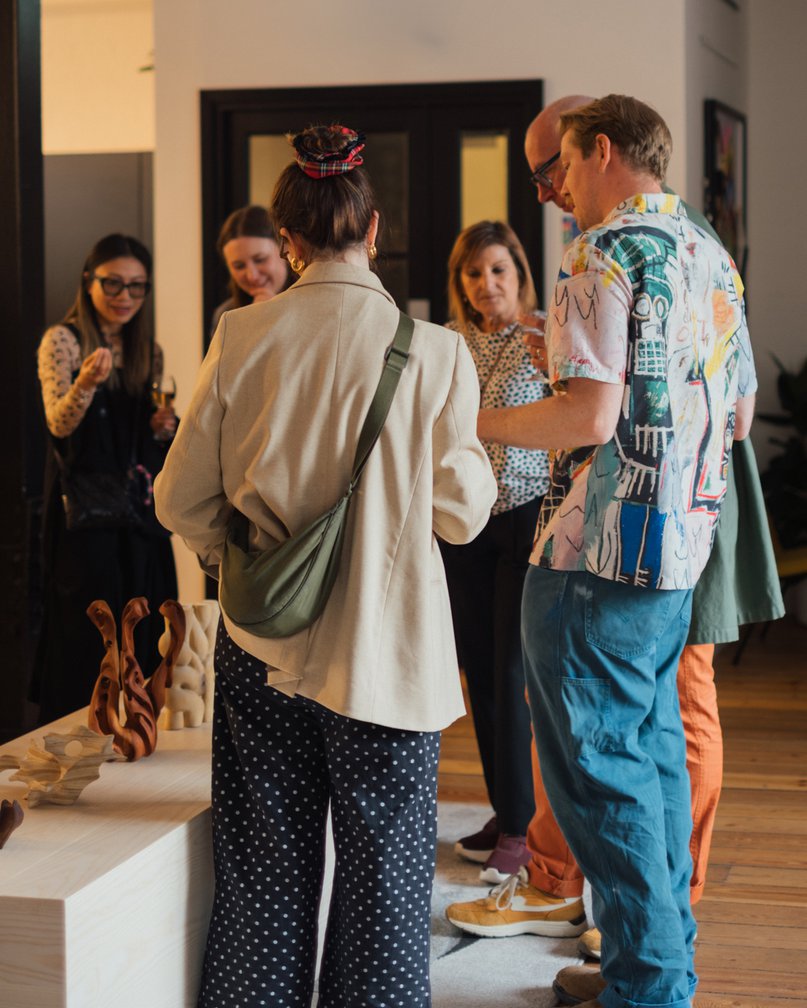
Alexandra also asked Ben about the material choices central to his practice, noting how works like Objects Reimagined – Crescent I, composed of repurposed items such as shelving brackets, breathe new life into materials that might otherwise have been discarded. “Could you speak to why you believe it is important to reuse and repurpose existing materials,” she asked, “and what drove you to this realisation?” Ben reflected on the urgency of reuse: “The material question is at the heart of my practice, because I think it’s at the heart of modern society.” With 82% of UK waste going to landfill, his work offers a quieter challenge to waste culture, reshaping the detritus of development into moments of focus and form. “If I can lead by example and ensure we make the most of the materials we already have, I hope that my work can spark debate not just about what we dispose of, but how we design more responsibly from the start.”
The panel served as a live extension of the exhibition’s theme, offering a deeper, more personal lens on how texture, material, and sustainability intersect in contemporary design. Through the conversation between Alexandra and Ben, the discussion highlighted not only the aesthetic and tactile potential of reclaimed materials, but also the emotional and environmental resonance of designing with intention, reinforcing the exhibition’s central message that texture is not just seen, but felt.
The panel served as a live extension of the exhibition’s theme, offering a deeper, more personal lens on how texture, material, and sustainability intersect in contemporary design. Through the conversation between Alexandra and Ben, the discussion highlighted not only the aesthetic and tactile potential of reclaimed materials, but also the emotional and environmental resonance of designing with intention, reinforcing the exhibition’s central message that texture is not just seen, but felt.