article In conversation with
Freddie Yauner
In conversation with
Freddie Yauner
In conversation with Freddie Yauner about
self-implication, being "seriously funny," and
the lengths he’ll go to to shift a viewer's perspective.
self-implication, being "seriously funny," and
the lengths he’ll go to to shift a viewer's perspective.
In conversation with Freddie Yauner about
self-implication, being "seriously funny," and
the lengths he’ll go to to shift a viewer's perspective.
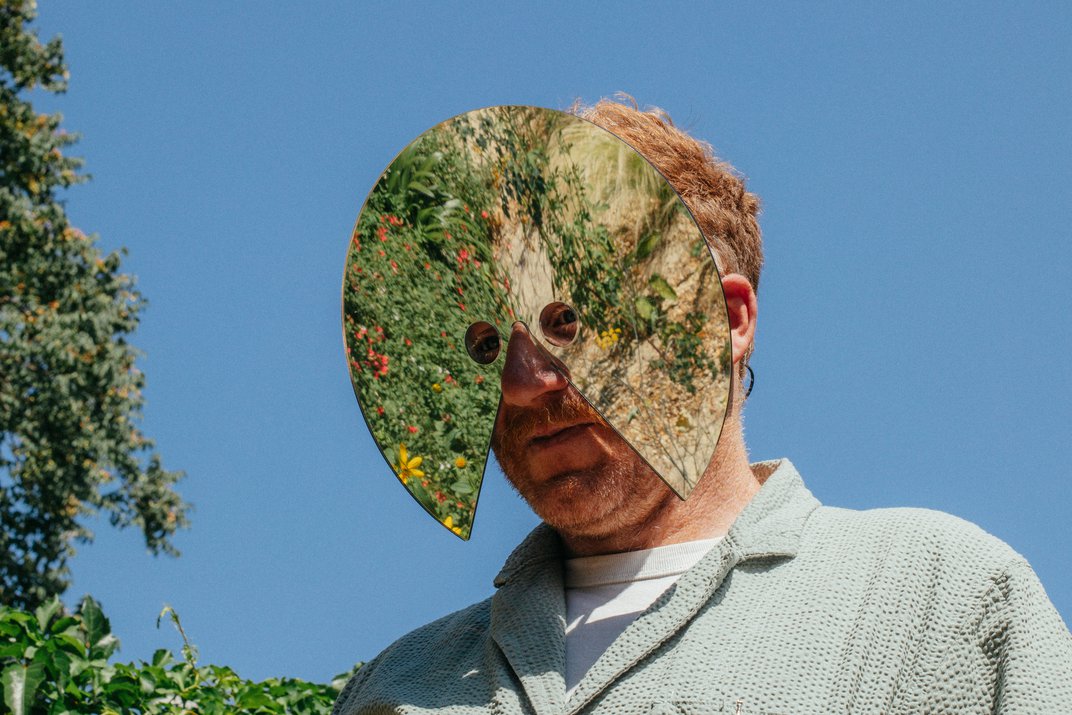
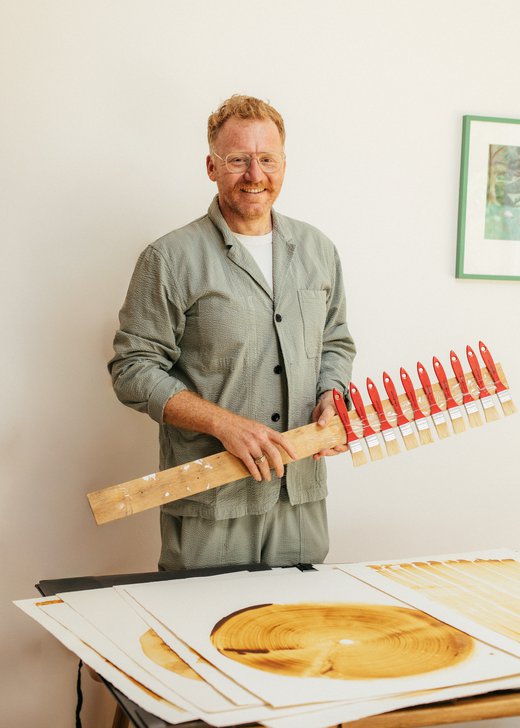
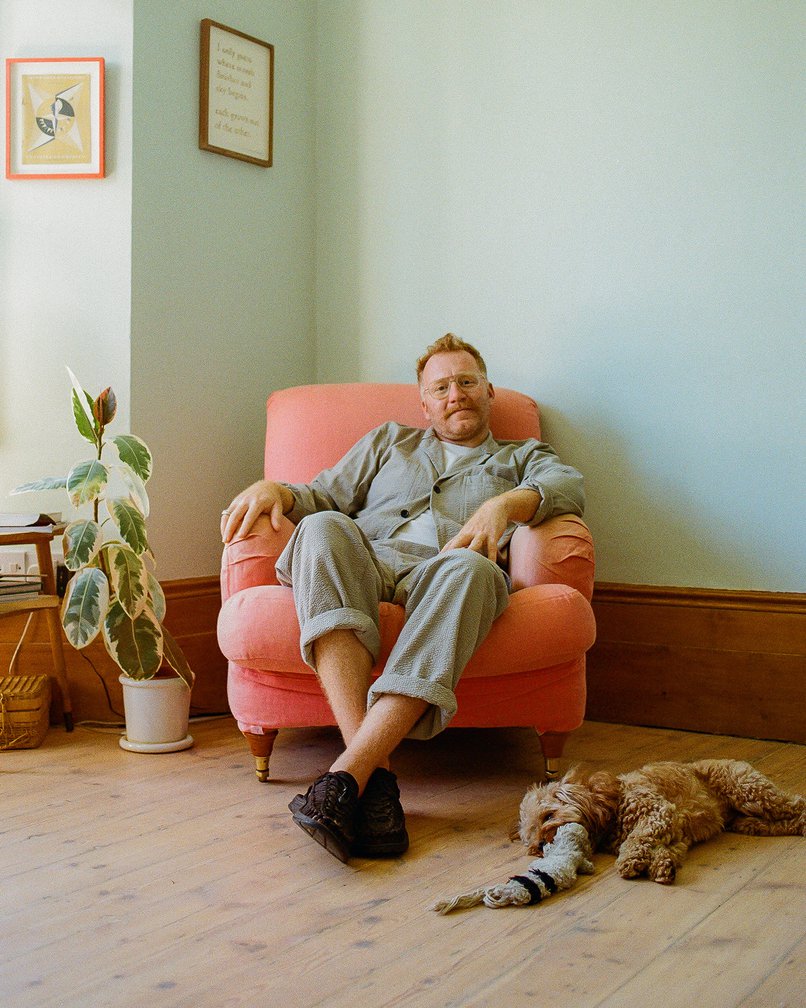
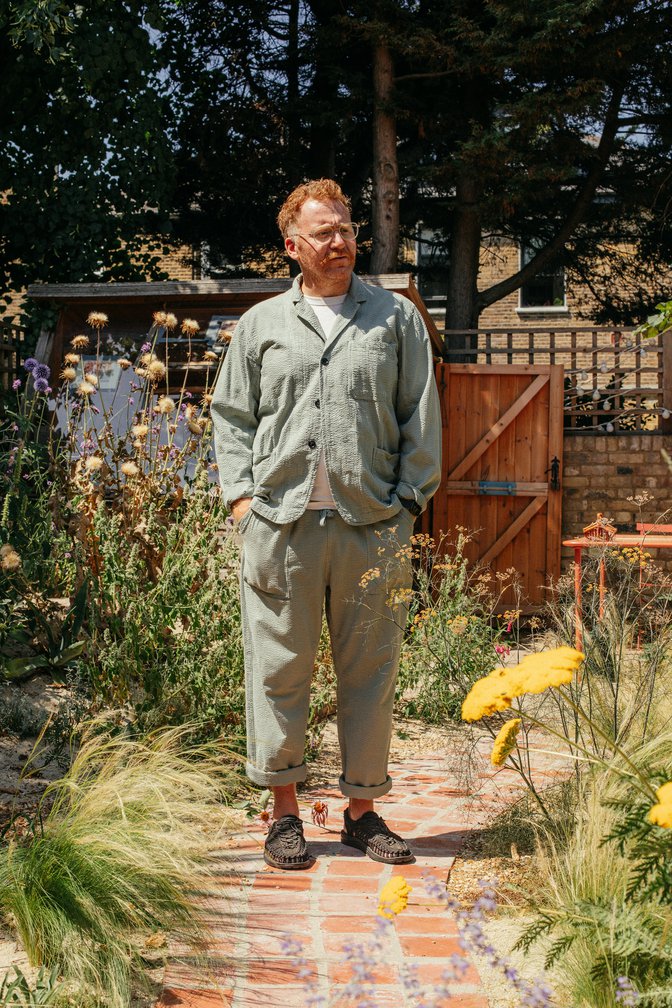
Freddie Yauner is a multimedia artist whose work explores how the human drive for continual growth has impacted people and planet, using pollen paint, mirrored masks and ‘performative ridiculousness’ to bring audiences into the unfamiliar. We spoke with Freddie about putting himself into his work, balancing humour with serious ideas, and his evolving series of films and paintings exploring farms and food systems.
You've described your practice as holding a mirror up to the world, sometimes quite literally, through works like your mirror mask. What first drew you to using yourself as both the subject and the canvas, and what does this approach allow you to explore?
The key to putting myself into the works, both as the subject and the canvas, is the self-implication that it involves. I suppose what it allows me to do is to look at the world and critique it with my eyes wide open but also make it clear that I am very much stuck within this world and part of the problem. It also makes the work sometimes quite ridiculous. I go to ridiculous lengths to make the works, whether that's creating ink from pollen or trying to become a Victorian polymath. That ridiculousness hopefully makes clear how mad the world that we're living in at the moment is and that no matter how much we want to change things we're also unavoidably part of this current moment.
Humour, playfulness, and spectacle often run through your work, even when you're tackling complex social and political themes. How do you balance whimsy with more serious ideas? And what do you hope audiences take away from that contrast
I really like the phrase "seriously funny," and I try and make my work serious and funny. I've always loved political and socially engaged comedians, and I think delivering a social message through humour is one of the greatest ways to reach beyond existing audiences and cut through. People want to be delighted and entertained, and often turn away from some of the darkest and most troubling issues of our day because they're too much to live with. So, if you can bring some humour and playfulness to the ideas, it creates a new avenue in. In a way, it's like dropping a pebble and seeing the ripples run out; some people will be affected and some people won't, and that's okay.
‘It's like dropping a pebble and seeing the ripples run out; some people will be affected and some people won't, and that's okay.’
- Freddie Yauner
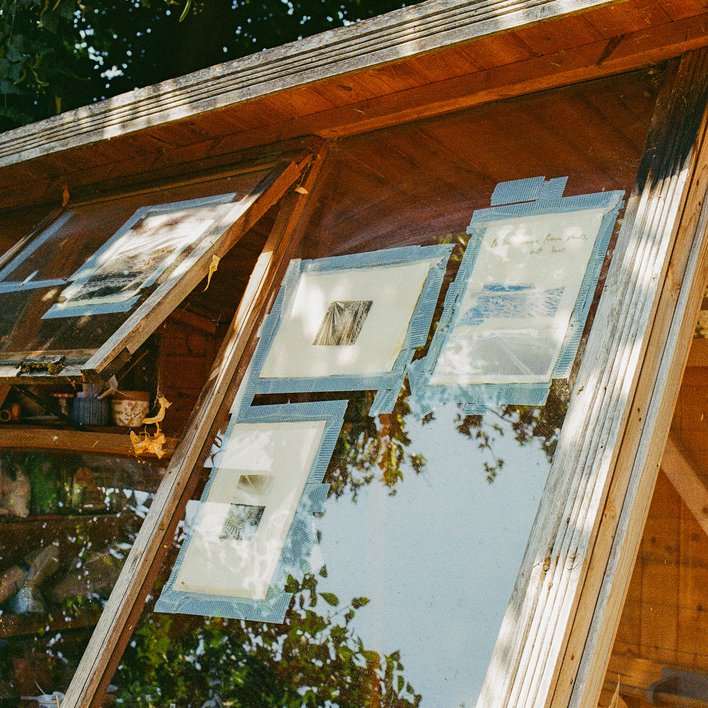
From flying red flags off rooftops to filming through your mirror mask, your work often challenges conventional ways of making and presenting art. How does experimenting with materials, locations, and formats influence the ideas you explore and the way each project develops?
Well, normally it's the other way around: the idea or the subject matter comes first, and the materiality, location, and approach come second. However, as many of my projects become longer form, it also flips back the other way. For example, the pollen work started as an exploration of human impact on the rock and in soil, but then having pollen ink in the studio inspires new paintings. Similarly, the mirror mask started with an exploration of self-image and technology but moved into new opportunities. I'm open to both directions, but the works always find their medium after starting with an idea. You have to rein yourself back sometimes to check if material experimentation still holds the truth of the original purpose.
William Morris has become an annual part of your practice, inviting you to inhabit his philosophy as much as his creative output. What keeps drawing you back to Morris, and how has this ongoing dialogue shaped your own approach to making artwork?
In many ways, William Morris is kind of like a spirit animal for me. He helps me navigate my own life, my privilege, and my desire to make socially engaged works while being entrepreneurial. Morris was an extraordinary multidisciplinary artist and political thinker; if I could be even one facet of his multifaceted shining light, I'd be really happy with my output.
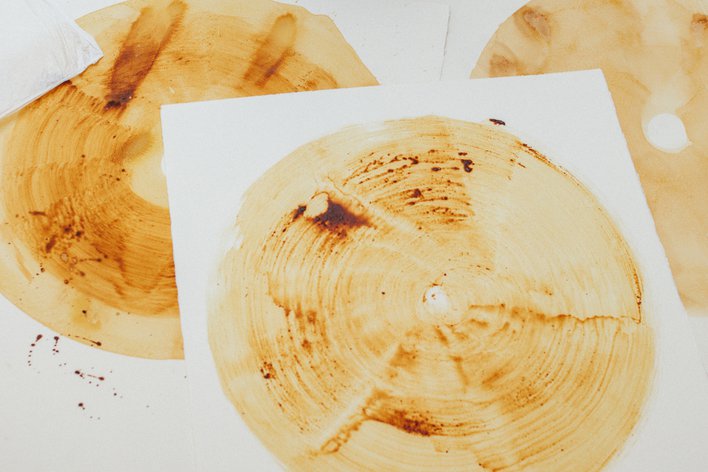
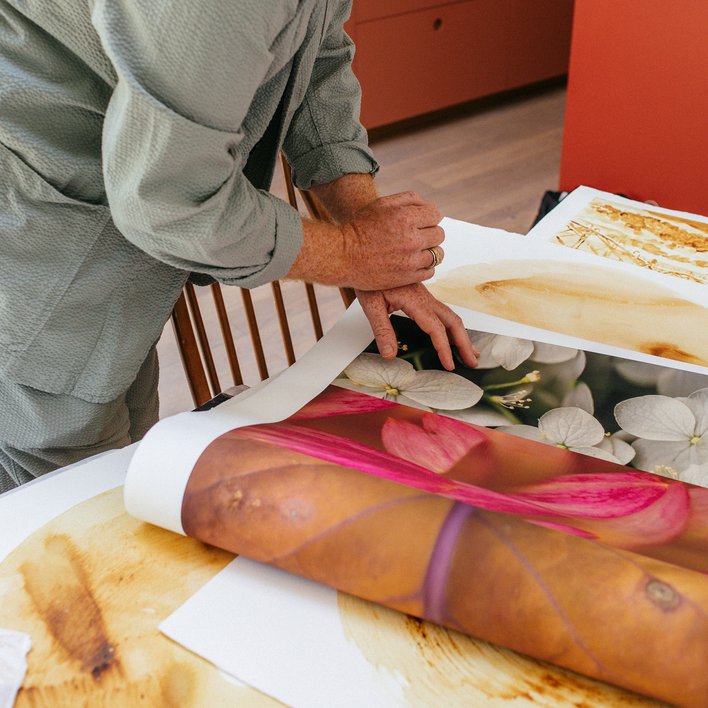
‘I've been scorching the pollen I collect to create different tonal values and darker pigments, which allows me to make much more interesting and varied paintings.’
- Freddie Yauner
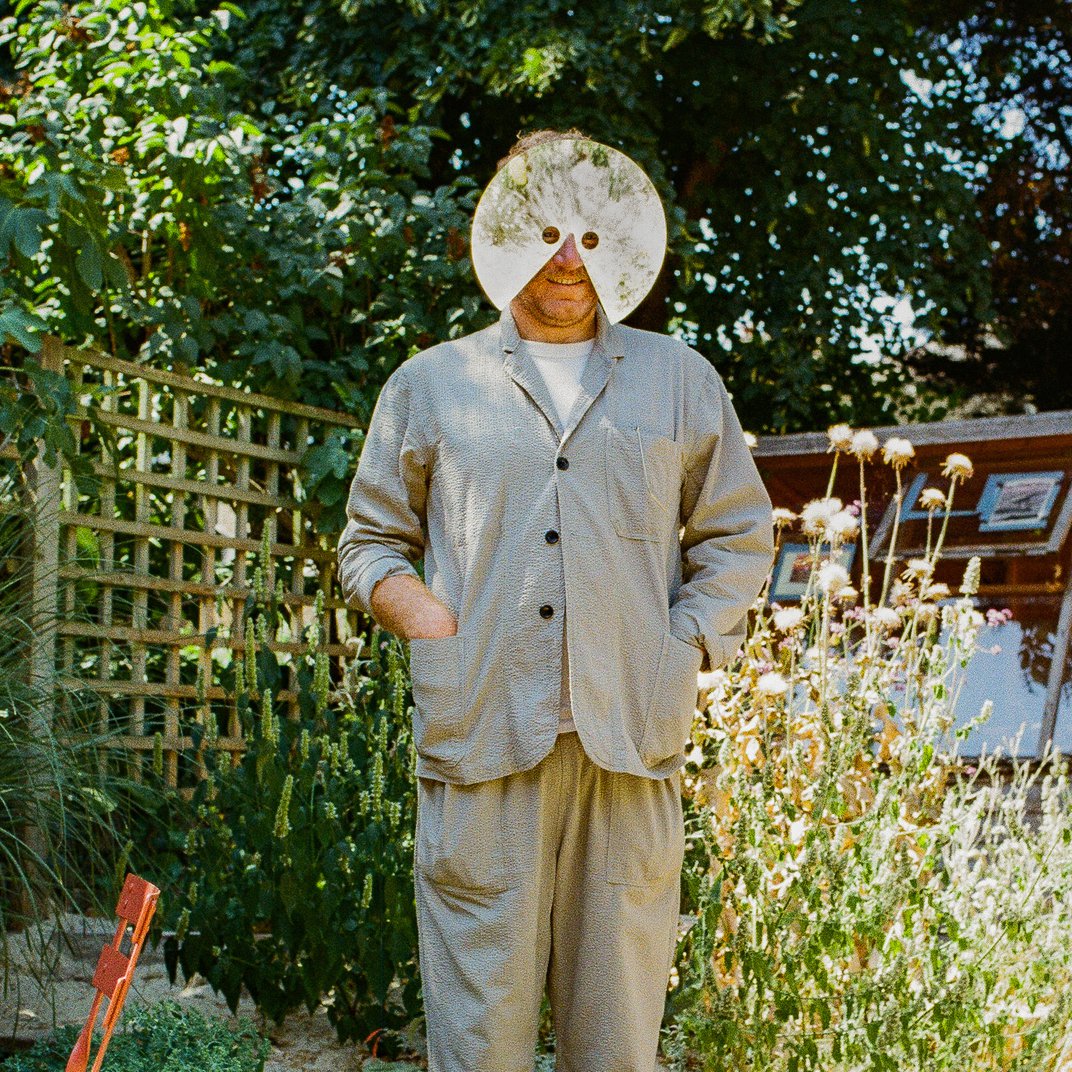
You're currently developing a series of short films exploring farms and food systems. What has drawn you to filmmaking for this body of work, and how does it allow you to tell these stories differently from your painting or performance-based practice?
In truth, the series of films was a first way in to finding opportunities to use the mirror mask. A lot of my work is about farms and food systems; I'm really interested in the huge, disproportionate impact our food system has on the world in terms of greenhouse gases. It represents the far end of human ingenuity where we create new innovations to save ourselves that simultaneously create new problems. The filmmaking became a pattern of regularity; I set myself a challenge to make a new film each month, which drove me to make contact with places I was interested in. Now the mirror and the food system work have spread through a lot of my other practice.
Do you have any upcoming projects that you'd like to share with us?
One of the most exciting things is that due to the success of the mirror masks, there are now 5,000 masks around the world, and people are making their own artwork with them. We're starting a film project asking the community to make films about "super hot" weather events. I'm also about to embark on a whole new series of pollen paintings using agricultural images captured over the last year as a starting point. I've been scorching the pollen I collect to create different tonal values and darker pigments, which allows me to make much more interesting and varied paintings. I'm also exploring the use of gold backgrounds as a reference to religious icons in these new works which I'm super excited about getting into.
Want to be part of our network? Submit your work and join Artiq's growing community of artists.