article In conversation with
Jonathan Lawes
In conversation with
Jonathan Lawes
In conversation with Jonathan Lawes
about geometry, instinct, and the
evolving language of colour.
about geometry, instinct, and the
evolving language of colour.
In conversation with Jonathan Lawes
about geometry, instinct, and the
evolving language of colour.
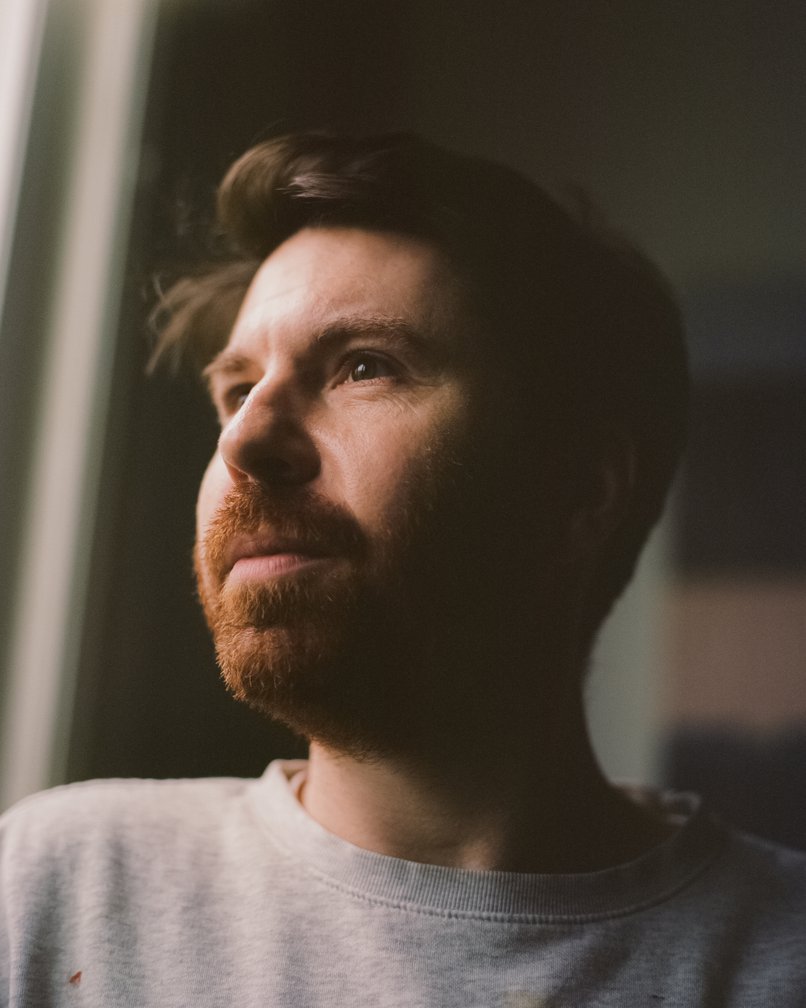
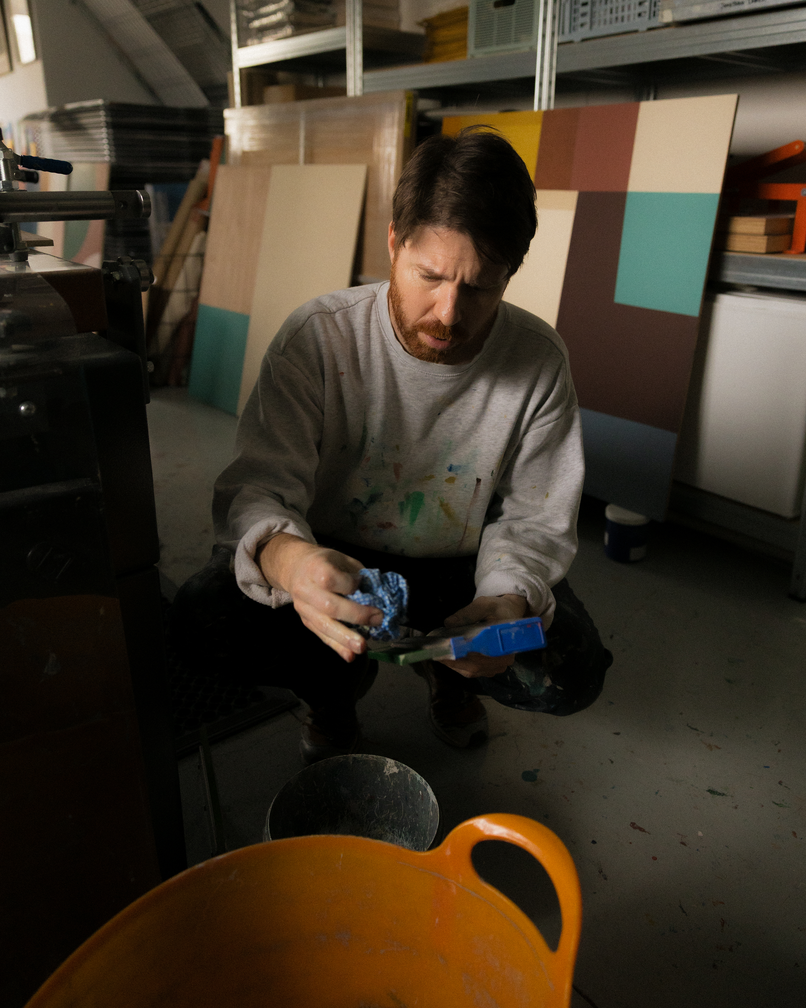
Jonathan Lawes is a South-East London–based artist and printmaker creating bold geometric abstractions through silkscreen printing. His work blends structure and intuition, drawing on architecture, urban rhythms, and a process-led approach to colour, shape, and texture.
We recently visited Jonathan’s studio to learn more about his practice, his evolving “library” of shapes, and the balance he strikes between precision and spontaneity at the printing table.
We recently visited Jonathan’s studio to learn more about his practice, his evolving “library” of shapes, and the balance he strikes between precision and spontaneity at the printing table.
Llenya 08
Artiq Given your background in printed textiles and pattern design, how has your initial training influenced the way you approach the technical constraints and possibilities of silkscreen printing today?
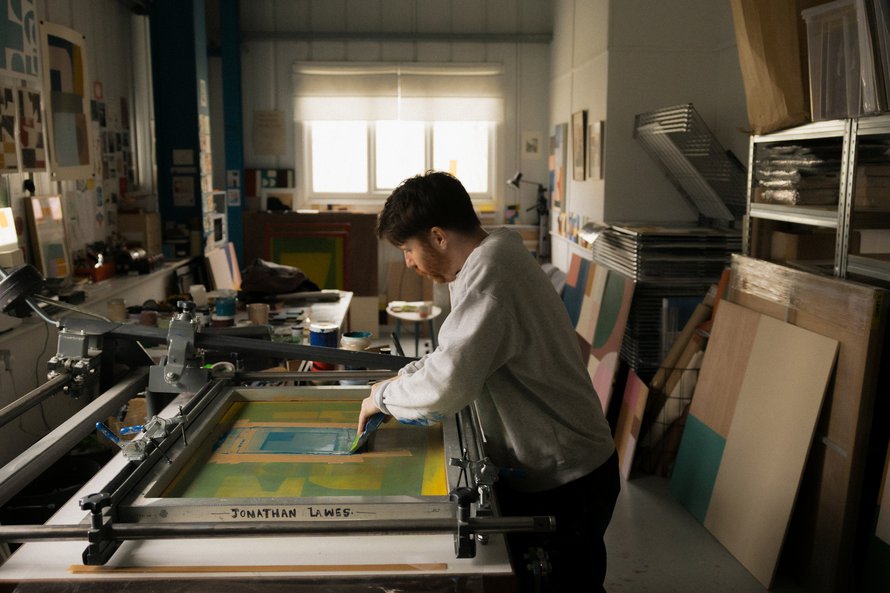
Jonathan The main thing that led me to pursue a degree in printed textiles was the abundance of manual printing techniques that were on offer, most specifically screen printing. There were digital options, of course, but I tended to spend the vast majority of my time getting my hands dirty in the studio. Mixing inks, experimenting with different mediums, and numerous other possibilities. All of this set the foundations of how I work now. Since my degree I have honed my skills through experimentation and a lot of hard work. I have a genuine love for the process and that has obviously helped push me further.
Artiq You have often referred to maintaining an internal ‘library’ of shapes. Could you elaborate on how you build and maintain your collection?
Jonathan I’ve always said that I’m constantly working, constantly taking things in with my eyes. Shapes, colours, compositions from all around me and the rhythms and structures of architecture and urban environments. Some shapes work better than others, and those I will continue to revisit. But I feel it’s always evolving, and I’m very eager to continually refresh things.
Jonathan The main thing that led me to pursue a degree in printed textiles was the abundance of manual printing techniques that were on offer, most specifically screen printing. There were digital options, of course, but I tended to spend the vast majority of my time getting my hands dirty in the studio. Mixing inks, experimenting with different mediums, and numerous other possibilities. All of this set the foundations of how I work now. Since my degree I have honed my skills through experimentation and a lot of hard work. I have a genuine love for the process and that has obviously helped push me further.
Artiq You have often referred to maintaining an internal ‘library’ of shapes. Could you elaborate on how you build and maintain your collection?
Jonathan I’ve always said that I’m constantly working, constantly taking things in with my eyes. Shapes, colours, compositions from all around me and the rhythms and structures of architecture and urban environments. Some shapes work better than others, and those I will continue to revisit. But I feel it’s always evolving, and I’m very eager to continually refresh things.
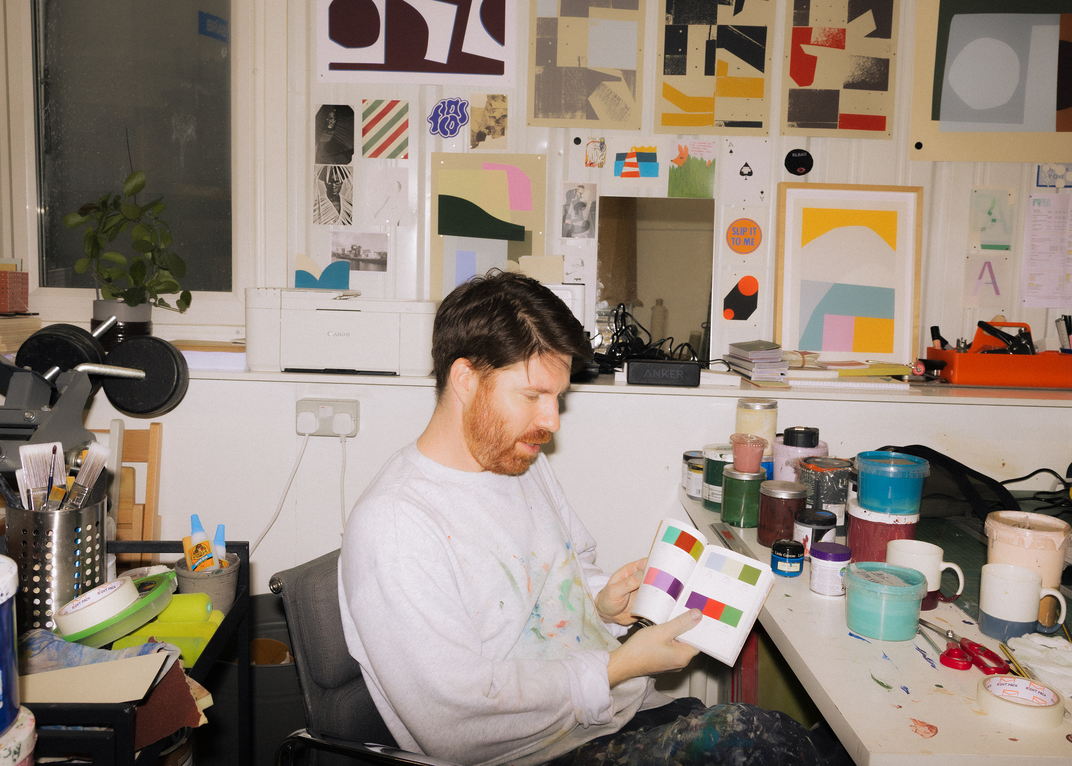
Artiq Your practice has evolved from traditional paper to include wood, canvas, and vintage book covers. What draws you to these more textured surfaces, and how do you find the physical properties of wood change the way you approach layering?
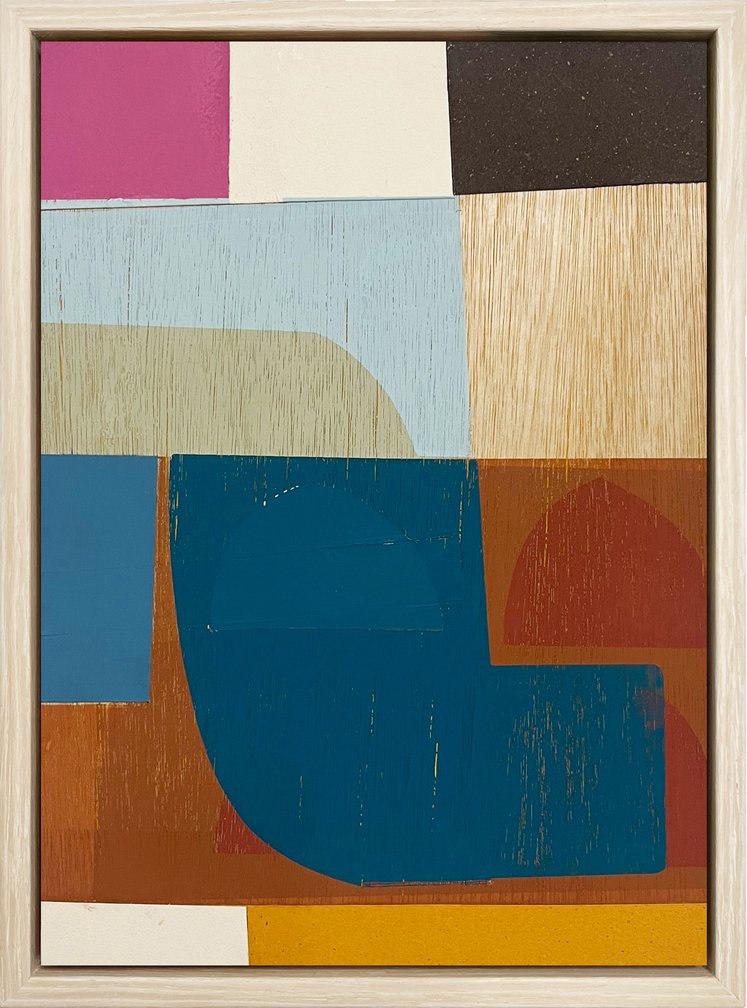
Jonathan I’m always looking for new directions in which to experiment, and texture has certainly become one of them. I like the variety that it offers in contrast to the flat ink surface you can get on paper. It can add character, and a more hand-made element to my work. The paper I use is specifically designed for printing, whereas the wooden boards aren’t. Therefore it’s a little tricker to work with, and can take some adjusting with layering. But when you get it right it adds that extra special touch.
Artiq You’ve noted that while you start with an outline, the final piece is often an organic evolution on the printing table. How do you balance the rigid precision of geometric abstraction with the natural process that occurs during printmaking?
Jonathan I like to have a rough idea of what I’m doing, but I also like to mix that with a bit of flexibility. I work in the moment and make decisions during the process. Not all decisions work out, but I find this way of working comfortable and very adaptable. It comes naturally to me. There has to be a balance of course, but I like to embrace the unknown while printing.
Jonathan I’m always looking for new directions in which to experiment, and texture has certainly become one of them. I like the variety that it offers in contrast to the flat ink surface you can get on paper. It can add character, and a more hand-made element to my work. The paper I use is specifically designed for printing, whereas the wooden boards aren’t. Therefore it’s a little tricker to work with, and can take some adjusting with layering. But when you get it right it adds that extra special touch.
Artiq You’ve noted that while you start with an outline, the final piece is often an organic evolution on the printing table. How do you balance the rigid precision of geometric abstraction with the natural process that occurs during printmaking?
Jonathan I like to have a rough idea of what I’m doing, but I also like to mix that with a bit of flexibility. I work in the moment and make decisions during the process. Not all decisions work out, but I find this way of working comfortable and very adaptable. It comes naturally to me. There has to be a balance of course, but I like to embrace the unknown while printing.
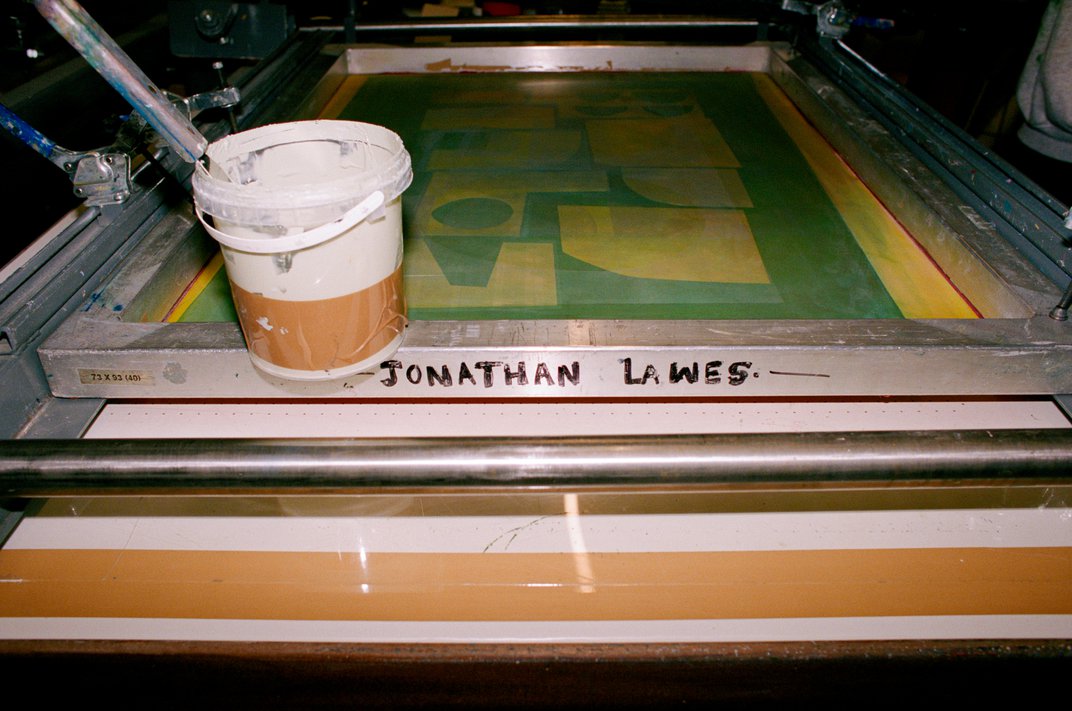
Artiq Your current Thamesside studio is characterized by remarkable natural light and open space. How does the atmosphere of your workspace influence your current series?
Jonathan I’m incredibly lucky to have such an open and inviting studio, with room not only to work, but also to relax and contemplate next steps. Over the last 2 years I’ve begun to work on a much larger scale and without the space that I have, this wouldn’t have been possible at all. It’s also great to be right on the Thames and a little outside of the centre of London. It gives me a bit of breathing space.
Artiq Do you have any upcoming projects you would like to share with us?
Jonathan I’m currently putting the final touches to all the works for my debut solo exhibition at Air Contemporary in Soho. ‘The Shape of Colour’ opens on 12th March at their gallery in Ham Yard and will run for just over two weeks. I’ve been working with Maria at Air Contemporary for 18 months now and during that time I feel my work has progressed massively. The show will bring together works on paper, large-scale wooden panels, which are my largest to date, and also some new three-dimensional pieces which I’m excited to share.
Jonathan I’m incredibly lucky to have such an open and inviting studio, with room not only to work, but also to relax and contemplate next steps. Over the last 2 years I’ve begun to work on a much larger scale and without the space that I have, this wouldn’t have been possible at all. It’s also great to be right on the Thames and a little outside of the centre of London. It gives me a bit of breathing space.
Artiq Do you have any upcoming projects you would like to share with us?
Jonathan I’m currently putting the final touches to all the works for my debut solo exhibition at Air Contemporary in Soho. ‘The Shape of Colour’ opens on 12th March at their gallery in Ham Yard and will run for just over two weeks. I’ve been working with Maria at Air Contemporary for 18 months now and during that time I feel my work has progressed massively. The show will bring together works on paper, large-scale wooden panels, which are my largest to date, and also some new three-dimensional pieces which I’m excited to share.