article In conversation with
Nick Gentry
In conversation with
Nick Gentry
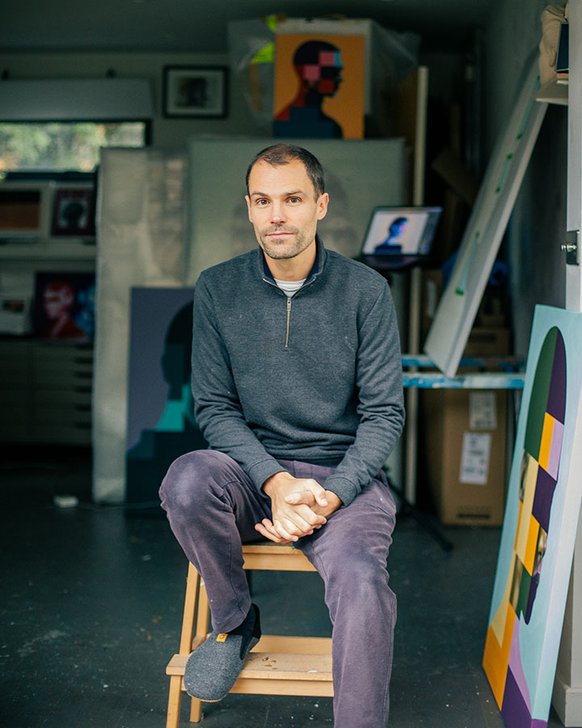
Exploring the intersection of digital and
analogue processes, Nick Gentry's work
reflects on the impact of internet culture.
analogue processes, Nick Gentry's work
reflects on the impact of internet culture.
Exploring the intersection of digital and
analogue processes, Nick Gentry's work
reflects on the impact of internet culture.
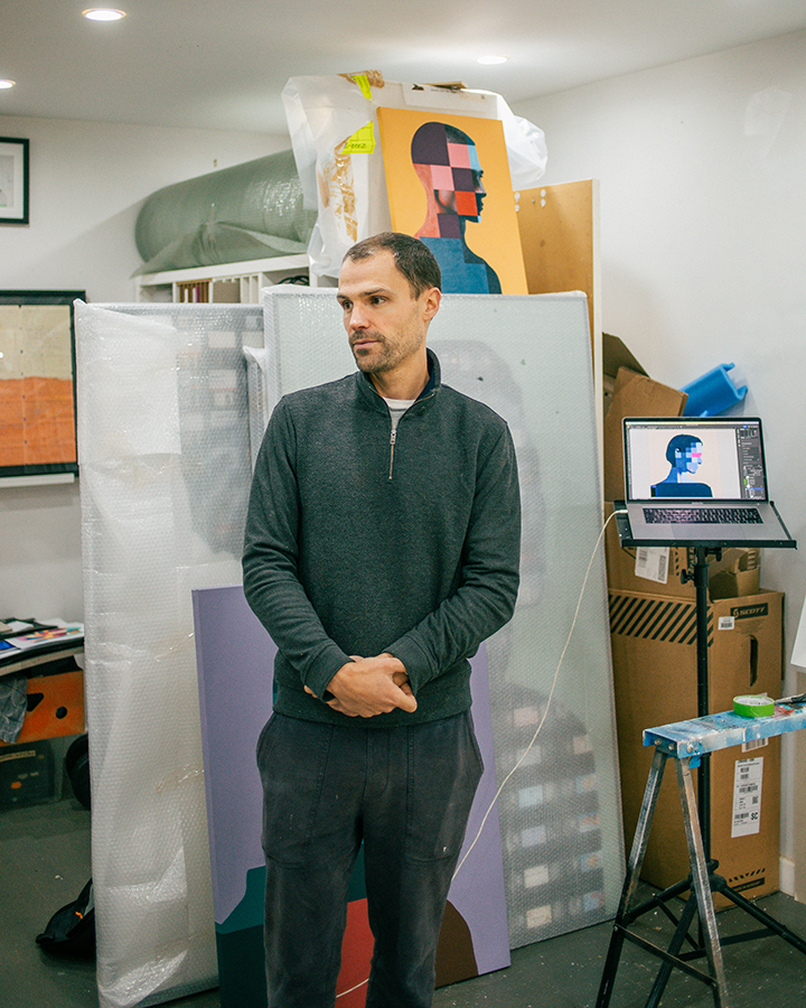
Nick Gentry is a British artist using recycled technological relics such as floppy disks and VHS tapes to create intriguing, formless portraits. By combining obsolete data formats, Gentry creates new identities embedded with personal information, evoking a conversation about how past technologies shape our understanding of the future.
Artiq When did you first know you wanted to become an artist?
Nick I can't pinpoint the exact moment, but I was very young – maybe five years old. I loved the feeling of getting completely absorbed in a drawing, creating and exploring my own inner world. My parents and teachers recognised that spark and nurtured it. I'm so grateful for their support as it shaped my identity and gave me the courage to pursue this path. All through my life it has been a vital way for me to process feelings and express myself. Now, after working professionally as an artist for 15 years, I hope more than ever to inspire others to find that same creative fire within themselves.
Artiq How has your practice evolved in response to the distinct phases of life, such as becoming a parent?
Nick I think it's impossible to predict the profound changes that occur when you have children. It definitely felt like a new phase of life to me and it makes sense that the art I produce follows that and changes as well. It inevitably impacted my art, adding layers of emotional depth – but also playfulness. My creative process now feels like navigating a river – often calm and flowing, sometimes turbulent and unpredictable. Parenthood has taught me to embrace the unexpected and find beauty in the chaos.
Nick I can't pinpoint the exact moment, but I was very young – maybe five years old. I loved the feeling of getting completely absorbed in a drawing, creating and exploring my own inner world. My parents and teachers recognised that spark and nurtured it. I'm so grateful for their support as it shaped my identity and gave me the courage to pursue this path. All through my life it has been a vital way for me to process feelings and express myself. Now, after working professionally as an artist for 15 years, I hope more than ever to inspire others to find that same creative fire within themselves.
Artiq How has your practice evolved in response to the distinct phases of life, such as becoming a parent?
Nick I think it's impossible to predict the profound changes that occur when you have children. It definitely felt like a new phase of life to me and it makes sense that the art I produce follows that and changes as well. It inevitably impacted my art, adding layers of emotional depth – but also playfulness. My creative process now feels like navigating a river – often calm and flowing, sometimes turbulent and unpredictable. Parenthood has taught me to embrace the unexpected and find beauty in the chaos.

Artiq Your work explores themes of AI and the environment—pressing issues in today’s world. How does your art address these challenges?
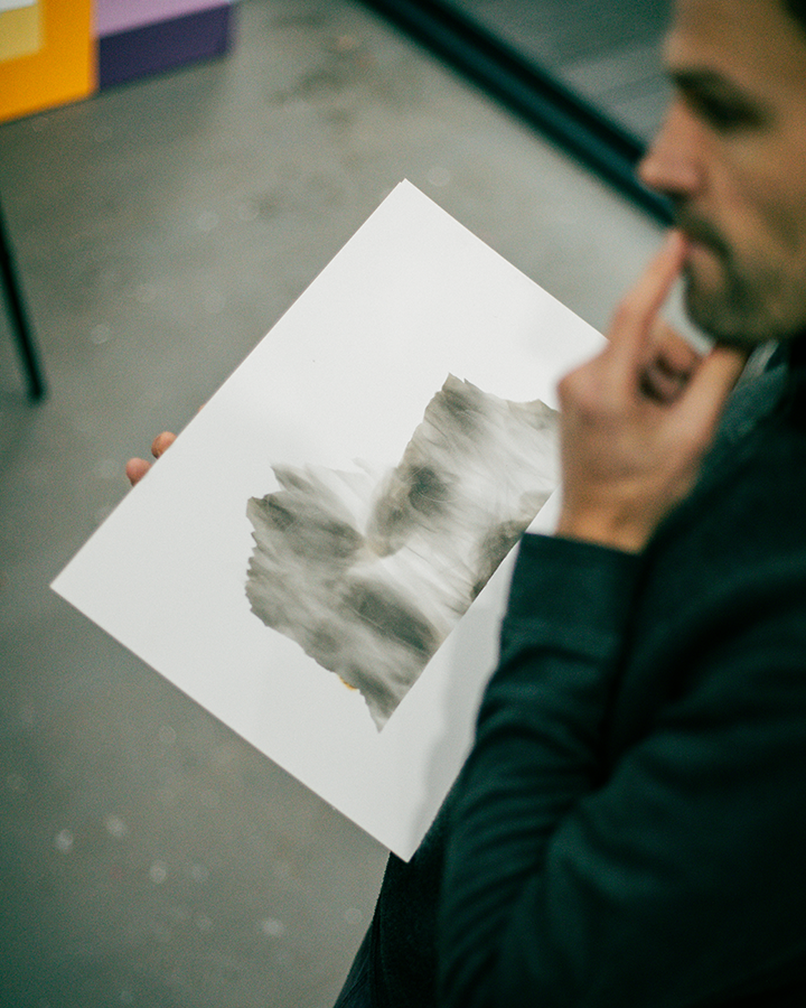
Nick AI has fascinated me for years and of course it's clear that this technological revolution is only just getting started. Through using obsolete data forms, my art has been exploring this since 2009. But it's not just about the technology itself; it's about the human impact. Similarly, my recent 'Iceberg' series, created with smoke and soot (carbon), looks towards the delicate balance of our environment. The smoke dances over the surface and leaves ghostly marks, which serve as a reminder of what we stand to lose. The world is moving faster, but art asks us to stop and reflect. I believe that art can be a powerful tool that can inspire a deeper emotional response to complex issues – and ultimately inspire action.
Artiq We discussed on your studio visit how your work depicts non-specific human figures. What does this anonymity allow you to communicate?
Nick By avoiding specific categorisation of gender, race, or even 'humanity,' I aim to create figures that are universally relatable: they are blank canvases onto which viewers can project their own interpretations and experiences. This anonymity allows the work to transcend individual identities and speak to broader themes of existence, memory, and our place in a rapidly changing world. We are spending more time communicating digitally and that of course impacts on our sense of identity. Being a digital representation, these personas are not tied to anything specific – which opens the door to them to be more open and fluid than what we were formerly accustomed to.
Nick AI has fascinated me for years and of course it's clear that this technological revolution is only just getting started. Through using obsolete data forms, my art has been exploring this since 2009. But it's not just about the technology itself; it's about the human impact. Similarly, my recent 'Iceberg' series, created with smoke and soot (carbon), looks towards the delicate balance of our environment. The smoke dances over the surface and leaves ghostly marks, which serve as a reminder of what we stand to lose. The world is moving faster, but art asks us to stop and reflect. I believe that art can be a powerful tool that can inspire a deeper emotional response to complex issues – and ultimately inspire action.
Artiq We discussed on your studio visit how your work depicts non-specific human figures. What does this anonymity allow you to communicate?
Nick By avoiding specific categorisation of gender, race, or even 'humanity,' I aim to create figures that are universally relatable: they are blank canvases onto which viewers can project their own interpretations and experiences. This anonymity allows the work to transcend individual identities and speak to broader themes of existence, memory, and our place in a rapidly changing world. We are spending more time communicating digitally and that of course impacts on our sense of identity. Being a digital representation, these personas are not tied to anything specific – which opens the door to them to be more open and fluid than what we were formerly accustomed to.
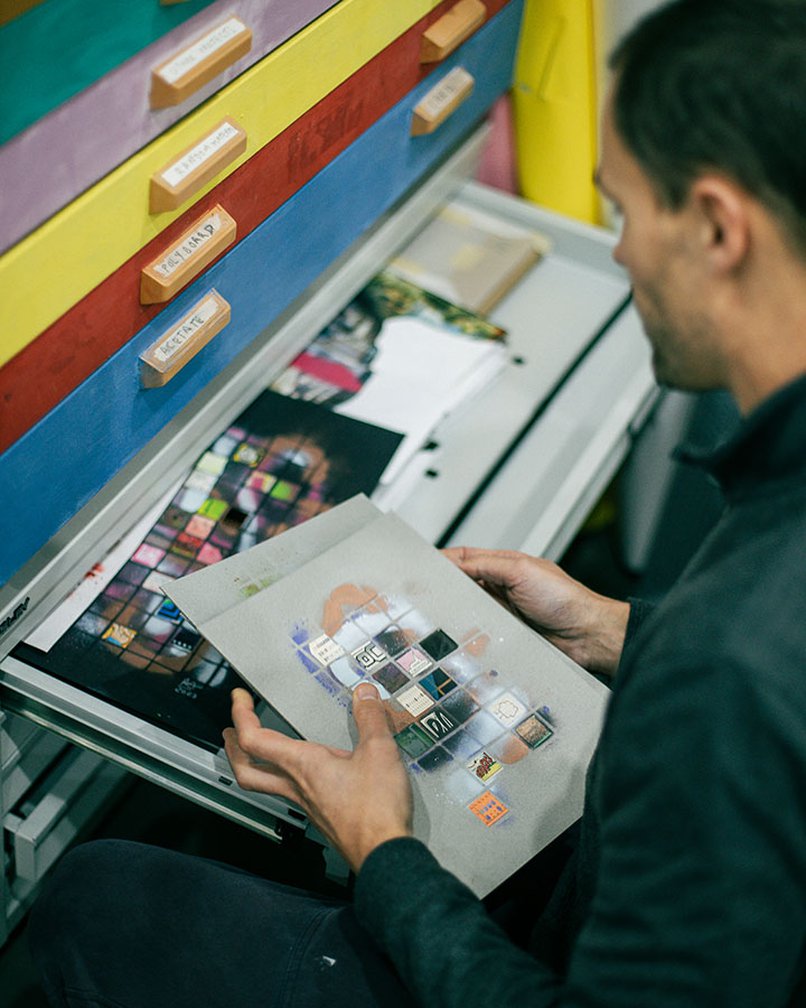
Artiq You frequently source and incorporate archival objects like punch-cards, floppy disks, and videotapes into your practice. What draws you to these analogue materials, and how do they contribute to the wider narratives of your work?
Nick The brutal obsolescence of these objects intrigues and haunts me in equal measure. The technology moves on so quickly and I find it interesting to look at what trails in the wake of this relentless innovation. These objects had a life and they had a purpose; they were personal items and were often treasured. Then quite suddenly they are cast aside and forgotten. I find that shocking, as so much of our civilised world is built upon those humble outdated objects. By incorporating them into my art, I explore themes of memory, technological change, and the ephemeral nature of our digital world. They serve as a reminder that progress comes at a cost, and that what we value today might be forgotten tomorrow.
Artiq Do you have any upcoming projects you would like to share with us?
Nick I'm going to continue experimenting with my iceberg series and find ways to develop that. It's still a new process, so I'm working out how to scale them up and develop the concept further. As I am currently in this process of change and experimentation I haven't committed to any specific projects at the moment. Aside from that I'm open to new opportunities and collaborations, and I'm always eager to explore new creative avenues. I find that the most exciting projects often arise unexpectedly, and I'm looking forward to seeing what the future holds.
Nick The brutal obsolescence of these objects intrigues and haunts me in equal measure. The technology moves on so quickly and I find it interesting to look at what trails in the wake of this relentless innovation. These objects had a life and they had a purpose; they were personal items and were often treasured. Then quite suddenly they are cast aside and forgotten. I find that shocking, as so much of our civilised world is built upon those humble outdated objects. By incorporating them into my art, I explore themes of memory, technological change, and the ephemeral nature of our digital world. They serve as a reminder that progress comes at a cost, and that what we value today might be forgotten tomorrow.
Artiq Do you have any upcoming projects you would like to share with us?
Nick I'm going to continue experimenting with my iceberg series and find ways to develop that. It's still a new process, so I'm working out how to scale them up and develop the concept further. As I am currently in this process of change and experimentation I haven't committed to any specific projects at the moment. Aside from that I'm open to new opportunities and collaborations, and I'm always eager to explore new creative avenues. I find that the most exciting projects often arise unexpectedly, and I'm looking forward to seeing what the future holds.