article Ones to
Watch
Ones to
Watch
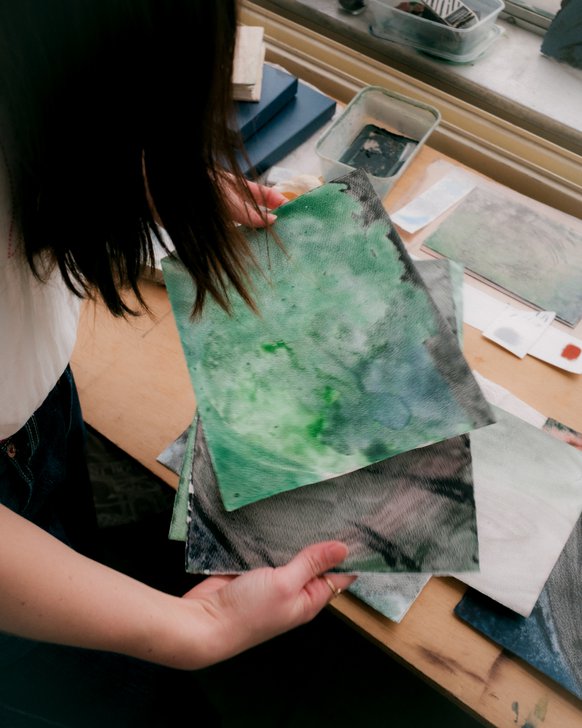
Presenting four exceptional artists,
each poised to make their mark on the world.
each poised to make their mark on the world.
Presenting four exceptional artists,
each poised to make their mark on the world.
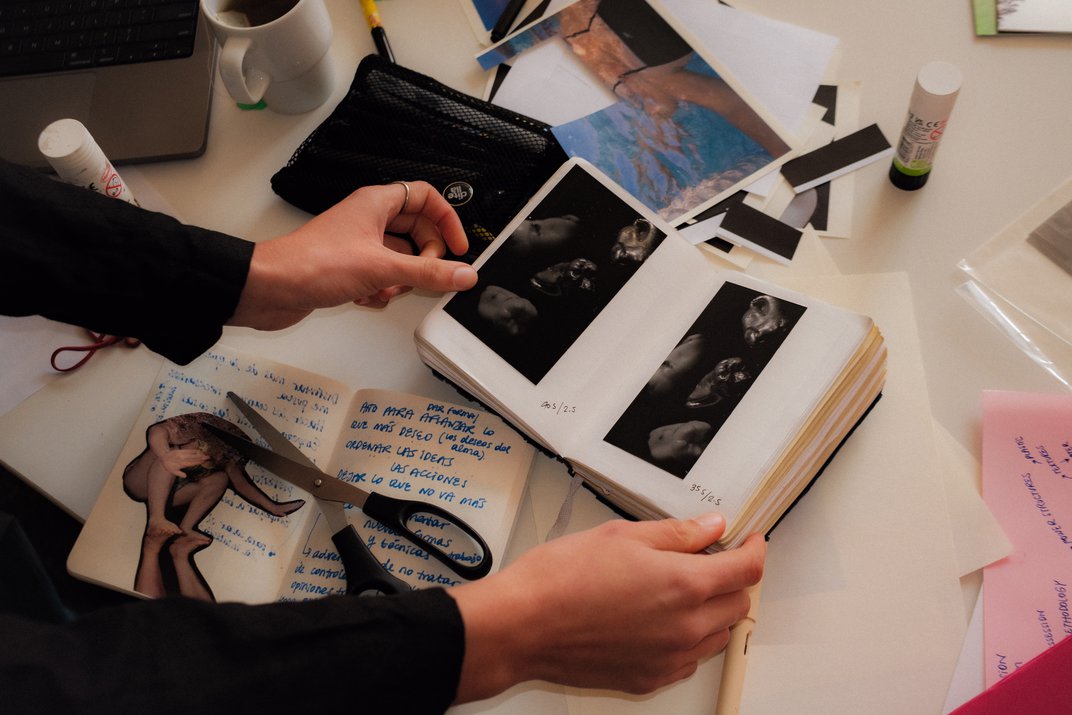
For recent graduates, degree shows mark the culmination of years of study and experimentation. They are times of great anticipation and excitement, where bold new ideas and cutting-edge concepts are presented to the public, critics, and industry professionals for the very first time.
Supporting emerging artists isn’t just an investment in the future of the arts—it’s essential to the growth of industries that rely on bold, original thinking to shape their environments. At Artiq, our team visits degree shows every summer to scout for the next wave of talent. With a sharp curatorial eye and a strong sense of industry trends, they look for practices that speak directly to the shifting needs of commercial spaces and the wider cultural landscape.
This year, we are excited to present four exceptional artists, each poised to make their mark on the world as they graduate from master’s programmes across London. From Camberwell, Slade and RCA, Senah Tuma highlights the work of Rose Shuckburgh and Sara Sahores, while Megan Davies introduces Yuxuan Hou and Gaia Ozwyn.
Supporting emerging artists isn’t just an investment in the future of the arts—it’s essential to the growth of industries that rely on bold, original thinking to shape their environments. At Artiq, our team visits degree shows every summer to scout for the next wave of talent. With a sharp curatorial eye and a strong sense of industry trends, they look for practices that speak directly to the shifting needs of commercial spaces and the wider cultural landscape.
This year, we are excited to present four exceptional artists, each poised to make their mark on the world as they graduate from master’s programmes across London. From Camberwell, Slade and RCA, Senah Tuma highlights the work of Rose Shuckburgh and Sara Sahores, while Megan Davies introduces Yuxuan Hou and Gaia Ozwyn.
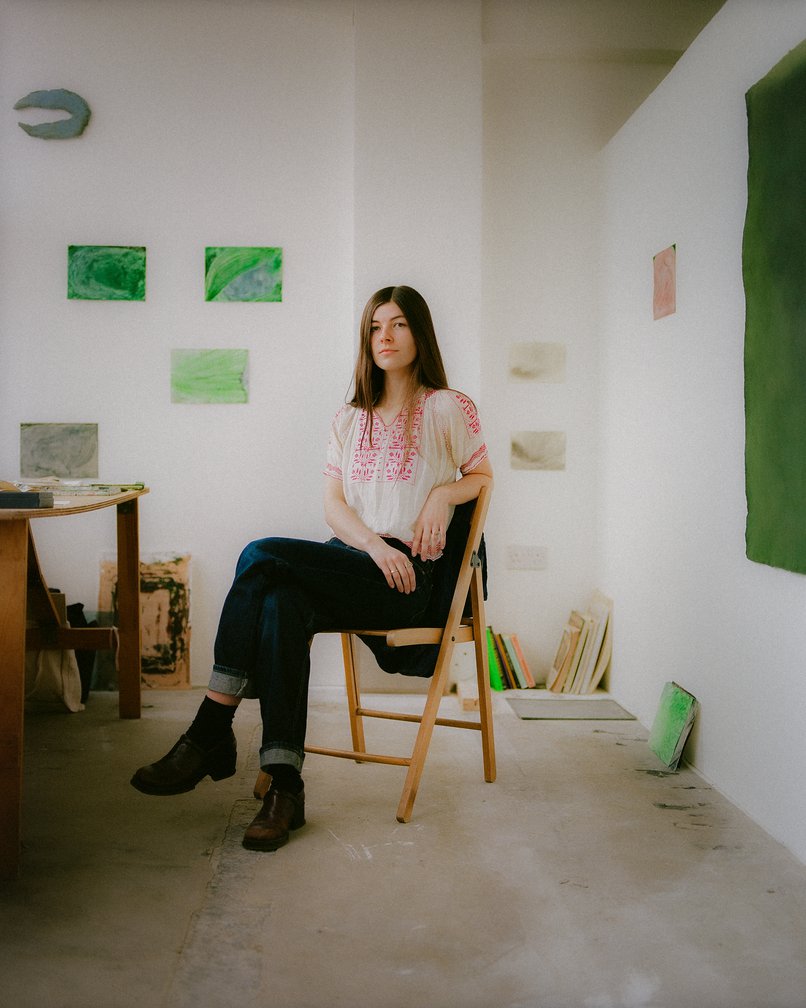
Rose Shuckburgh
MA Fine Art, Slade School of Fine Art
Rooted in both the rugged landscapes of Wales and the artistic rigor of London, Rose Shuckburgh’s practice is an evolving dialogue with the natural world. Exploring the delicate interplay between material, scale, and environment, her work draws upon the rhythms and textures of the landscapes that have shaped her.
Rose’s relationship with the land runs deep, cultivated through generations of family ties to mid-Wales. “It’s a place where there is no hiding from the elements, so you live with them and with the land.” This immersive experience has instilled in her an understanding that the natural world is not something separate, but part of a thick copresence.
Increasingly, her practice embraces organic materials, working with foraged plant dyes, earth sediment slips for ceramics, and felting techniques using wool gifted by farmers from her home valley. These slow, seasonal processes challenge the accelerated pace of modern life. “The slowness which they demand goes against our modern human culture in a way that I find very moving,” she notes. By weaving the tangible and the ephemeral, Rose seeks to convey her belief that the natural world is not inert but inherently animate, imbued with energy and spirit.
Hovering between abstraction and representation, her work evokes familiarity without dictating narrative, carving a space for individual interpretation. “I mean to create the conditions for meaning to be conjured and questioned, rather than attempting to overly control the narrative,” she says. Her practice remains an ongoing meditation on the interconnectedness of the natural world—an exploration of the rhythms, cycles, and overlooked vitality of the landscapes she holds close.
MA Fine Art, Slade School of Fine Art
Rooted in both the rugged landscapes of Wales and the artistic rigor of London, Rose Shuckburgh’s practice is an evolving dialogue with the natural world. Exploring the delicate interplay between material, scale, and environment, her work draws upon the rhythms and textures of the landscapes that have shaped her.
Rose’s relationship with the land runs deep, cultivated through generations of family ties to mid-Wales. “It’s a place where there is no hiding from the elements, so you live with them and with the land.” This immersive experience has instilled in her an understanding that the natural world is not something separate, but part of a thick copresence.
Increasingly, her practice embraces organic materials, working with foraged plant dyes, earth sediment slips for ceramics, and felting techniques using wool gifted by farmers from her home valley. These slow, seasonal processes challenge the accelerated pace of modern life. “The slowness which they demand goes against our modern human culture in a way that I find very moving,” she notes. By weaving the tangible and the ephemeral, Rose seeks to convey her belief that the natural world is not inert but inherently animate, imbued with energy and spirit.
Hovering between abstraction and representation, her work evokes familiarity without dictating narrative, carving a space for individual interpretation. “I mean to create the conditions for meaning to be conjured and questioned, rather than attempting to overly control the narrative,” she says. Her practice remains an ongoing meditation on the interconnectedness of the natural world—an exploration of the rhythms, cycles, and overlooked vitality of the landscapes she holds close.
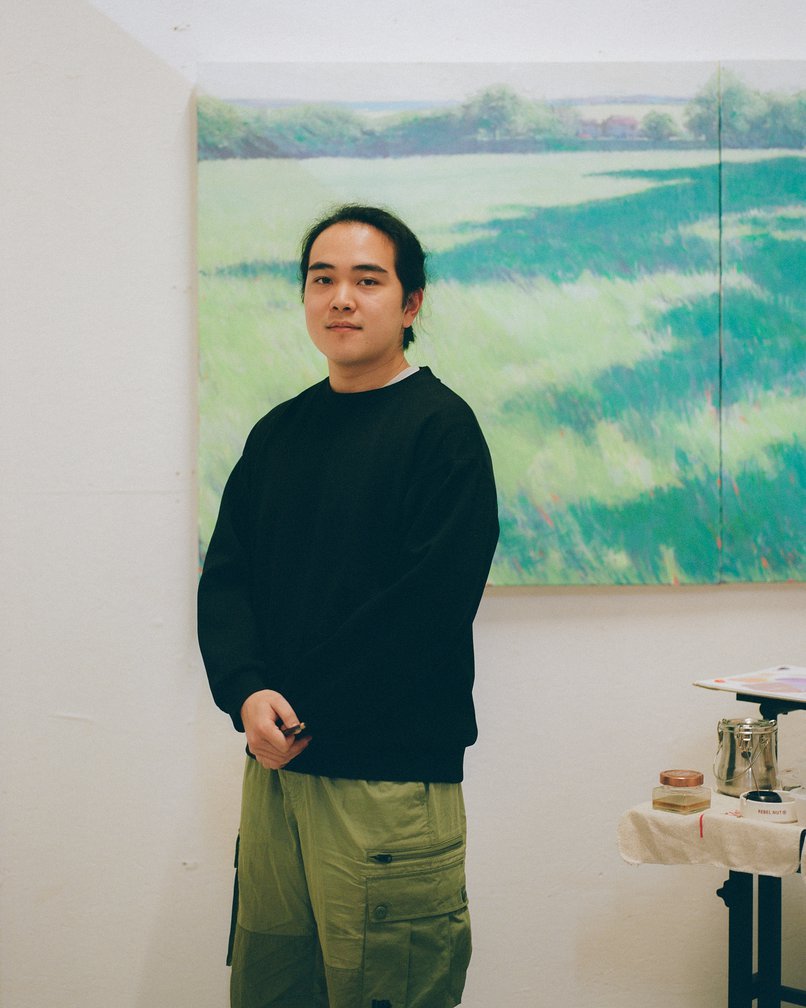
Yuxuan Hou
MA Fine Art, Camberwell College of Art
Constructed through subtly layered graphite, Yuxuan Hou’s landscapes convey a deep sense of contemplation. With their light and airy textures, his drawings encourage us to find stillness and fascination within the everyday, inviting viewers to pause, reflect, and appreciate the understated beauty often overlooked in daily life.
Considering landscapes a medium rather than a subject, Yuxuan plays with the abstract quality of his compositions, initiating his creative process through a mixture of scale and focus, chance and control. Setting off on directionless hikes, he allows his sketches and photographs to guide him: “Randomness in terms of where I have been and what I’ve seen… control lies in how I choose and manipulate images”.
While Yuxuan works in both graphite and oil paint, he focused primarily on the former during his time at university. Graphite, he says, is a “medium without mystery”, traditionally seen as a preparatory tool for more serious oil paintings. Yuxuan, however, looks to celebrate this common material in its own right.
Having completed his BA and MA at Camberwell College of Arts, Yuxuan recognises the freedom and mental space he now has and acknowledges the magnitude this holds: “The other side of the issue of being free means there is no guidance on what I should be doing. That could be quite terrifying at the start, but as an artist, we should be embracing the possibilities.” This sense of freedom challenges him to trust his instincts and explore creative boundaries with confidence. Since his MA, Yuxuan has returned to Shanghai, where he has been inspired by Chinese Shanshui, which he loosely translates as “Chinese landscape.”
At the core of his practice, he continues to encourage viewers to allow their surroundings to trigger them into giving their full attention and their curiosity to look and find fascination beyond the surface. In doing so, he fosters a deeper connection between his art, the viewer, and the world around them.
MA Fine Art, Camberwell College of Art
Constructed through subtly layered graphite, Yuxuan Hou’s landscapes convey a deep sense of contemplation. With their light and airy textures, his drawings encourage us to find stillness and fascination within the everyday, inviting viewers to pause, reflect, and appreciate the understated beauty often overlooked in daily life.
Considering landscapes a medium rather than a subject, Yuxuan plays with the abstract quality of his compositions, initiating his creative process through a mixture of scale and focus, chance and control. Setting off on directionless hikes, he allows his sketches and photographs to guide him: “Randomness in terms of where I have been and what I’ve seen… control lies in how I choose and manipulate images”.
While Yuxuan works in both graphite and oil paint, he focused primarily on the former during his time at university. Graphite, he says, is a “medium without mystery”, traditionally seen as a preparatory tool for more serious oil paintings. Yuxuan, however, looks to celebrate this common material in its own right.
Having completed his BA and MA at Camberwell College of Arts, Yuxuan recognises the freedom and mental space he now has and acknowledges the magnitude this holds: “The other side of the issue of being free means there is no guidance on what I should be doing. That could be quite terrifying at the start, but as an artist, we should be embracing the possibilities.” This sense of freedom challenges him to trust his instincts and explore creative boundaries with confidence. Since his MA, Yuxuan has returned to Shanghai, where he has been inspired by Chinese Shanshui, which he loosely translates as “Chinese landscape.”
At the core of his practice, he continues to encourage viewers to allow their surroundings to trigger them into giving their full attention and their curiosity to look and find fascination beyond the surface. In doing so, he fosters a deeper connection between his art, the viewer, and the world around them.
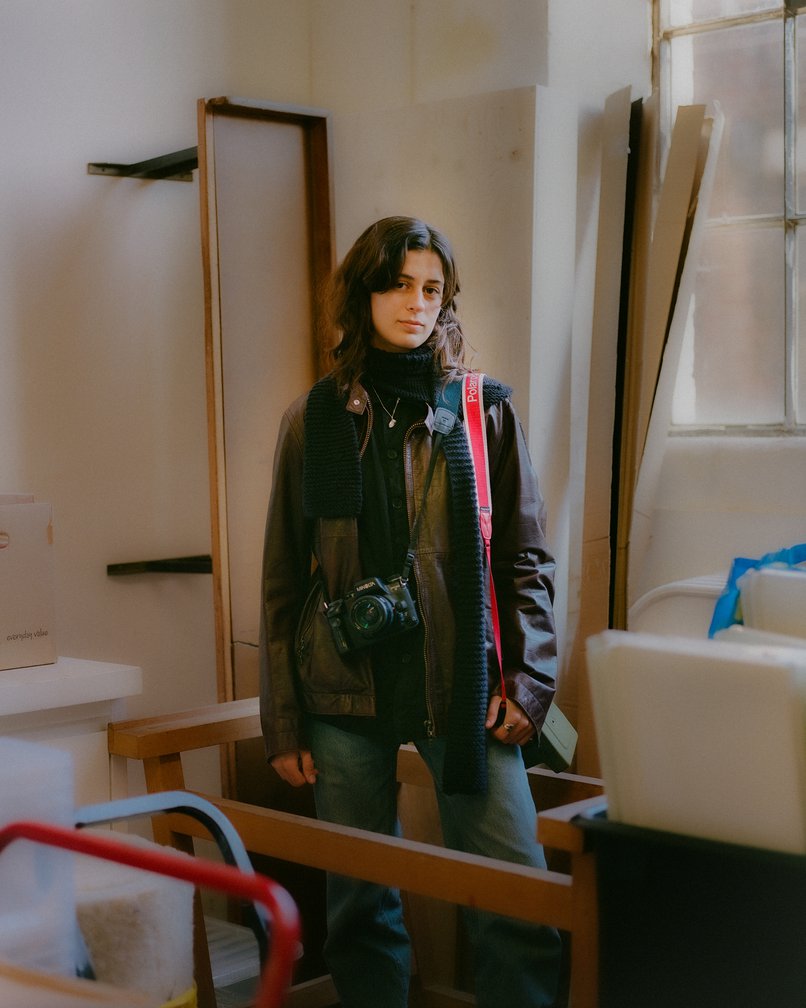
Sara Sahores
MA Photography, Royal College of Art
Sara Sahores’ artistic journey is one of brave curiosity and exploration, from childhood visits to museums with her grandmother to experimenting with materials provided by her father, a cinema distributor and painter. “I think that kind of legitimation from a young age is important,” she reflects. “It makes you feel like what you’re doing is worth it, even if you’re not showing, or selling, or making art professionally.” This early support had resulted in a dynamic portfolio that challenges how we present and think about photography.
Exploring this role as an archivist and collector, Sara approaches her photography with a powerful open-mindedness. “When considering what feels right, I go from asking myself why to why not?”
Sara’s practice moves fluidly between capturing and creating, exploring the intersection of materiality, pleasure, and perception. The dark and absorbent backgrounds of her photographs reflect her responsiveness to the visual attributes of a place. Since moving to London to pursue her MA, she has found that this near-black has entered her work. Reflecting on the diverse art scene London has provided her with, she notes, “The amount of exhibition openings per week that I get in my mailbox is insane.”
This immersion has allowed Sara to develop a deeper understanding of her rhythms and methodologies as an artist. While she maintains strong ties with a community of photographers back at home in Argentina, her time in London has expanded her artistic dialogue to include new perspectives and approaches.
Ultimately, Sara sees her practice not as a fixed exploration of a single theme but as a methodology for collecting, possessing, and transforming images. “My practice is intuitive,” she explains. “Sometimes I don’t know that I’m making new work until it’s done, and then I can start to reflect and conceptualise it.”
MA Photography, Royal College of Art
Sara Sahores’ artistic journey is one of brave curiosity and exploration, from childhood visits to museums with her grandmother to experimenting with materials provided by her father, a cinema distributor and painter. “I think that kind of legitimation from a young age is important,” she reflects. “It makes you feel like what you’re doing is worth it, even if you’re not showing, or selling, or making art professionally.” This early support had resulted in a dynamic portfolio that challenges how we present and think about photography.
Exploring this role as an archivist and collector, Sara approaches her photography with a powerful open-mindedness. “When considering what feels right, I go from asking myself why to why not?”
Sara’s practice moves fluidly between capturing and creating, exploring the intersection of materiality, pleasure, and perception. The dark and absorbent backgrounds of her photographs reflect her responsiveness to the visual attributes of a place. Since moving to London to pursue her MA, she has found that this near-black has entered her work. Reflecting on the diverse art scene London has provided her with, she notes, “The amount of exhibition openings per week that I get in my mailbox is insane.”
This immersion has allowed Sara to develop a deeper understanding of her rhythms and methodologies as an artist. While she maintains strong ties with a community of photographers back at home in Argentina, her time in London has expanded her artistic dialogue to include new perspectives and approaches.
Ultimately, Sara sees her practice not as a fixed exploration of a single theme but as a methodology for collecting, possessing, and transforming images. “My practice is intuitive,” she explains. “Sometimes I don’t know that I’m making new work until it’s done, and then I can start to reflect and conceptualise it.”
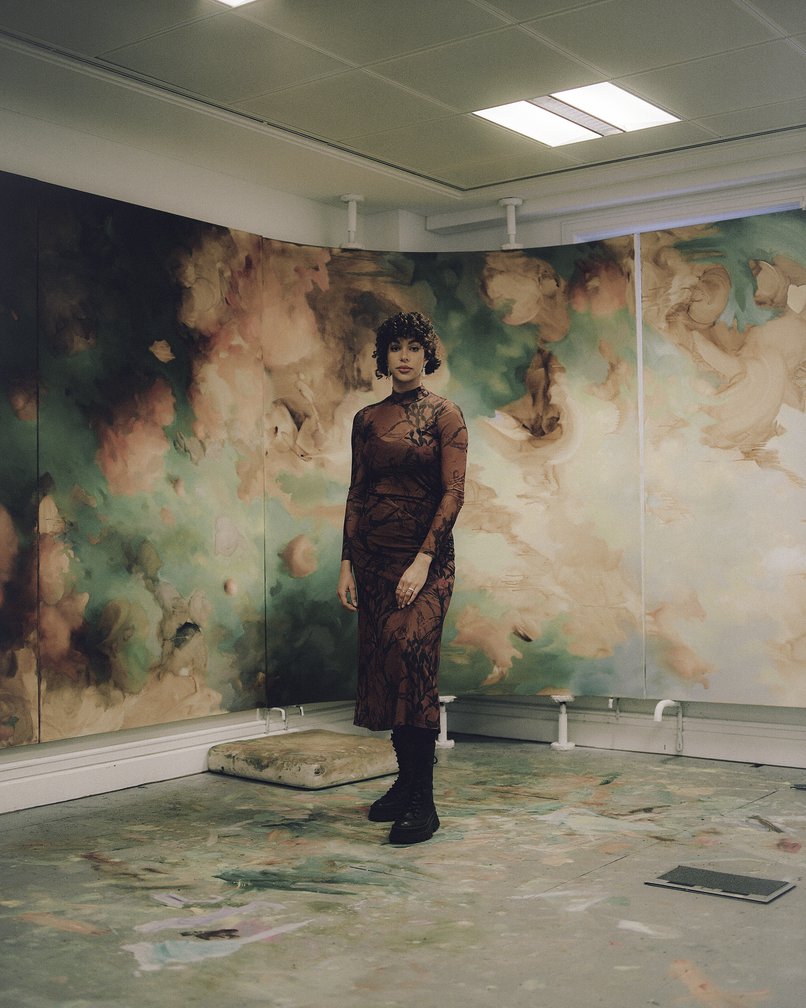
Gaia Ozwyn
MA Painting, Royal College of Art
Gaia Ozwyn explores her contrasting backgrounds through paintings of ethereal borderlands. A Caribbean-British artist who previously worked as a doctor, Gaia’s practice interrogates ideas of solitude and belonging, as well as the false dichotomies of intermediary spaces. By blending the sculptural qualities of concrete with otherworldly, gestural compositions, Gaia has created a unique material language that explores the contrasts within her identity.
Stemming from a “distinct feeling of isolation which led to my need to make a theoretical place to seek solace”, her work challenges the notion of binary classifications and the pressure to fit neatly into a category. The use of concrete also holds bodily significance. “There is something personified about the presence of a solitary form in an unknown environment, in a plane that it perhaps has no business (or, all business) occupying.”
Much of her current practice developed during her time at university. Entering her MA from a non-traditional art background, she feels less restrained by the rules of painting. “No one told me I could put concrete in a painting, but nobody told me I couldn’t either!” Gaia also acknowledges the integral part artist communities play in her practice. She now shares a studio with two fellow RCA painters, where daily practice is informed by the critical approaches they developed at university.
Having studied medicine and biomedical sciences, Gaia worked as a doctor in the NHS before pursuing arts. Her time at the RCA was influenced by this history, exploring how problem-solving through the scientific method might apply to painting. When asked for advice for those considering art school, Gaia was quick to say: “Run the experiment; follow the thread of whatever interests you.”
Megan Davies and Senah Tuma, Artist Administrators
Photography by Nathan Grace
MA Painting, Royal College of Art
Gaia Ozwyn explores her contrasting backgrounds through paintings of ethereal borderlands. A Caribbean-British artist who previously worked as a doctor, Gaia’s practice interrogates ideas of solitude and belonging, as well as the false dichotomies of intermediary spaces. By blending the sculptural qualities of concrete with otherworldly, gestural compositions, Gaia has created a unique material language that explores the contrasts within her identity.
Stemming from a “distinct feeling of isolation which led to my need to make a theoretical place to seek solace”, her work challenges the notion of binary classifications and the pressure to fit neatly into a category. The use of concrete also holds bodily significance. “There is something personified about the presence of a solitary form in an unknown environment, in a plane that it perhaps has no business (or, all business) occupying.”
Much of her current practice developed during her time at university. Entering her MA from a non-traditional art background, she feels less restrained by the rules of painting. “No one told me I could put concrete in a painting, but nobody told me I couldn’t either!” Gaia also acknowledges the integral part artist communities play in her practice. She now shares a studio with two fellow RCA painters, where daily practice is informed by the critical approaches they developed at university.
Having studied medicine and biomedical sciences, Gaia worked as a doctor in the NHS before pursuing arts. Her time at the RCA was influenced by this history, exploring how problem-solving through the scientific method might apply to painting. When asked for advice for those considering art school, Gaia was quick to say: “Run the experiment; follow the thread of whatever interests you.”
Megan Davies and Senah Tuma, Artist Administrators
Photography by Nathan Grace