article Queer Frontiers presents:
Ranny Cooper
Queer Frontiers presents:
Ranny Cooper
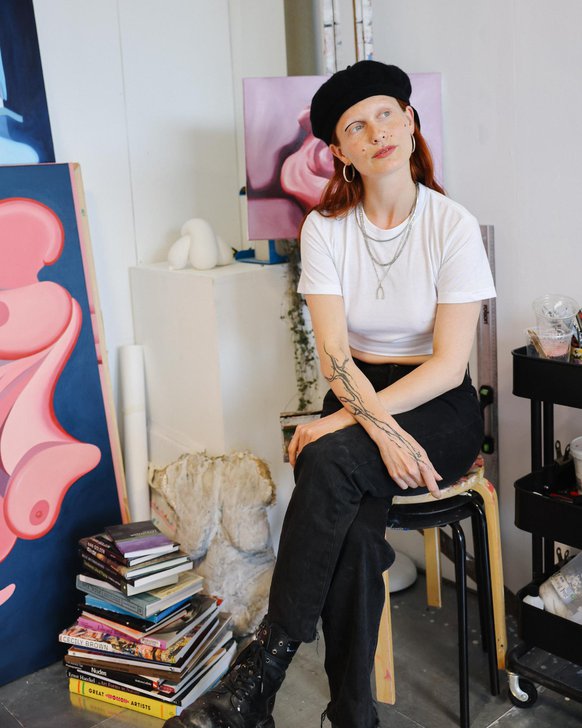
In conversation with Ranny Cooper
about how she presents work that celebrates
non-normative bodies and identities.
about how she presents work that celebrates
non-normative bodies and identities.
In conversation with Ranny Cooper
about how she presents work that celebrates
non-normative bodies and identities.
Ranny Cooper is a London-based artist working across mediums of painting and sculpture. Addressing themes such as gender, self-discovery and acceptance. Ranny draws from the history of the female nude which she brings to the present by celebrating non-normative bodies and identities.
We had the pleasure to interview Ranny on the occasion of the 2023’s edition of Queer Frontiers:
Artiq You are one of the 12 artists who produced a limited-edition print for the exhibition. What was the inspiration behind this work?
Ranny For my piece 'And still, we rise' I was heavily inspired by friends within the queer community and the ongoing battle with society and restrictions which are still being pressed upon us. I wanted to create something which exuberate a sense of freedom and euphoria, timing in with the title from one of Maya Angelou's poems.
We had the pleasure to interview Ranny on the occasion of the 2023’s edition of Queer Frontiers:
Artiq You are one of the 12 artists who produced a limited-edition print for the exhibition. What was the inspiration behind this work?
Ranny For my piece 'And still, we rise' I was heavily inspired by friends within the queer community and the ongoing battle with society and restrictions which are still being pressed upon us. I wanted to create something which exuberate a sense of freedom and euphoria, timing in with the title from one of Maya Angelou's poems.
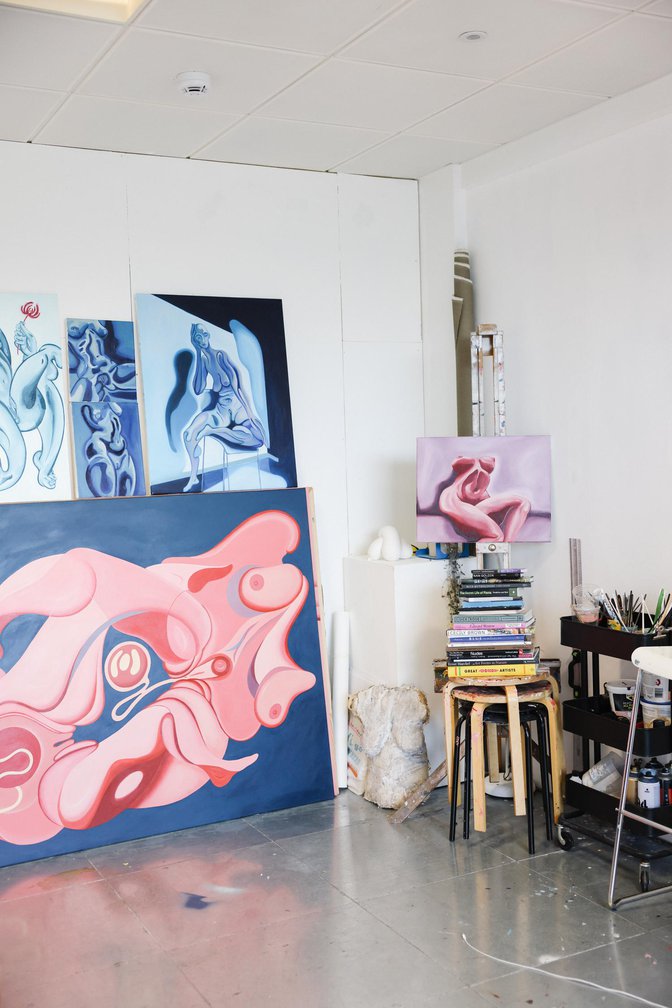
Artiq How do mythology and queer culture inspire your intuitive creative process?
Ranny Queer culture and everybody who comprises it have historically been boundary-breaking, free-thinking. individuals collectively supporting one another and their ideology.It's this way of thinking and sharing that is constantly. inspiring me.
This ties in so much with mythology, the legends and fables surrounding these thinkers, movers and shakers always ready to stir the pot and bring something new to the table.
Ranny Queer culture and everybody who comprises it have historically been boundary-breaking, free-thinking. individuals collectively supporting one another and their ideology.It's this way of thinking and sharing that is constantly. inspiring me.
This ties in so much with mythology, the legends and fables surrounding these thinkers, movers and shakers always ready to stir the pot and bring something new to the table.
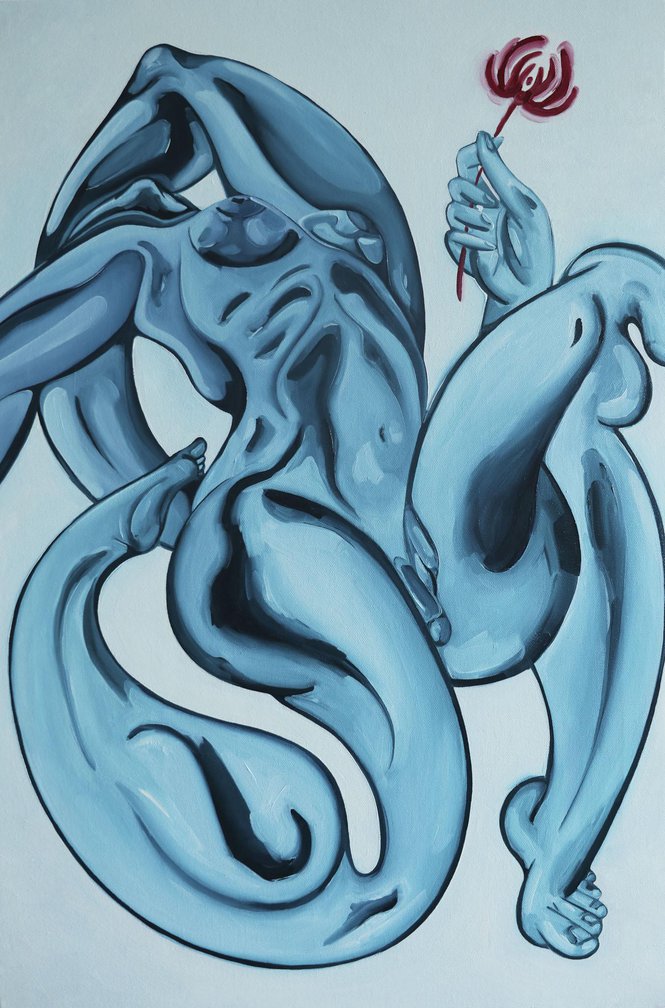
Ranny Cooper for Queer Frontiers
Artiq Your work is inspired by mythology but it also very much challenges it. Do you believe that appropriating aspects of the past can help move societal conversations forward?
Ranny Absolutely, I think it's really important to have this ideology - to be able to reference and look back on it. But it's also very important to keep challenging these ideals, keeping them current with today's thinking.
I find it useful, and also positive to reference history and see how we have moved forward with ideologies, and yet helpful to see how in the past, things were challenged in response to this. Sometimes you do need to look back to be able to move forward.
Ranny Absolutely, I think it's really important to have this ideology - to be able to reference and look back on it. But it's also very important to keep challenging these ideals, keeping them current with today's thinking.
I find it useful, and also positive to reference history and see how we have moved forward with ideologies, and yet helpful to see how in the past, things were challenged in response to this. Sometimes you do need to look back to be able to move forward.
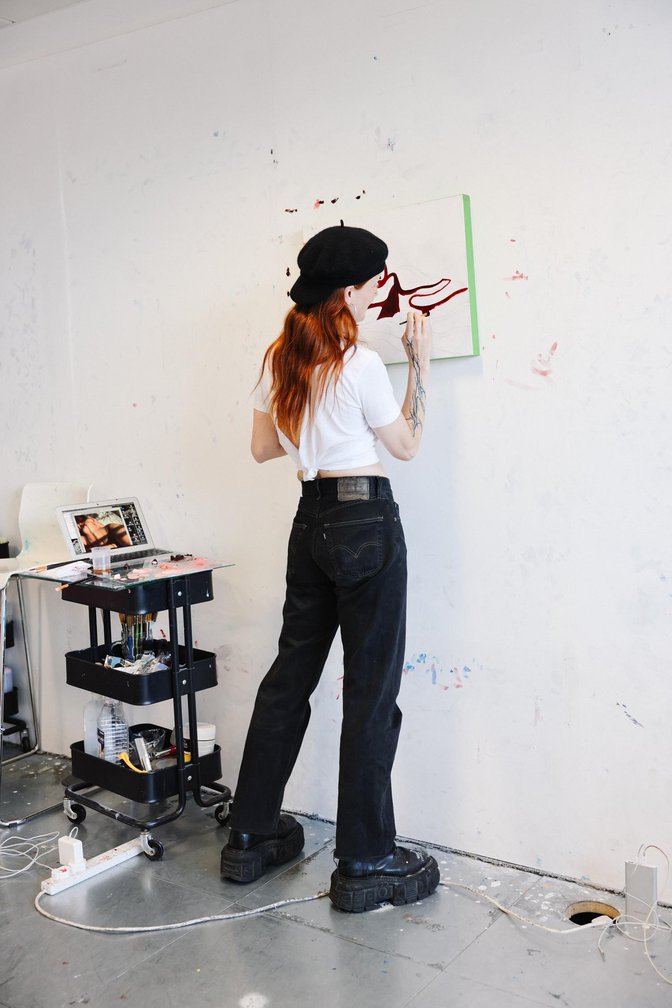
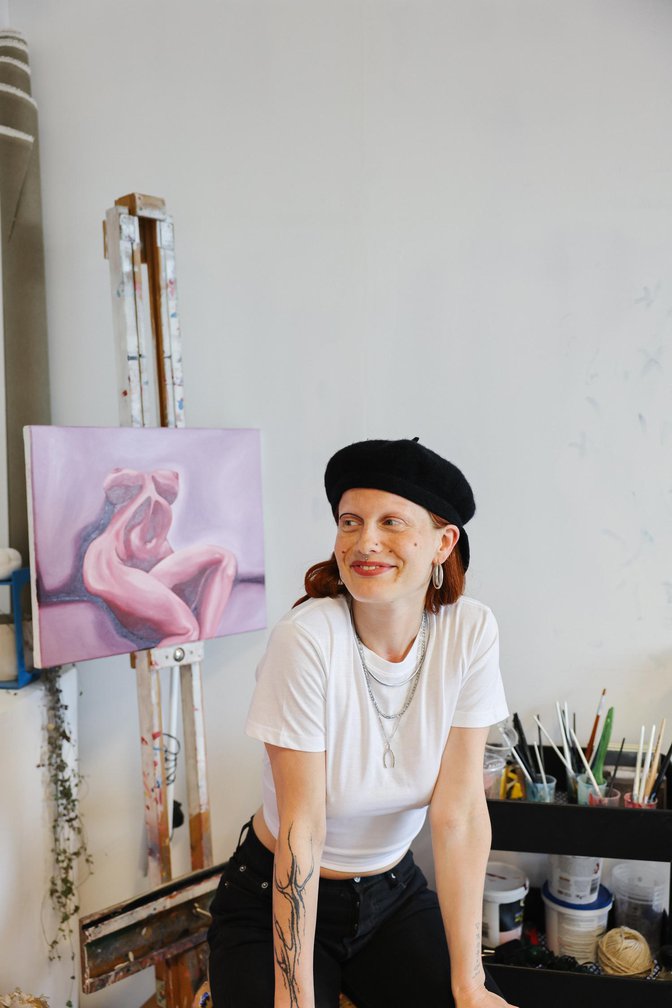
Artiq In your practice, you often work with sculpture as well. How does this medium offer you a different opportunity to express your artistic identity?
Ranny With sculpture I find it hands-on in a different way: I often have an idea of how it will look and let it develop more organically. When I sculpt I use a lot of filler, so it's the push and pull of adding and subtracting as you go.
It's a process that can take you to unexpected results, which I always try to allow. I tend to use a lot more abstract shapes to represent the form with my sculptures, leaning to interpretation as they're often quite suggestive.
Ranny Cooper is exhibiting in Queer Frontiers: Queer Myths, Queer Futures
June 29 - July 4 at 1-4 Walker's Court, London W1F 0BS.
Ranny With sculpture I find it hands-on in a different way: I often have an idea of how it will look and let it develop more organically. When I sculpt I use a lot of filler, so it's the push and pull of adding and subtracting as you go.
It's a process that can take you to unexpected results, which I always try to allow. I tend to use a lot more abstract shapes to represent the form with my sculptures, leaning to interpretation as they're often quite suggestive.
Ranny Cooper is exhibiting in Queer Frontiers: Queer Myths, Queer Futures
June 29 - July 4 at 1-4 Walker's Court, London W1F 0BS.