article The future of brand identity: Tensions and truths at D&AD’s Brand Reborn
The future of brand identity: Tensions and truths at D&AD’s Brand Reborn
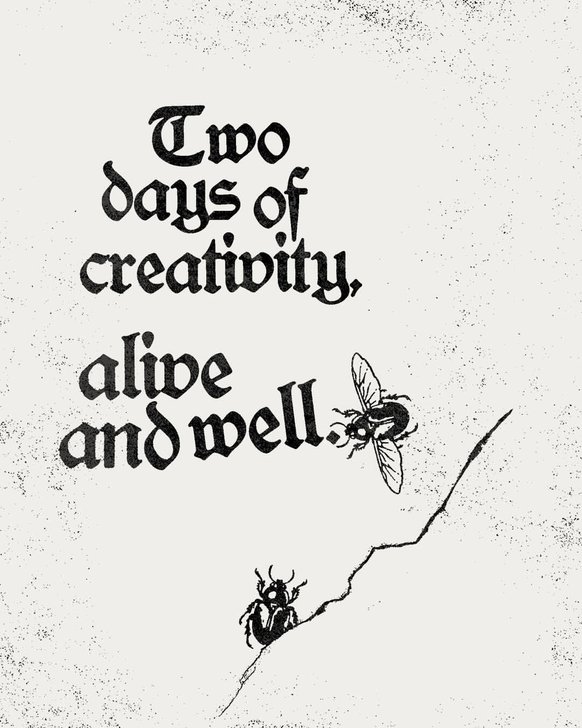
Reflecting on D&AD’s 2026 Design Festival, Lia Morse
considers the current state of creativity, and shares key insights
for anyone seeking to articulate a more distinct and enduring voice.
considers the current state of creativity, and shares key insights
for anyone seeking to articulate a more distinct and enduring voice.
Reflecting on D&AD’s 2026 Design Festival, Lia Morse
considers the current state of creativity, and shares key insights
for anyone seeking to articulate a more distinct and enduring voice.
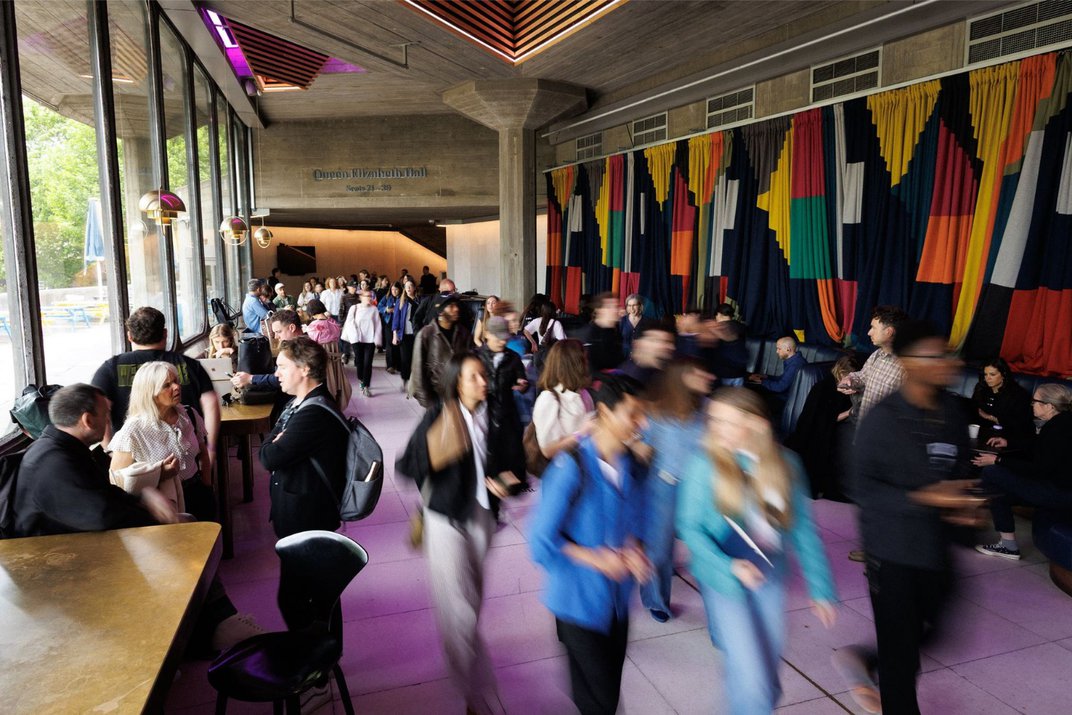
Photography by Scott Little for D&AD
A particular kind of exhaustion settles in after looking at contemporary visual identity. The landscape is governed by the attention economy, where the default setting for most brands is an unremitting sensory assault. Every brand asset screams for a sliver of human attention, and the instinct for many creative agencies is to scream back harder.
Yet a counter-narrative emerged during the D&AD Brand Reborn panel at the Tate Modern Starr Cinema. When anyone can pick up a digital tool and achieve a good standard of design, the traditional benchmarks of excellence begin to dissolve. The panel shifted away from evaluating visual polish and instead explored something far more elusive: a brand's core truth, its willingness to embrace friction, and the relationship between impact and storytelling.
Through these conversations, Melissa Baillanche, Alice Mourou, Lee Rolston, and moderator Clare Dowdy focused on the quiet confidence of craft and the simplistic power of brand truth, returning repeatedly to a more fundamental question: what actually makes a brand meaningful today? Looking at the most compelling work across three D&AD award categories: New Brand Identity, Brand Identity Refresh, and Brand Transformation the panel suggested that the future of branding may depend less on looking different and more on understanding what makes a brand genuinely distinctive.
Yet a counter-narrative emerged during the D&AD Brand Reborn panel at the Tate Modern Starr Cinema. When anyone can pick up a digital tool and achieve a good standard of design, the traditional benchmarks of excellence begin to dissolve. The panel shifted away from evaluating visual polish and instead explored something far more elusive: a brand's core truth, its willingness to embrace friction, and the relationship between impact and storytelling.
Through these conversations, Melissa Baillanche, Alice Mourou, Lee Rolston, and moderator Clare Dowdy focused on the quiet confidence of craft and the simplistic power of brand truth, returning repeatedly to a more fundamental question: what actually makes a brand meaningful today? Looking at the most compelling work across three D&AD award categories: New Brand Identity, Brand Identity Refresh, and Brand Transformation the panel suggested that the future of branding may depend less on looking different and more on understanding what makes a brand genuinely distinctive.
The Confidence of Stepping Back
The discussion opened with a deep dive into the Brand Refresh category. In a sea of high-octane entries, the jury was drawn to Sigma, a quiet, family-owned Japanese camera lens manufacturer.
Sigma’s refresh became a crucial case study for the morning. Rather than trying to out-manoeuvre the market with flashy graphic systems, the work leaned into what Lee Rolston termed ‘an understated assurance’. It relied on beautiful photography and possessed the rare discipline to know exactly when to step back, choosing to focus on a single, perfectly executed element.
When Clare Dowdy questioned whether such a muted approach was risky in a hyper-stimulated marketplace, the panel agreed that it felt true to who they were. It spoke directly to the precision and physical qualities of the product itself.
This reveals a truth about modern brand longevity. Restraint is no longer just an aesthetic choice. It is a declaration of operational health. When a brand embraces its genuine, core identity, it does not need to rely on graphic fireworks. The commercial impact of this restraint was immediate, as Sigma’s next product presale sold out in its entirety. In, considered, conscious restraint, Sigma demonstrated that the most effective branding isn't always the loudest. True assurance bypasses the frantic race for attention and goes straight to building long-term consumer trust.
The discussion opened with a deep dive into the Brand Refresh category. In a sea of high-octane entries, the jury was drawn to Sigma, a quiet, family-owned Japanese camera lens manufacturer.
Sigma’s refresh became a crucial case study for the morning. Rather than trying to out-manoeuvre the market with flashy graphic systems, the work leaned into what Lee Rolston termed ‘an understated assurance’. It relied on beautiful photography and possessed the rare discipline to know exactly when to step back, choosing to focus on a single, perfectly executed element.
When Clare Dowdy questioned whether such a muted approach was risky in a hyper-stimulated marketplace, the panel agreed that it felt true to who they were. It spoke directly to the precision and physical qualities of the product itself.
This reveals a truth about modern brand longevity. Restraint is no longer just an aesthetic choice. It is a declaration of operational health. When a brand embraces its genuine, core identity, it does not need to rely on graphic fireworks. The commercial impact of this restraint was immediate, as Sigma’s next product presale sold out in its entirety. In, considered, conscious restraint, Sigma demonstrated that the most effective branding isn't always the loudest. True assurance bypasses the frantic race for attention and goes straight to building long-term consumer trust.
‘We want to believe that branding is a quantifiable science rooted in data and predictable consumer behaviour. But even the most respected industry minds acknowledge that we are dealing with the subjective art of
narrative construction.’
narrative construction.’
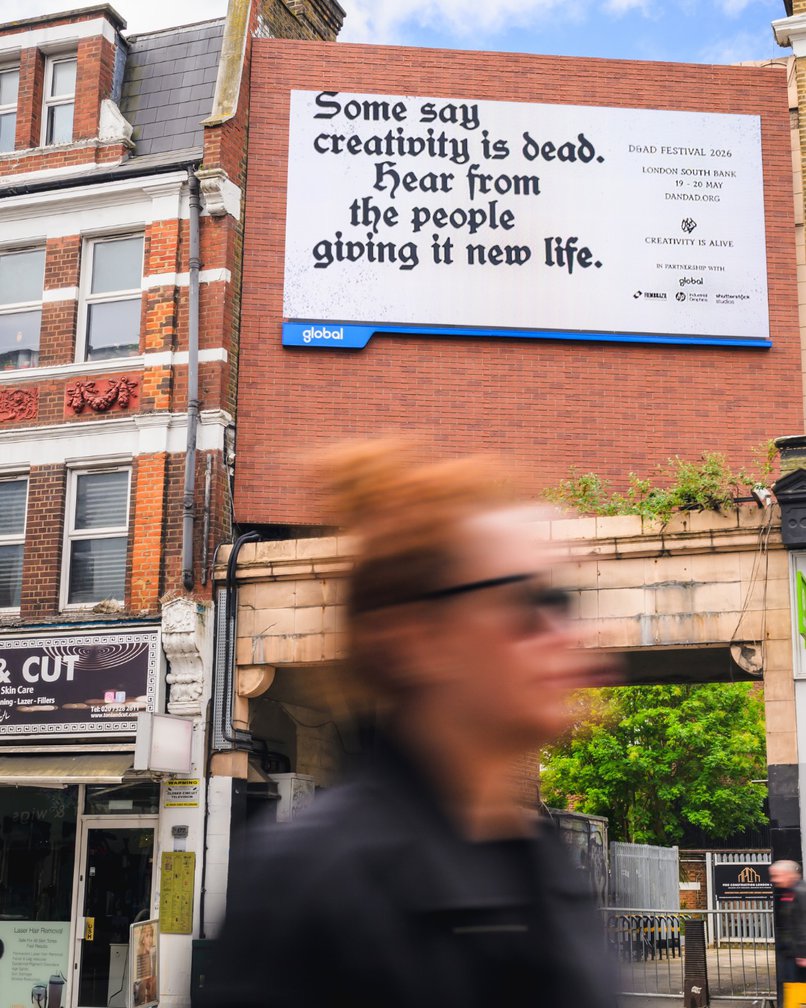
Photography by Scott Little & Alexis White for D&AD
The Contradiction of Transformation
The most intellectually turbulent portion of the panel centered on D&AD’s newest category, Brand Transformation.
Because the category is in its infancy, judges were tasked with the messy work of defining what transformation means in practice. To filter entries, the jury asked 4 key questions: What the piece of work was trying to achieve, how it did this, whether it had tangible impact, and what the negative consequence on survival would have been if the brand had not done this?
The benchmark example chosen by the jury was Saints Pères, a French heritage brand that shifted its business model from selling 100-euro porcelain plates, to producing high-end, porcelain olive oil bottles. By transforming the physical product while staying true to their material history, Saints Pères increased consumer time in store by 900 percent. Yet a fascinating tension lay beneath this case study. Rolston pointed out, that throughout judging, the jury had to weed out heavily biased entries that attributed massive business successes to a fresh coat of paint or a clever PR campaign. He rightly questioned the metrics, noting that if a brand claims a 100 percent increase in performance, but started from absolute zero, it is hard to know if that is a genuine, successful transformation.
Intrigued by this, I caught up with Rolston after the panel to ask if there is a specific duration that a brand transformation must sustain its success to be judged as truly successful. His response was illuminating. He noted that the data behind the entries varied, tracking anywhere from six months to three years, but concluded that it was less about the timeline and more about the intent of the brand.
To me, this felt like a pivot. To place such emphasis on systemic impact during the judging process, only to fall back on intent when questioned about long-term sustainability, felt contradictory. When I asked if it is therefore less about metrics and more about the mastery of the brand’s storytelling, Rolston paused and replied, it is.
This admission exposes the fiction at the heart of design criticism. We want to believe that branding is a quantifiable science rooted in data and predictable consumer behaviour. But even the most respected industry minds acknowledge that we are dealing with the subjective art of narrative construction. This focus on intent and storytelling can easily be distorted by personal bias, yet there is something strangely idealistic about it. It presents design not merely as a corporate tool to move numbers on a spreadsheet, but as an intentional act of storytelling that hopes to inspire.
The most intellectually turbulent portion of the panel centered on D&AD’s newest category, Brand Transformation.
Because the category is in its infancy, judges were tasked with the messy work of defining what transformation means in practice. To filter entries, the jury asked 4 key questions: What the piece of work was trying to achieve, how it did this, whether it had tangible impact, and what the negative consequence on survival would have been if the brand had not done this?
The benchmark example chosen by the jury was Saints Pères, a French heritage brand that shifted its business model from selling 100-euro porcelain plates, to producing high-end, porcelain olive oil bottles. By transforming the physical product while staying true to their material history, Saints Pères increased consumer time in store by 900 percent. Yet a fascinating tension lay beneath this case study. Rolston pointed out, that throughout judging, the jury had to weed out heavily biased entries that attributed massive business successes to a fresh coat of paint or a clever PR campaign. He rightly questioned the metrics, noting that if a brand claims a 100 percent increase in performance, but started from absolute zero, it is hard to know if that is a genuine, successful transformation.
Intrigued by this, I caught up with Rolston after the panel to ask if there is a specific duration that a brand transformation must sustain its success to be judged as truly successful. His response was illuminating. He noted that the data behind the entries varied, tracking anywhere from six months to three years, but concluded that it was less about the timeline and more about the intent of the brand.
To me, this felt like a pivot. To place such emphasis on systemic impact during the judging process, only to fall back on intent when questioned about long-term sustainability, felt contradictory. When I asked if it is therefore less about metrics and more about the mastery of the brand’s storytelling, Rolston paused and replied, it is.
This admission exposes the fiction at the heart of design criticism. We want to believe that branding is a quantifiable science rooted in data and predictable consumer behaviour. But even the most respected industry minds acknowledge that we are dealing with the subjective art of narrative construction. This focus on intent and storytelling can easily be distorted by personal bias, yet there is something strangely idealistic about it. It presents design not merely as a corporate tool to move numbers on a spreadsheet, but as an intentional act of storytelling that hopes to inspire.
The Friction of Cringe and the Comfort of Raw
As the conversation moved to the Brand Identity category, Alice Mourou launched a brilliant critique against what she termed ‘the cringe of total perfection’, reflecting that some entries were so polished, clean, and idealistic that there was nothing to react to. When design becomes too sterile, it loses its humanity.
In response, Mourou advocated for the raw and unfiltered, noting that imperfection invites active discussion, opinion, and genuine emotion. Dowdy extended this thought, wondering if this lack of friction might be the fault of creative agencies failing to push their clients out of their corporate comfort zones.
We see this friction illustrated by the skincare brand Evil Ray. In a category defined by soothing pastel gradients, minimalist sans-serifs, and clinical promises of eternal youth, Evil Ray introduced a jarring counter-narrative. Positioned defiantly as the official enemy of the sun, its graphics refused to sit comfortably within the traditional skincare aesthetics. It was weird, confrontational, and risky.
This sparked a vital debate around the utility of the bizarre. Reflecting on other submissions, Baillanche noted that one anonymous piece of work was so strange that people simply did not get it. This prompted the jury to ask whether the work did enough to resonate, or if it was simply an expression of the founder’s own perspective.
The line between a brilliant, rule-breaking subversion and a self-indulgent ego trip is incredibly thin. But as Mourou beautifully summarised, style does not matter because it is just a tool. Anyone can make something look superficially attractive. The real challenge is finding a brand truth that cannot be fabricated.
As the conversation moved to the Brand Identity category, Alice Mourou launched a brilliant critique against what she termed ‘the cringe of total perfection’, reflecting that some entries were so polished, clean, and idealistic that there was nothing to react to. When design becomes too sterile, it loses its humanity.
In response, Mourou advocated for the raw and unfiltered, noting that imperfection invites active discussion, opinion, and genuine emotion. Dowdy extended this thought, wondering if this lack of friction might be the fault of creative agencies failing to push their clients out of their corporate comfort zones.
We see this friction illustrated by the skincare brand Evil Ray. In a category defined by soothing pastel gradients, minimalist sans-serifs, and clinical promises of eternal youth, Evil Ray introduced a jarring counter-narrative. Positioned defiantly as the official enemy of the sun, its graphics refused to sit comfortably within the traditional skincare aesthetics. It was weird, confrontational, and risky.
This sparked a vital debate around the utility of the bizarre. Reflecting on other submissions, Baillanche noted that one anonymous piece of work was so strange that people simply did not get it. This prompted the jury to ask whether the work did enough to resonate, or if it was simply an expression of the founder’s own perspective.
The line between a brilliant, rule-breaking subversion and a self-indulgent ego trip is incredibly thin. But as Mourou beautifully summarised, style does not matter because it is just a tool. Anyone can make something look superficially attractive. The real challenge is finding a brand truth that cannot be fabricated.
‘If your brand voice can be seamlessly swapped with your competitors without anyone noticing, no amount of slick typography or trendy colour palettes will
save you.’
save you.’
Power, Tools, and the Democratic Baseline
Many entries, particularly in the Brand Identity space, are notoriously budget strapped. Brands are often forced to do a lot with very little, making it vital for judges to look at the strength of individual elements rather than demanding an all-encompassing, expensive ecosystem. A budget-strapped identity needs to convey a single, powerful idea with clarity, planting a seed that allows the brand to grow with time and budget.
This economic divide brought the panel to a highly contentious topic: Canva. While traditionalists in the design industry often view accessible applications with a mix of disdain, the panel took a refreshing, deeply empathetic stance. Ultimately, good design is about using the specific tools and language that are accessible and appropriate for your client. If you are working with a budget-conscious non-profit, forcing an expensive, hyper-complex software on them is not good design; it is institutional arrogance. The tool itself is neutral. What matters is the strategy driving it. As the speakers took turns summarising their philosophies, a unified manifesto for modern branding emerged.
Lee Rolston stated that the most valuable asset of a business is a brand, and if you have a strong brand, you have a core, without which you cannot execute a successful campaign. Alice Mourou emphasised talking to your clients about story, strategy, and reason before visuals. Melissa Baillanche took this a step further, suggesting that we need to be able to move beyond visuals, focussing on what a brand actually does so we can help clients have more meaningful conversations.
To illustrate this, Baillanche shared a brilliant, disarming exercise she uses in her own practice. She will take a client’s website, print out their very first line of copy alongside the first lines of their direct competitors, and ask the client if they can recognise their own messaging. It is a brutal, effective test of distinctiveness. If your brand voice can be seamlessly swapped with your competitors without anyone noticing, no amount of slick typography or trendy colour palettes will save you.
Many entries, particularly in the Brand Identity space, are notoriously budget strapped. Brands are often forced to do a lot with very little, making it vital for judges to look at the strength of individual elements rather than demanding an all-encompassing, expensive ecosystem. A budget-strapped identity needs to convey a single, powerful idea with clarity, planting a seed that allows the brand to grow with time and budget.
This economic divide brought the panel to a highly contentious topic: Canva. While traditionalists in the design industry often view accessible applications with a mix of disdain, the panel took a refreshing, deeply empathetic stance. Ultimately, good design is about using the specific tools and language that are accessible and appropriate for your client. If you are working with a budget-conscious non-profit, forcing an expensive, hyper-complex software on them is not good design; it is institutional arrogance. The tool itself is neutral. What matters is the strategy driving it. As the speakers took turns summarising their philosophies, a unified manifesto for modern branding emerged.
Lee Rolston stated that the most valuable asset of a business is a brand, and if you have a strong brand, you have a core, without which you cannot execute a successful campaign. Alice Mourou emphasised talking to your clients about story, strategy, and reason before visuals. Melissa Baillanche took this a step further, suggesting that we need to be able to move beyond visuals, focussing on what a brand actually does so we can help clients have more meaningful conversations.
To illustrate this, Baillanche shared a brilliant, disarming exercise she uses in her own practice. She will take a client’s website, print out their very first line of copy alongside the first lines of their direct competitors, and ask the client if they can recognise their own messaging. It is a brutal, effective test of distinctiveness. If your brand voice can be seamlessly swapped with your competitors without anyone noticing, no amount of slick typography or trendy colour palettes will save you.
The Irreplicable Core
When you refuse or fail to express your brand fully, you quiet its power. In a world saturated with aesthetic options, the ultimate strategic victory is not achieving flawless compliance with current design trends. The ultimate victory is achieving a state of true self-knowledge.
As the panel concluded, a final remark from Rolston lingered in the room, perfectly capturing the contemporary creative dilemma. He stated that the only thing a brand can be is itself, and therefore it cannot be replicated.
In an industry obsessed with automated efficiency, optimised algorithms, and aesthetic perfection, perhaps the most radical thing a brand can do is step back. It must embrace its raw, weird truths, and have the quiet confidence to tell a story that belongs entirely to itself. The future of the discipline belongs not to the most polished systems, but to the most authentic ones.
Lia Morse, Graphic Designer & Artworker
When you refuse or fail to express your brand fully, you quiet its power. In a world saturated with aesthetic options, the ultimate strategic victory is not achieving flawless compliance with current design trends. The ultimate victory is achieving a state of true self-knowledge.
As the panel concluded, a final remark from Rolston lingered in the room, perfectly capturing the contemporary creative dilemma. He stated that the only thing a brand can be is itself, and therefore it cannot be replicated.
In an industry obsessed with automated efficiency, optimised algorithms, and aesthetic perfection, perhaps the most radical thing a brand can do is step back. It must embrace its raw, weird truths, and have the quiet confidence to tell a story that belongs entirely to itself. The future of the discipline belongs not to the most polished systems, but to the most authentic ones.
Lia Morse, Graphic Designer & Artworker