article Why workplace art matters more than you think
Why workplace art matters more than you think
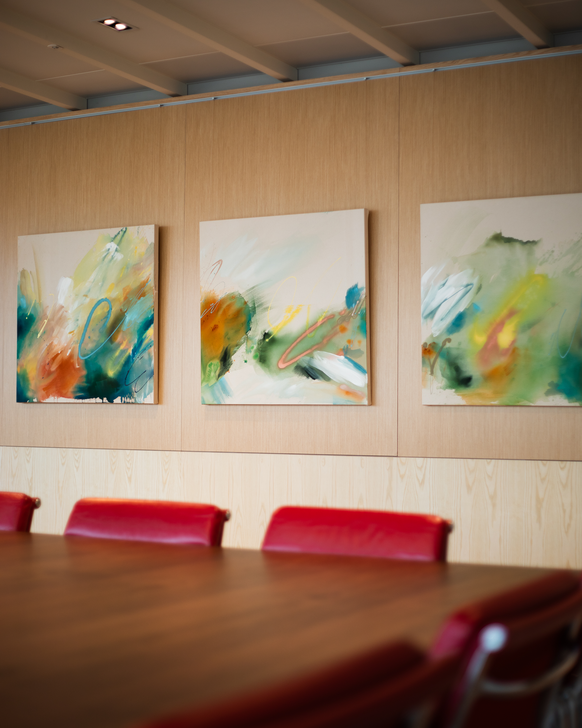
Artiq's Angel Lin on why workplace art matters more than most realise, and how activation turns it into a catalyst for connection and belonging.
Artiq's Angel Lin on why workplace art matters more than most realise, and how activation turns it into a catalyst for connection and belonging.
Recently, I met up with a few friends for drinks near the office. Since I started at Artiq a few months ago, conversation immediately revolved around what the company does and what my new role involves. My inner sales voice prompted me to seize the potential opportunity, and so I found myself asking these friends how they’re finding their working environment and whether they have artworks in their offices.
I was met with a long pause and answers along the lines of “I don’t know, do we have any art in the office?” or “Not sure, we might have some posters with inspirational text on them.”
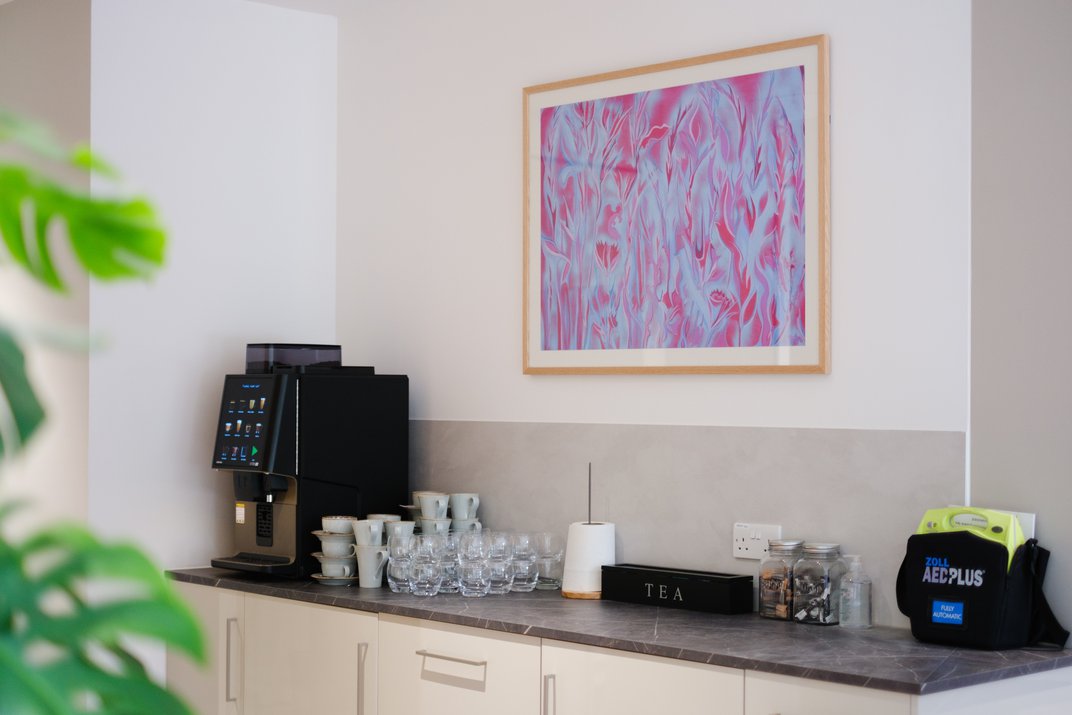
After almost six months at Artiq, I’ve encountered this response time and time again from friends working in office environments. Even where art has been intentionally curated, it has often faded into the background, something people walk past every day without ever engaging with it. Often the issue isn’t that there is no art, but that the true value of the artworks has not been activated.
The value of art lies not only in being displayed but in its ability to spark dialogue and encourage connection. Over the years, attending gallery exhibitions and art fairs, I have experienced this firsthand, often finding myself engaged in conversations with strangers about how a painting has triggered fond memories, or debating our interpretations of what the artist was trying to say.
It’s not difficult to foster discussion and engagement around art within an art world context, but in a non-traditional art space such as the corporate workplace, we need to be more intentional about how we activate the art around us. This matters because our relationship with the workplace environment has a measurable impact on how connected we feel to the organisations we work for.
I was met with a long pause and answers along the lines of “I don’t know, do we have any art in the office?” or “Not sure, we might have some posters with inspirational text on them.”
After almost six months at Artiq, I’ve encountered this response time and time again from friends working in office environments. Even where art has been intentionally curated, it has often faded into the background, something people walk past every day without ever engaging with it. Often the issue isn’t that there is no art, but that the true value of the artworks has not been activated.
The value of art lies not only in being displayed but in its ability to spark dialogue and encourage connection. Over the years, attending gallery exhibitions and art fairs, I have experienced this firsthand, often finding myself engaged in conversations with strangers about how a painting has triggered fond memories, or debating our interpretations of what the artist was trying to say.
It’s not difficult to foster discussion and engagement around art within an art world context, but in a non-traditional art space such as the corporate workplace, we need to be more intentional about how we activate the art around us. This matters because our relationship with the workplace environment has a measurable impact on how connected we feel to the organisations we work for.
‘Creating meaningful opportunities for discussion and shared experiences is therefore not just a nice-to-have, it is central to how organisations build community.’
According to Gensler’s Global Workplace Survey, 90% of employees who feel positive about their workplace say they are proud to work for their company, compared to just 47% of employees who feel disconnected from their environment. The need for greater connection in the workplace is particularly relevant today. EY’s Belonging Barometer found that 75% of employees have experienced exclusion at work, while 56% feel unable or reluctant to share aspects of their identity in the workplace. At the same time, 41% identified work as one of their most important sources of belonging outside of home.
Creating meaningful opportunities for discussion and shared experiences is therefore not just a nice-to-have, it is central to how organisations build community.
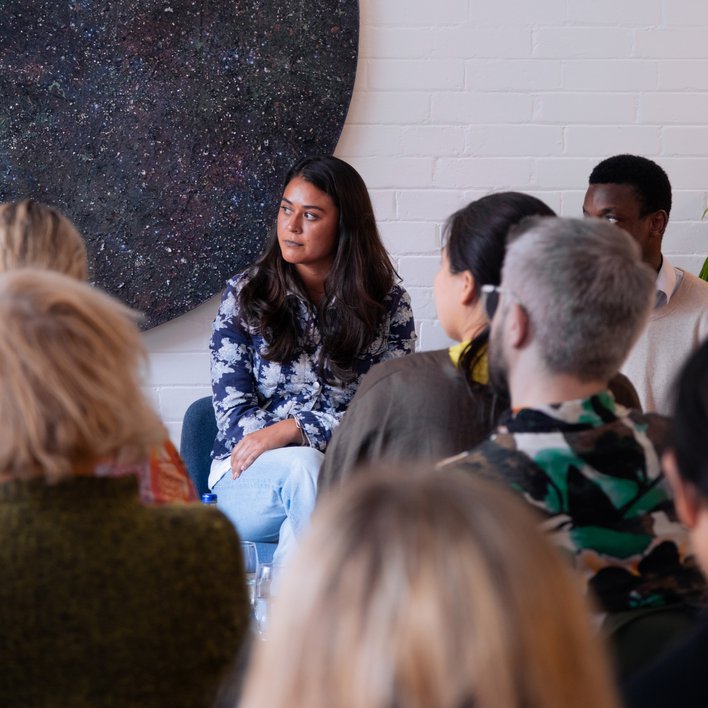
Art activation in the workplace can take a variety of forms, including events such as talks and discussion panels. At Artiq, these are often led by a dedicated curator with extensive knowledge of the collection. Sometimes, they’re accompanied by the artists themselves to provide even deeper storytelling.
Activations can also be much more interactive and hands-on. We recently hosted an art voting event in the lobby of a major office building in the city. Employees from multiple companies were given the opportunity to vote for their favourite artist and to select one of their sculptures to replace the current installation. I was surprised to find that a few participants were unaware of the current sculpture installation, even though it was 2 metres tall.
It was also interesting to overhear some participants debating which artist’s work would best fit the space. One participant justified their vote by explaining that they liked how the artist brought natural elements into the office space, creating a sense of tranquillity and relaxation after a stressful day. Another participant said they loved the incorporation of technology and LED lights in another artist’s practice. Some of the participants also shared their own creative practices outside of their 9-to-5 jobs.
Creating meaningful opportunities for discussion and shared experiences is therefore not just a nice-to-have, it is central to how organisations build community.
Art activation in the workplace can take a variety of forms, including events such as talks and discussion panels. At Artiq, these are often led by a dedicated curator with extensive knowledge of the collection. Sometimes, they’re accompanied by the artists themselves to provide even deeper storytelling.
Activations can also be much more interactive and hands-on. We recently hosted an art voting event in the lobby of a major office building in the city. Employees from multiple companies were given the opportunity to vote for their favourite artist and to select one of their sculptures to replace the current installation. I was surprised to find that a few participants were unaware of the current sculpture installation, even though it was 2 metres tall.
It was also interesting to overhear some participants debating which artist’s work would best fit the space. One participant justified their vote by explaining that they liked how the artist brought natural elements into the office space, creating a sense of tranquillity and relaxation after a stressful day. Another participant said they loved the incorporation of technology and LED lights in another artist’s practice. Some of the participants also shared their own creative practices outside of their 9-to-5 jobs.
‘The artworks had become a catalyst for discussion encouraging colleagues and strangers to share perspectives, reveal personal experiences, and engage with one another in a way they might not otherwise have done’
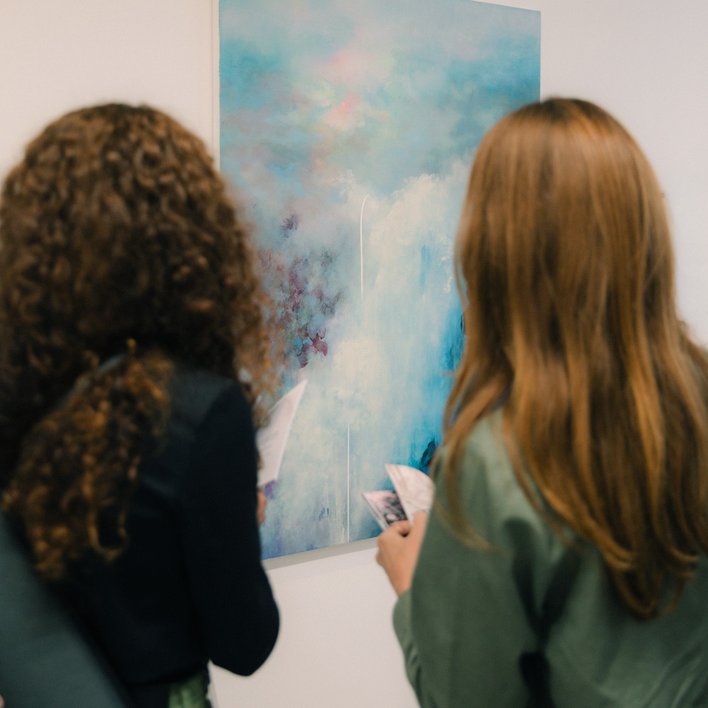
What struck me most was not which artist ultimately received the most votes, but the conversations and exchanges of opinions that took place throughout the process. The artworks had become a catalyst for discussion encouraging colleagues and strangers to share perspectives, reveal personal experiences, and engage with one another in a way they might not otherwise have done.
In that moment, art was no longer simply something to look at; it became something to participate in. It was fostering connection, belonging and engagement. Given that three-quarters of the workforce report having experienced exclusion in the workplace (EY Belonging Barometer), these seemingly small moments of interaction can have a much greater impact than we realise.
This is the true potential of art in the workplace. When thoughtfully activated, it can become a tool for building culture, encouraging belonging, and creating environments where people feel engaged and valued. At Artiq, our role is not only to bring exceptional art into workplaces, but to unlock its ability to inspire conversation, strengthen communities, and transform the everyday experience of work.
Angel Lin, Head of Art Collections
In that moment, art was no longer simply something to look at; it became something to participate in. It was fostering connection, belonging and engagement. Given that three-quarters of the workforce report having experienced exclusion in the workplace (EY Belonging Barometer), these seemingly small moments of interaction can have a much greater impact than we realise.
This is the true potential of art in the workplace. When thoughtfully activated, it can become a tool for building culture, encouraging belonging, and creating environments where people feel engaged and valued. At Artiq, our role is not only to bring exceptional art into workplaces, but to unlock its ability to inspire conversation, strengthen communities, and transform the everyday experience of work.
Angel Lin, Head of Art Collections