article In conversation with
James Grossman
In conversation with
James Grossman
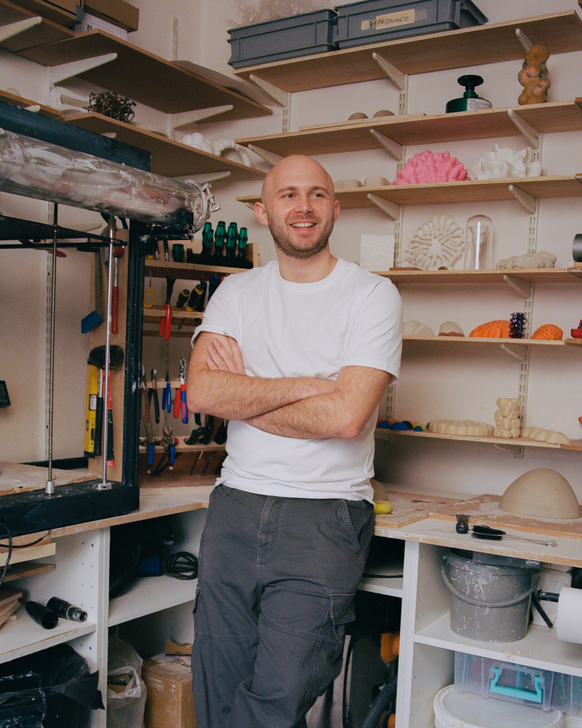
London-based sculptor James Grossman discusses
material experimentation, digital processes, and the
organic systems that shape his tactile sculptures.
material experimentation, digital processes, and the
organic systems that shape his tactile sculptures.
London-based sculptor James Grossman discusses
material experimentation, digital processes, and the
organic systems that shape his tactile sculptures.
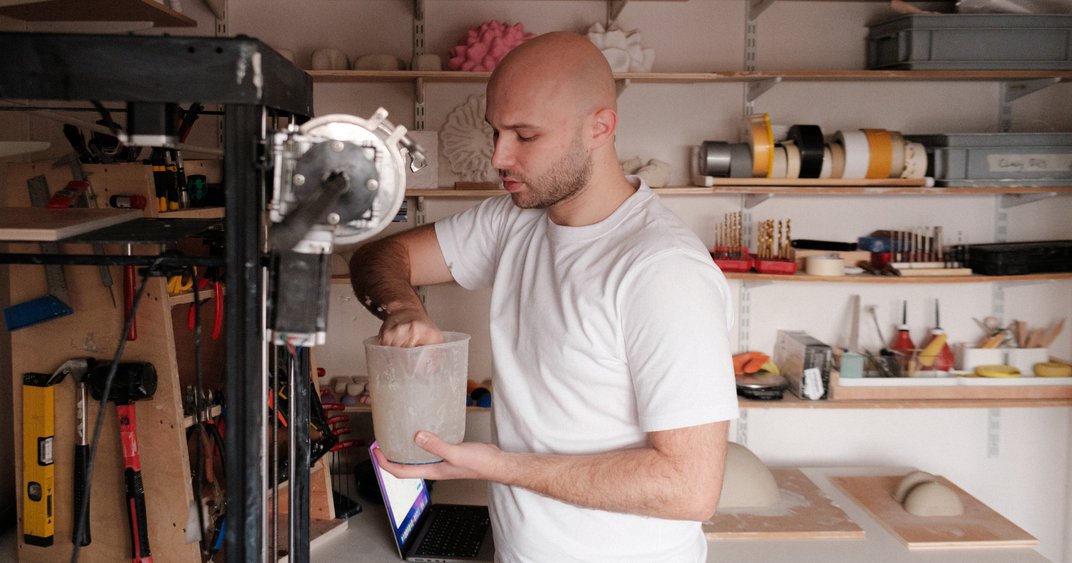
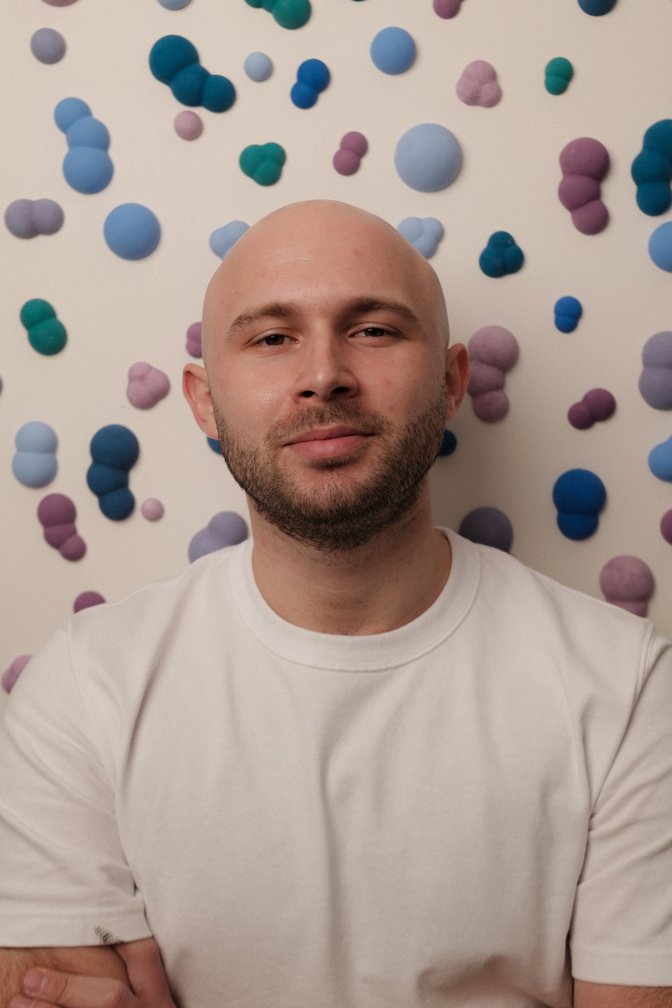
James Grossman is a London-based sculptor exploring the intersection of nature and emerging technologies. Drawing on digital simulation and organic structures, he creates tactile installations that suspend motion, translating the hidden patterns and rhythms of living systems into speculative sculptural environments. Currently installed within Artiq’s collection for a major global law firm we sat down with James to discover more about the processes behind his otherworldly forms.
Artiq Sustainability and circularity seem embedded in your practice. How has that training rooted and shaped your decision making when it comes to considering your materials?
James My choice of materials comes from a place of reuse, experimentation and play. How do these material properties of reclaimed clay, algae ink, or recycled wood interact with their surrounding nature? The investigative and speculative mindset at the core of my practice drives a fascination with material exploration, pushing the material to its limit and discovering what lies beyond it.
There's an inherent unknown that creates a beautiful tension between chaos and order, whether that's the unexpected deforming and cracking in recycled clay bodies, or earth's inscriptions left on wood affected by nature's movements. Embracing these qualities is what makes the work feel simultaneously natural and crafted. It is the process of working with these materials that creates a symbiotic relationship between artist and material.
Artiq How do you navigate the tension between the controlled engineered processes of 3D printing and the use of plaster moulds with your exploration of organic systems?
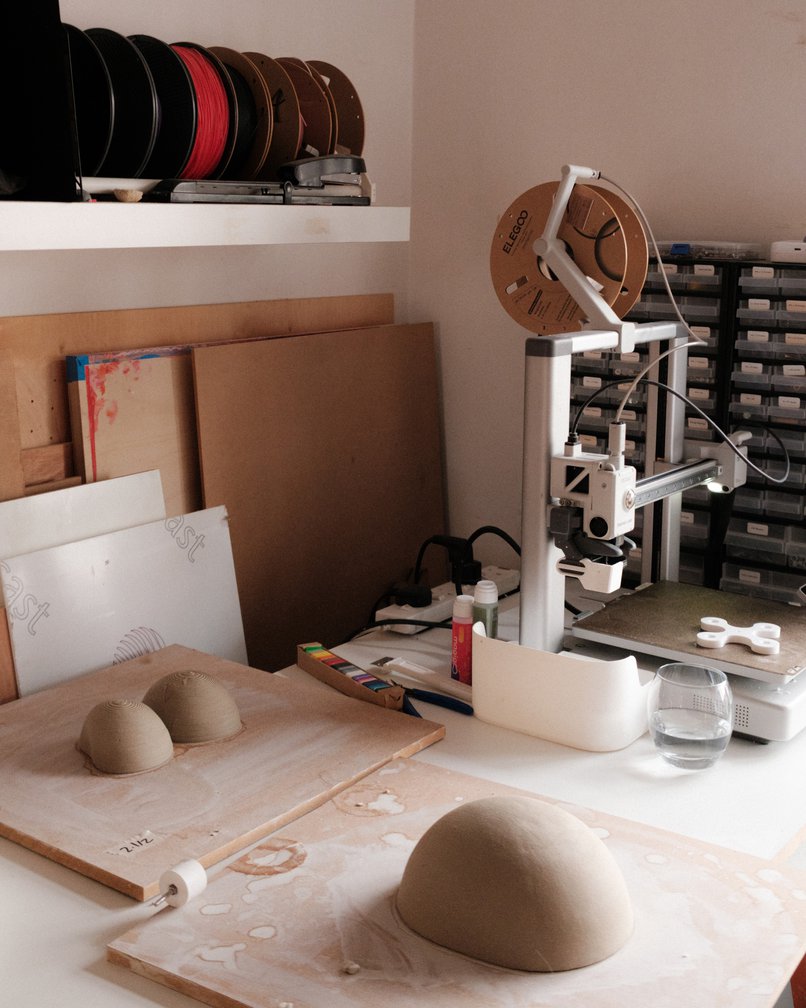
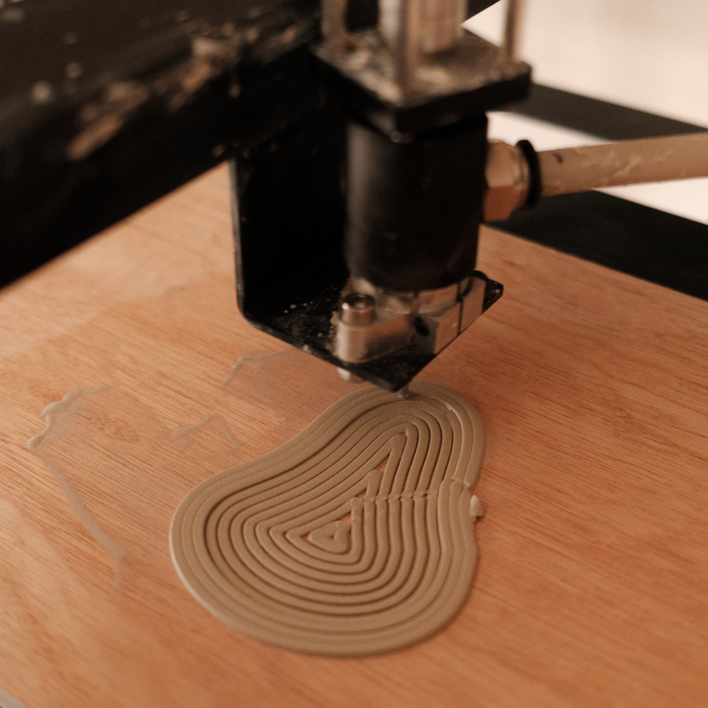
James The process of 3D printing creates accurate, rigid forms and high precision parts, which are ideal for scenarios where I need to achieve high tolerances in order for pieces to slot together. But experimenting with its parameters is just as valuable, especially when using a pliable material like clay, where its free flowing and unpredictable qualities can result in mistakes and fluid outcomes. What I find beautiful is playing with this order and chaos, especially when it comes to clay printing, small misprints can create marvellous growths and collapses within the work that could be seen as destructive to some or beautiful natural occurrences to others.
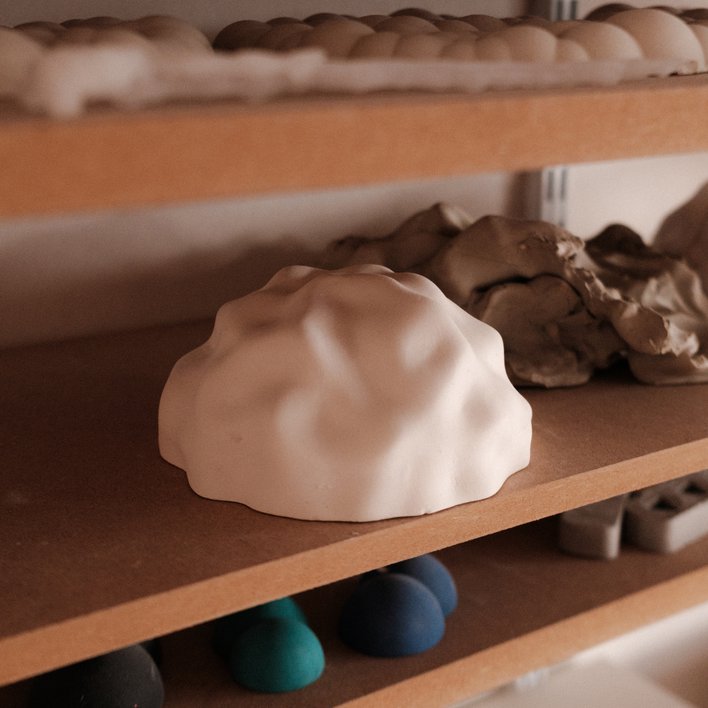
Plaster moulds come into their own when dealing with complex geometries, the kind of convoluted, ever-growing and evolving forms found in nature. In its liquid state, plaster captures minute detail, fingerprints, hairs, and surface texture, preserving qualities that other processes would lose.
James My choice of materials comes from a place of reuse, experimentation and play. How do these material properties of reclaimed clay, algae ink, or recycled wood interact with their surrounding nature? The investigative and speculative mindset at the core of my practice drives a fascination with material exploration, pushing the material to its limit and discovering what lies beyond it.
There's an inherent unknown that creates a beautiful tension between chaos and order, whether that's the unexpected deforming and cracking in recycled clay bodies, or earth's inscriptions left on wood affected by nature's movements. Embracing these qualities is what makes the work feel simultaneously natural and crafted. It is the process of working with these materials that creates a symbiotic relationship between artist and material.
Artiq How do you navigate the tension between the controlled engineered processes of 3D printing and the use of plaster moulds with your exploration of organic systems?
James The process of 3D printing creates accurate, rigid forms and high precision parts, which are ideal for scenarios where I need to achieve high tolerances in order for pieces to slot together. But experimenting with its parameters is just as valuable, especially when using a pliable material like clay, where its free flowing and unpredictable qualities can result in mistakes and fluid outcomes. What I find beautiful is playing with this order and chaos, especially when it comes to clay printing, small misprints can create marvellous growths and collapses within the work that could be seen as destructive to some or beautiful natural occurrences to others.
Plaster moulds come into their own when dealing with complex geometries, the kind of convoluted, ever-growing and evolving forms found in nature. In its liquid state, plaster captures minute detail, fingerprints, hairs, and surface texture, preserving qualities that other processes would lose.
‘Working with materials that shift between fluid and solid states is central to how I explore form and movement.’
James Grossman
Artiq What sources, either visual, scientific, or material, do you return to when developing new work? How do these references translate into your final pieces?
James Much of my work originates from living organisms, deep-sea creatures like nudibranchs, or growth structures such as mycelium and slime mould. Although these life forms might seem unsettling on the surface, they are remarkably beautiful and intelligent, and I think it's important to approach them with curiosity and appreciation.
The emergence of new work typically begins with a series of animations I create, simulating movement found in nature - growths, divisions or biological phenomena. Extracting and collaging these freeze frames of movement is how my works come to life. It's this process that bridges the digital and the natural, translating living systems into physical forms that carry the energy and logic of the organisms that inspired them.
Artiq You work with materials which shift from fluid to solid states such as clay and 3D printing. What role does this transformative process play in your finished work?
James Working with materials that shift between fluid and solid states is central to how I explore form and movement. Soft, flowing materials like clay allow me to create undulating forms as well as an ability to engage with the work long after the initial creation through editing, refining, and responding to the material days later. This extended window of intervention means the work is never truly fixed until I decide it is, which keeps the process feeling collaborative and alive.
This mirrors how nature itself builds form, much like crystals growing from mineral-rich water or stalactites and stalagmites accumulating drop by drop over centuries, many of my materials begin their life as a liquid before being layered over time. Whether that be layers of clay slip, plaster, melted plastic, or bronze, each is poured, shaped, or cast before surrendering to its solid state.
James Much of my work originates from living organisms, deep-sea creatures like nudibranchs, or growth structures such as mycelium and slime mould. Although these life forms might seem unsettling on the surface, they are remarkably beautiful and intelligent, and I think it's important to approach them with curiosity and appreciation.
The emergence of new work typically begins with a series of animations I create, simulating movement found in nature - growths, divisions or biological phenomena. Extracting and collaging these freeze frames of movement is how my works come to life. It's this process that bridges the digital and the natural, translating living systems into physical forms that carry the energy and logic of the organisms that inspired them.
Artiq You work with materials which shift from fluid to solid states such as clay and 3D printing. What role does this transformative process play in your finished work?
James Working with materials that shift between fluid and solid states is central to how I explore form and movement. Soft, flowing materials like clay allow me to create undulating forms as well as an ability to engage with the work long after the initial creation through editing, refining, and responding to the material days later. This extended window of intervention means the work is never truly fixed until I decide it is, which keeps the process feeling collaborative and alive.
This mirrors how nature itself builds form, much like crystals growing from mineral-rich water or stalactites and stalagmites accumulating drop by drop over centuries, many of my materials begin their life as a liquid before being layered over time. Whether that be layers of clay slip, plaster, melted plastic, or bronze, each is poured, shaped, or cast before surrendering to its solid state.
Artiq How do you think of texture as both a visual and tactile language in your work?
James Tactility is fundamental to my background in product design, where surface and texture guide the user to communicate function. In my art practice, texture shifts into a different kind of language, one of intrigue, beauty, and sensory invitation.
Touch is something we innately need, and there are countless well-being benefits tied to it. By creating forms that appear soft, squishy, and tactile, I want to spark that instinctive desire to reach out and make contact. There's something deeply human about being drawn to a surface that looks alive.
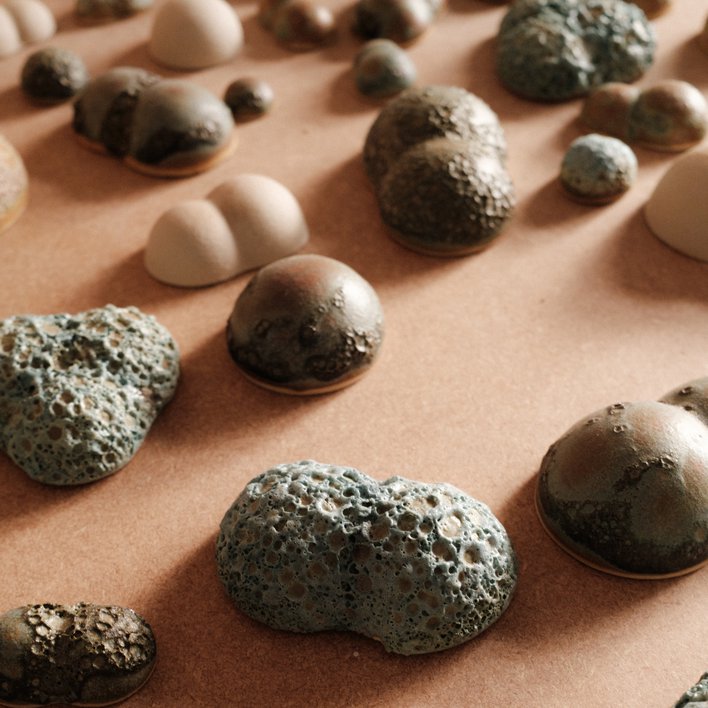
These tactile qualities also echo the natural world. I draw from the texture of coral, sea creatures, or cellular formations. Texture becomes a way of embedding the organic directly into the work, connecting the viewer to nature through the body.
Artiq Do you have any upcoming projects that you would like to share with us?
James I’m currently working with artist Leonard Maassen as Production Designer on Cryokinetica. The project explores more than human agency and long-form environmental collaboration through a sculptural time capsule embedded within a glacier in the European Alps. I’m developing the physical structure that will hold records of imagined environmental futures, placing them into material exchange with the glacier’s movement over time.
I'm deep in the process with a new ceramic series. After months of refining through trial and error and making small maquettes along the way, I have now finished a new work assembled out of 12 fragments; all that's left to do is to glaze it. I am currently developing new glazes for the work to create a layered earthy finish, and where that exploration leads is part of the process.
There are also a number of other interesting projects in the works that I can't wait to share, but I'll save those for when they're ready to be revealed.
James Tactility is fundamental to my background in product design, where surface and texture guide the user to communicate function. In my art practice, texture shifts into a different kind of language, one of intrigue, beauty, and sensory invitation.
Touch is something we innately need, and there are countless well-being benefits tied to it. By creating forms that appear soft, squishy, and tactile, I want to spark that instinctive desire to reach out and make contact. There's something deeply human about being drawn to a surface that looks alive.
These tactile qualities also echo the natural world. I draw from the texture of coral, sea creatures, or cellular formations. Texture becomes a way of embedding the organic directly into the work, connecting the viewer to nature through the body.
Artiq Do you have any upcoming projects that you would like to share with us?
James I’m currently working with artist Leonard Maassen as Production Designer on Cryokinetica. The project explores more than human agency and long-form environmental collaboration through a sculptural time capsule embedded within a glacier in the European Alps. I’m developing the physical structure that will hold records of imagined environmental futures, placing them into material exchange with the glacier’s movement over time.
I'm deep in the process with a new ceramic series. After months of refining through trial and error and making small maquettes along the way, I have now finished a new work assembled out of 12 fragments; all that's left to do is to glaze it. I am currently developing new glazes for the work to create a layered earthy finish, and where that exploration leads is part of the process.
There are also a number of other interesting projects in the works that I can't wait to share, but I'll save those for when they're ready to be revealed.
‘There's something deeply human about being drawn to a surface that looks alive.’
James Grossman
Want to be part of our network? Submit your work and join Artiq's growing community of artists.