article In conversation with
Lara Sayegh
In conversation with
Lara Sayegh
In conversation with Lara Sayegh
about surfing, abstraction and the
physical rhythm of painting at scale.
about surfing, abstraction and the
physical rhythm of painting at scale.
In conversation with Lara Sayegh
about surfing, abstraction and the
physical rhythm of painting at scale.
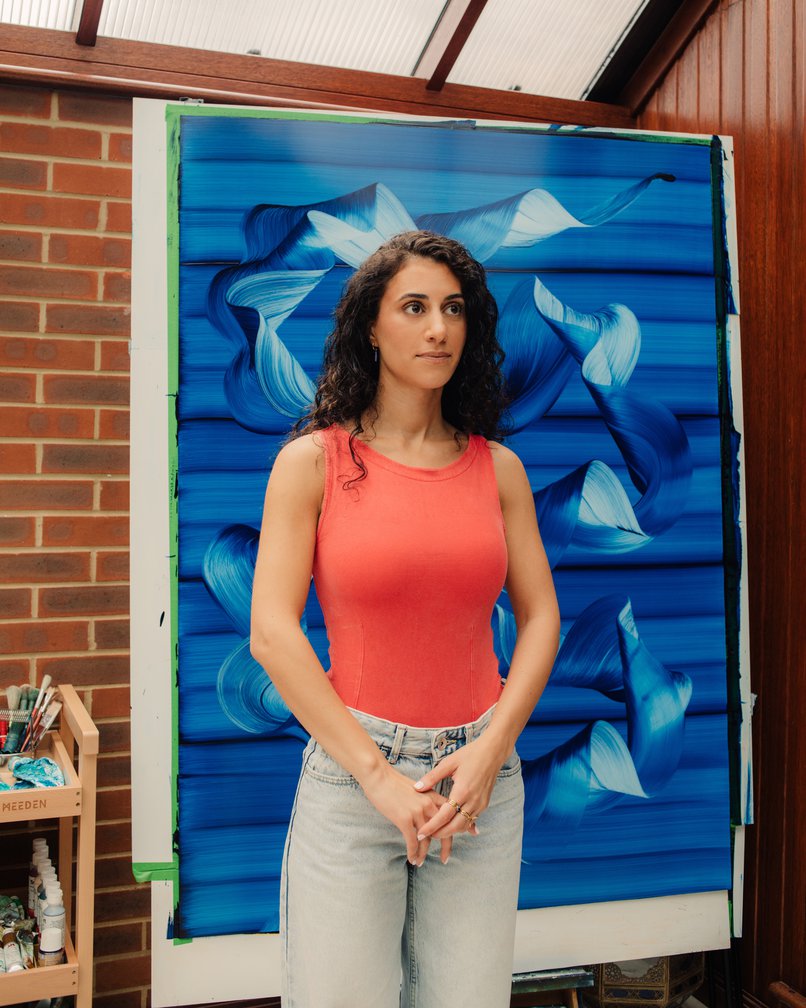
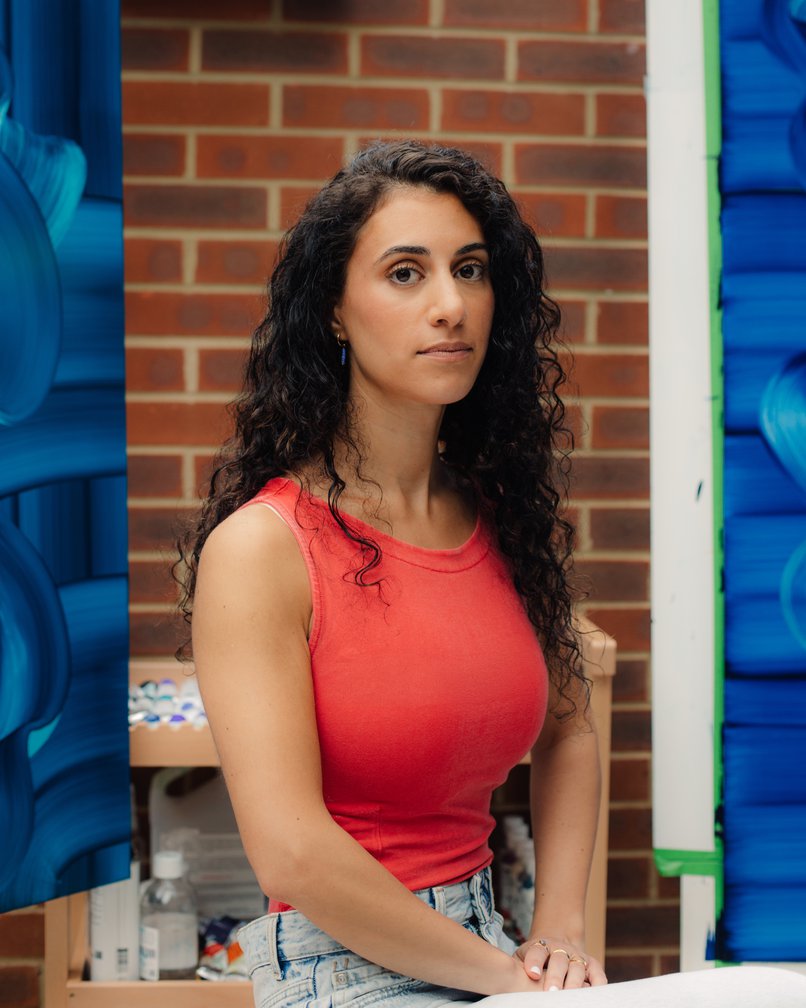
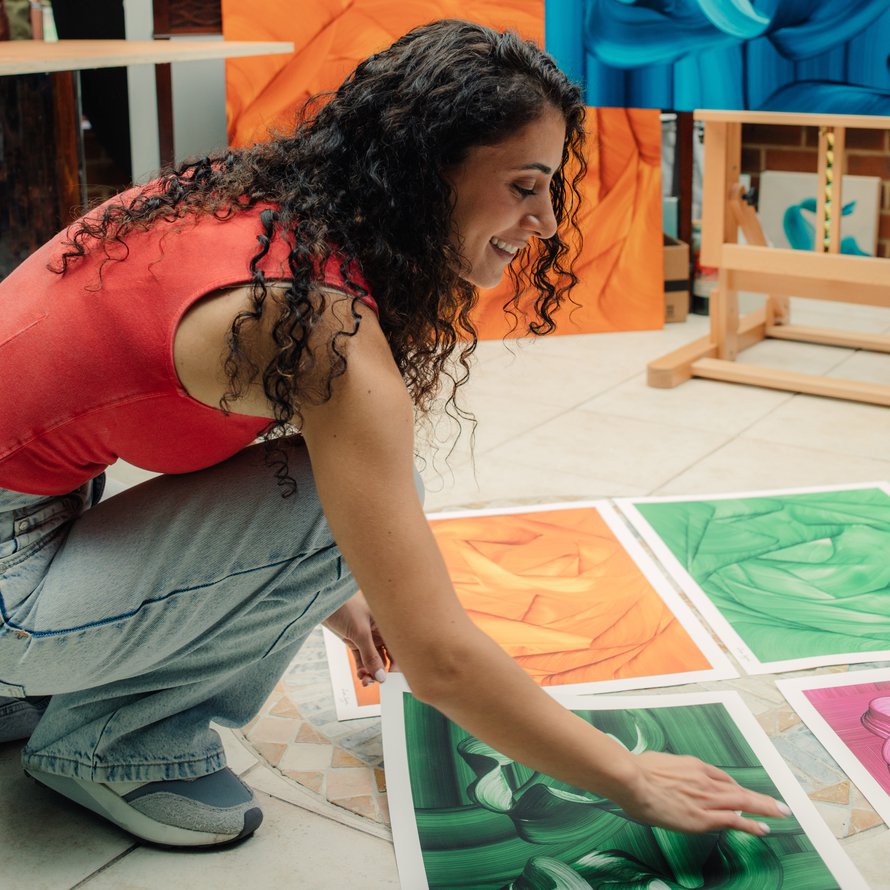
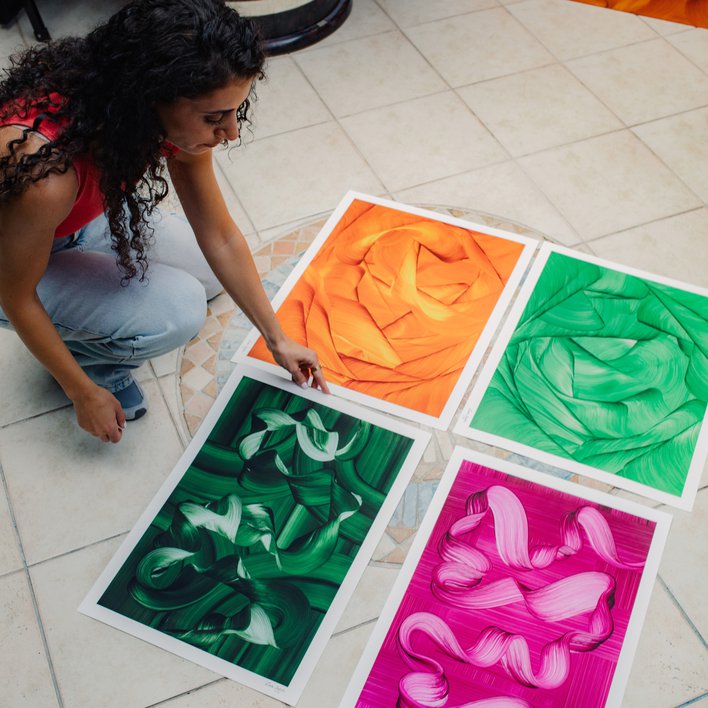
Working in oil, London-based artist Lara Sayegh creates large-scale abstract paintings informed by her close relationship with the sea. Through layered colour and sweeping gestures, her work explores the rhythm of waves, shifting currents and underwater light, and is featured in Artiq’s collection for Convene.
We spoke with Lara about how surfing has influenced her approach to painting, the role of chance and physical movement in her process, and how colour can carry both the qualities of the natural world and a sense of emotion.
We spoke with Lara about how surfing has influenced her approach to painting, the role of chance and physical movement in her process, and how colour can carry both the qualities of the natural world and a sense of emotion.
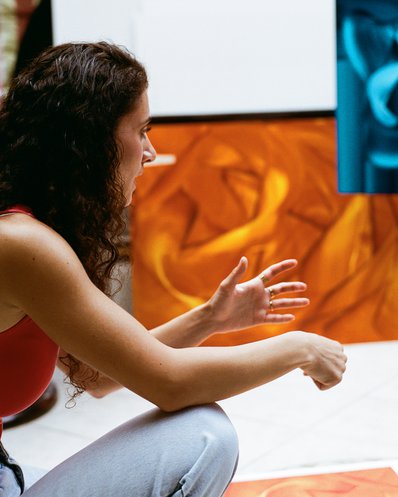
Your paintings are closely connected to your experiences in the sea. How did this relationship with water first find its way into your practice, and how do you translate those physical and sensory experiences onto the canvas?
My connection with the sea grew through surfing and spending time in the water, and that connection naturally found its way into my practice. Surfing has taught me about presence and working with natural forces rather than trying to control them. Over time, I began bringing that same mindset into painting.
What stays with me is often a sensation: the pull of a current, the quiet beyond the breaking waves, or the way light shifts beneath the surface. I translate those memories through colour, gesture, and the movement of paint, allowing sweeping marks to suggest the sea’s energy and depth.
I try to stay open to the direction the materials take. Unexpected brushstroke marks often shape the painting, and that process feels connected to being in the water: responding, adapting, and learning when to let go.
What is it about this combination of material and medium that supports your exploration of light and depth? How do you balance spontaneity and precision as a painting develops?
Oil paint remains at the centre of my practice because of its richness and versatility. I enjoy how it moves across the surface, allowing me to build depth through layers of colour and introduce thicker, textured marks. I’m interested in how form emerges through that process, with softer edges suggesting depth and more defined gestures bringing a sense of movement. The texture also catches the light, adding another dimension to the surface.
Because oil dries slowly, I have time to experiment, reflect, and make changes as the painting develops. The early stages are instinctive and driven by gesture. I stay open to accidents, as they often take the work somewhere I hadn’t anticipated. As the painting develops, I slow down, stepping back to consider composition, colour relationships, and balance. I become more deliberate about what to keep, what to soften, and where to let the surface breathe. For me, it’s about knowing when to refine something and when to trust what has already happened.
‘Over time, painting has taught me that colour is something we feel as much as something we see, and that emotional connection guides how I use it.’
- Lara Sayegh
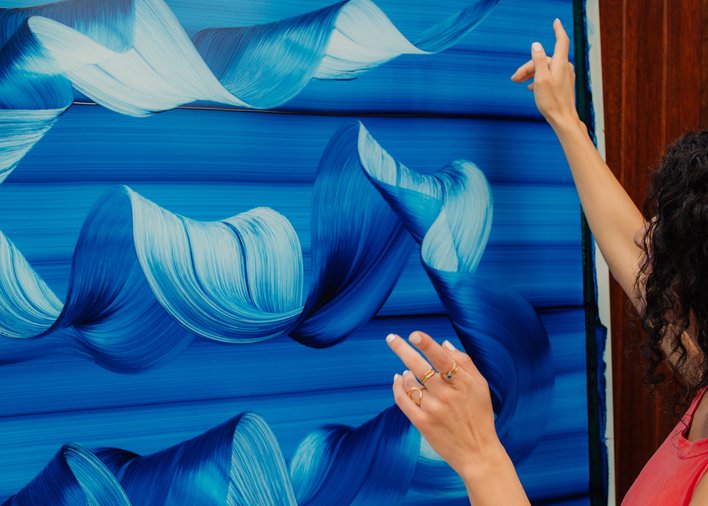
Your work evokes the rhythm of waves, shifting currents and underwater light without depicting the landscape directly. What draws you to abstraction as a way of responding to the natural world, and what does it allow you to express that a more literal approach might not?
I was drawn to abstraction because it gives me the freedom to explore form, colour, and movement without needing to describe a landscape directly. I’m interested in how shapes emerge through gesture and how their relationships can suggest the rhythm of water or the feeling of being immersed in it. When I paint the ocean, I’m responding to its energy and the tension between beauty and fragility.
Abstraction also leaves room for viewers to bring their own memories, emotions, and interpretations. There is a humility in sharing my inspiration without deciding exactly what someone should see. In many ways, it feels like co-authoring a piece with the audience.
That openness carries into my process. I can follow unexpected marks without a fixed outcome, allowing the painting to develop through experimentation. It has taught me to move beyond perfectionism and trust the act of creating.
Gesture and movement are central to your process, with sweeping brushstrokes that push and pull the paint? How does the physical act of painting, particularly at a larger scale, shape the way you work and the outcome of a piece?
Painting is a physical act for me. I often work on a large scale because it allows me to move physically around the surface and respond instinctively as the painting evolves. A sweeping brushstroke involves more than my hand; it carries the movement of my arm and body. That physical energy becomes part of the work.
There is a rhythm to the process: pushing and pulling the paint, moving closer, then stepping back to see how the gestures relate to one another. I’m aware of the composition, but I also allow the materials to interrupt my intentions.
Accidents and unexpected results play a significant role, often taking a piece in a direction I hadn’t anticipated. For me, the painting is as much about that process as the subject itself. The act of making becomes inseparable from the final work.
‘For me, it's about knowing when to refine something and when to trust what has already happened.’
- Lara Sayegh
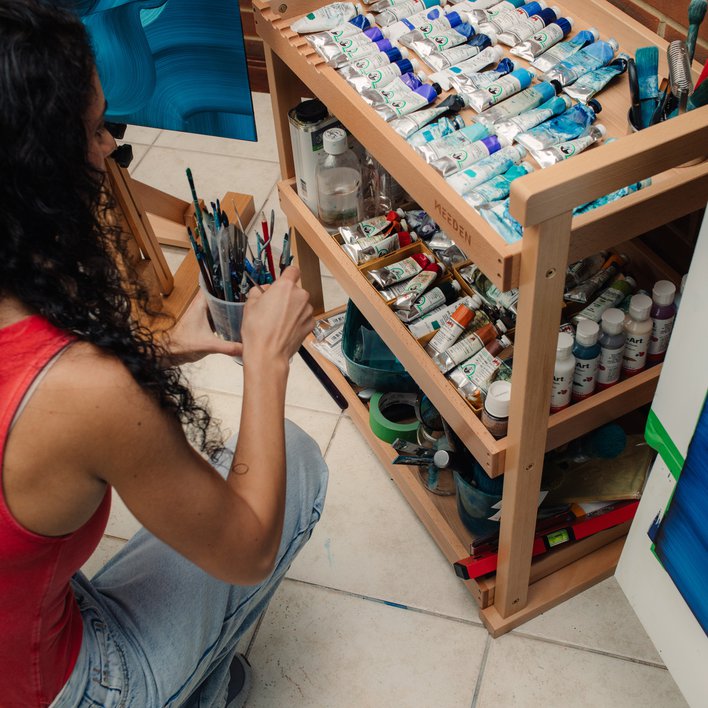
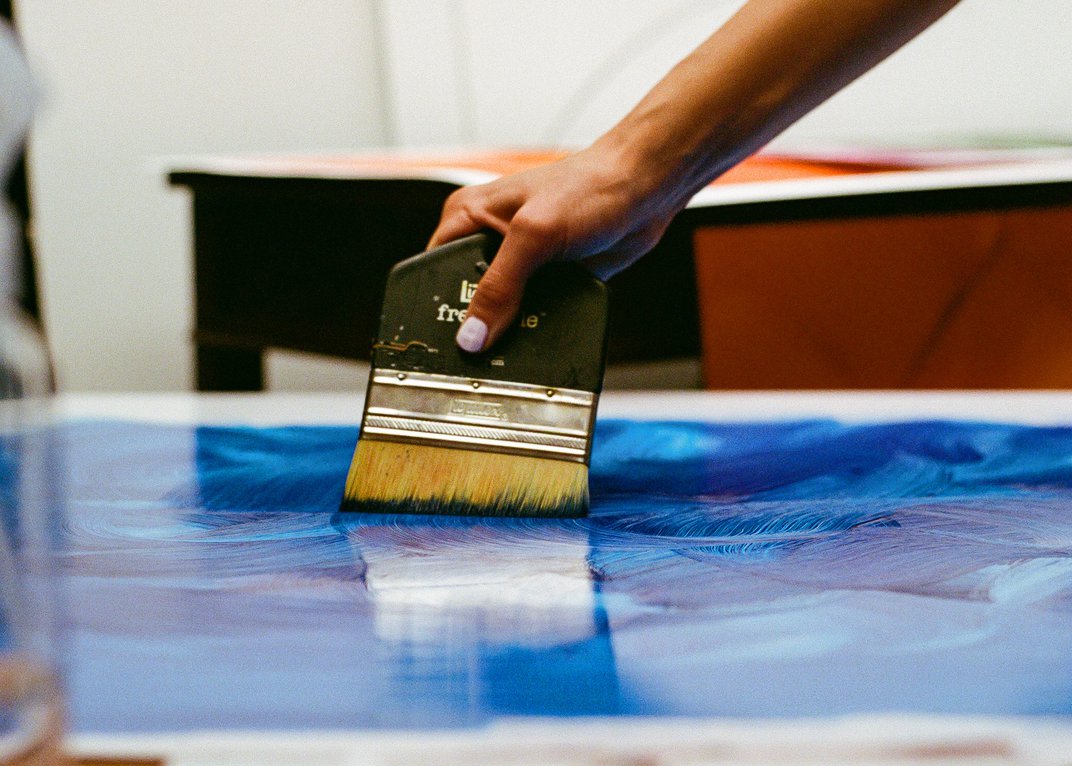
Colour plays an important role in creating a sense of light, depth and movement within your paintings. Where do you draw inspiration for your palettes, and how do you approach colour when working with both sheer and denser layers of paint?
Colour plays a particularly important role in my work —the changing seasons, shifting light, weather patterns, all find their way into my palette. Blue is something I return to often because it holds so many feelings for me, from calm and mystery to vulnerability and strength. Over time, painting has taught me that colour is something we feel as much as something we see, and that emotional connection guides how I use it.
When I build layers, I’m interested in how colours interact. Sheer layers allow earlier marks to show through, creating light and depth, while denser paint brings texture, weight, and definition. I work intuitively, responding to what happens on the surface and how the surrounding colours affect it. Their relationship gives the painting its rhythm, creating quieter areas alongside moments of greater energy.
Do you have any upcoming projects or practice developments you would like to share with us?
I’m currently working on a new collection that builds on my fascination with the ocean and the natural world. I’m giving myself space to experiment with colour, texture, and gesture, and enjoying seeing how the paintings connect as they evolve.
Alongside this, I’m continuing to work on commissions. I love understanding what someone responds to in my work and creating a painting that will become part of their home and everyday life.
I’m also exploring opportunities to take part in artist residencies and art fairs. I’d love to spend time in a new environment, developing ideas and seeing how different surroundings shape my work, while also sharing my paintings more widely and connecting with collectors and fellow artists.
These feel like connected ways of moving forward: deepening my own exploration while remaining open to the people, places, and experiences that shape the work.