article In conversation with
Lydia Smith
In conversation with
Lydia Smith
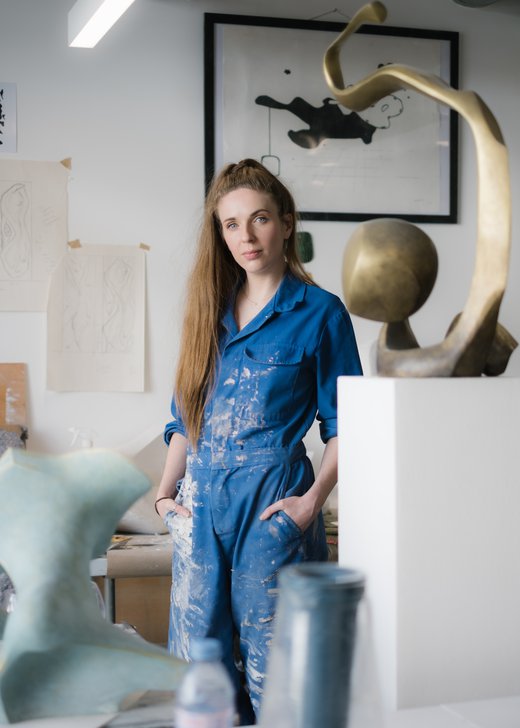
Lydia Smith reflects on intuition, material
dialogue and the evolving relationship
between sculpture and technology.
dialogue and the evolving relationship
between sculpture and technology.
Lydia Smith reflects on intuition, material
dialogue and the evolving relationship
between sculpture and technology.
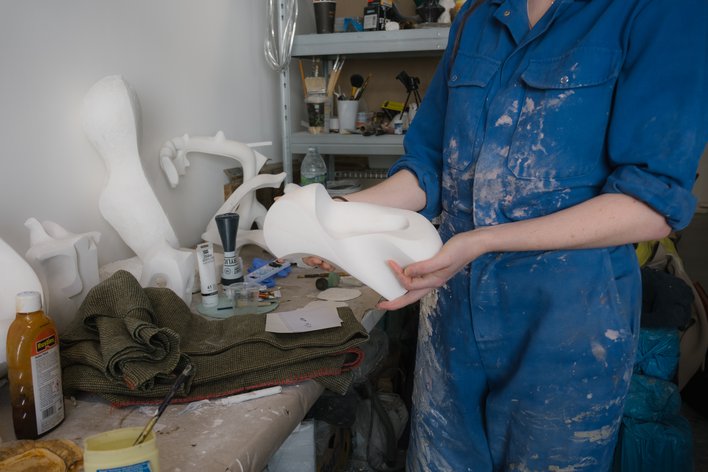
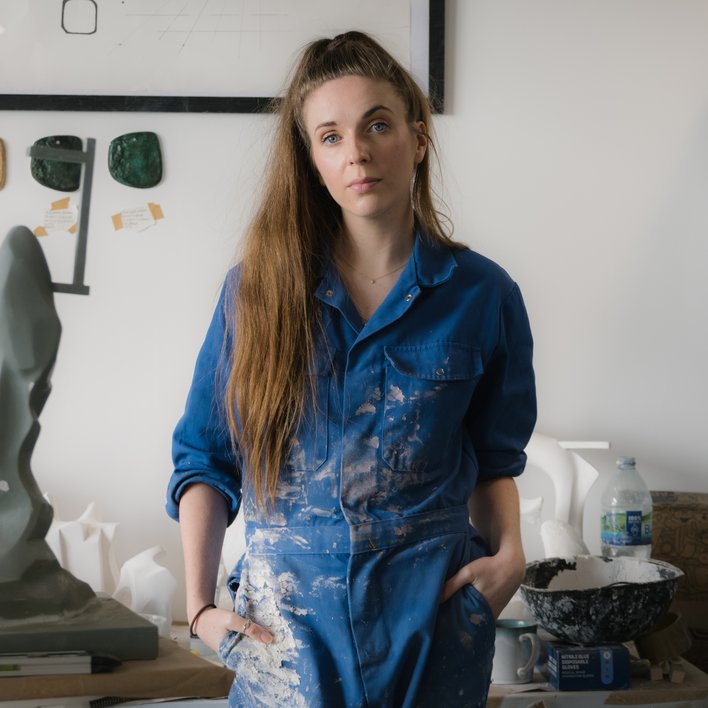
Lydia Smith is a multidisciplinary artist working across sculpture, works on paper and digital media. Through intuitive making and material experimentation, she explores human connection, identity and the evolving relationship between physical and virtual experience. Installed in our collections for luxury lifestyle brands, global law firms and CFC Underwriting, Smith's works bring a sense of presence and contemplation to the spaces they inhabit. We sat down with Lydia to discuss intuition, materiality and the role technology plays in her practice.
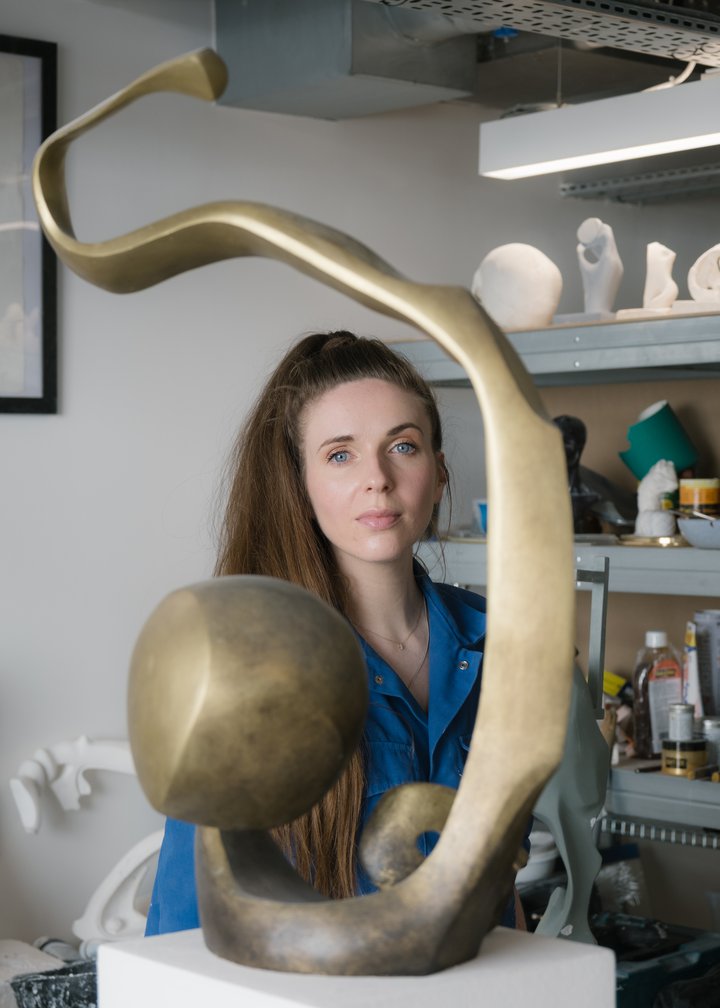
Your practice is rooted in intuitive making, allowing the unconscious to shape your work. What does this look like in your making process?
For me, making is an act of surrender. The work emerges through relinquishing control, allowing form to surface beyond conscious intention. When I try to impose authorship, I feel resistance - the material pushes back, and the process begins to close, often forcing a pause.
It is only in embracing uncertainty that the work starts to evolve. When I move without defining the outcome, something instinctive takes over. This approach extends beyond the studio; it reflects my way of being, where acceptance becomes the condition for both my work and life to unfold. The work is not constructed in a linear or predetermined way, but unfolds through a negotiation between intuition, material, and process.
What do you look to resolve while building the initial form? Is there a sense of clarity or balance that indicates that the piece is finished and ready to progress into more permanent materials like plaster and bronze?
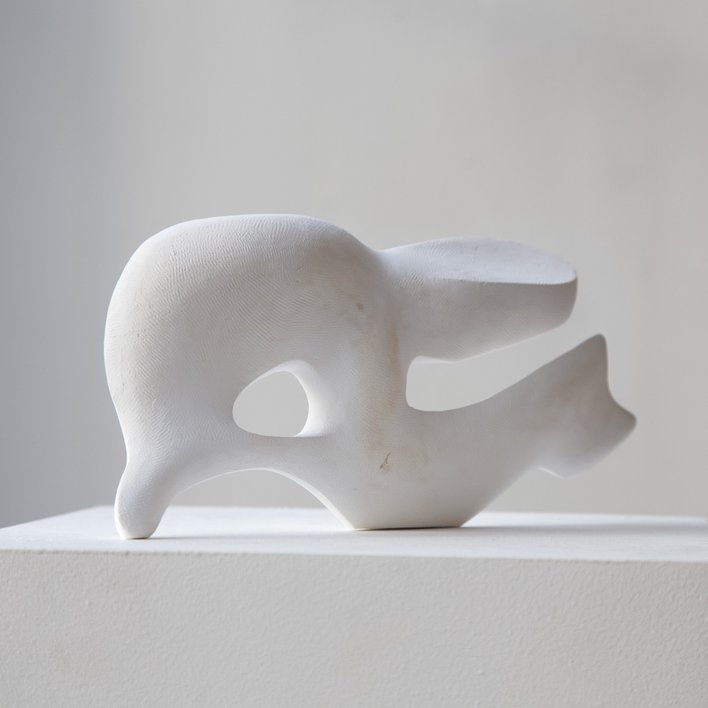
I’m not trying to resolve a predetermined design, but to reach a point where the form holds a sense of internal coherence. In the early stages, clay allows for immediacy; I can move quickly and respond instinctively. It becomes a conversation, almost a dance, in which the sculpture seems to ask me questions, and I respond through making. Clay operates through form, mass, and flexibility, a kind of embodied knowledge that carries an organic sense of flow.
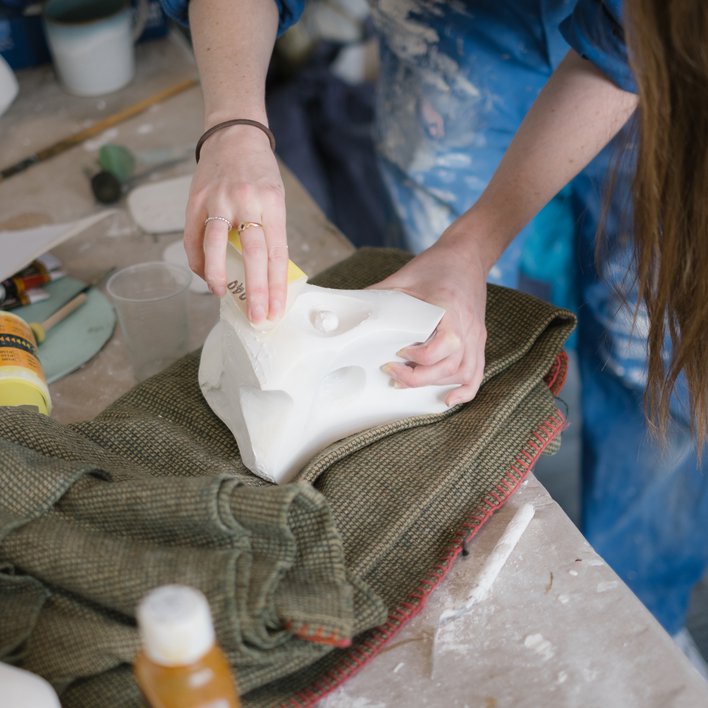
When I feel there are no further questions to answer in the clay, the work moves into plaster. Plaster introduces a more considered, structured process, a form of analytic refinement. It invites a different set of questions - of light, line, and angle - where the form begins to stabilise before moving into bronze. A work is ready to progress when it holds its own presence, existing with clarity and tension.
For me, making is an act of surrender. The work emerges through relinquishing control, allowing form to surface beyond conscious intention. When I try to impose authorship, I feel resistance - the material pushes back, and the process begins to close, often forcing a pause.
It is only in embracing uncertainty that the work starts to evolve. When I move without defining the outcome, something instinctive takes over. This approach extends beyond the studio; it reflects my way of being, where acceptance becomes the condition for both my work and life to unfold. The work is not constructed in a linear or predetermined way, but unfolds through a negotiation between intuition, material, and process.
What do you look to resolve while building the initial form? Is there a sense of clarity or balance that indicates that the piece is finished and ready to progress into more permanent materials like plaster and bronze?
I’m not trying to resolve a predetermined design, but to reach a point where the form holds a sense of internal coherence. In the early stages, clay allows for immediacy; I can move quickly and respond instinctively. It becomes a conversation, almost a dance, in which the sculpture seems to ask me questions, and I respond through making. Clay operates through form, mass, and flexibility, a kind of embodied knowledge that carries an organic sense of flow.
When I feel there are no further questions to answer in the clay, the work moves into plaster. Plaster introduces a more considered, structured process, a form of analytic refinement. It invites a different set of questions - of light, line, and angle - where the form begins to stabilise before moving into bronze. A work is ready to progress when it holds its own presence, existing with clarity and tension.
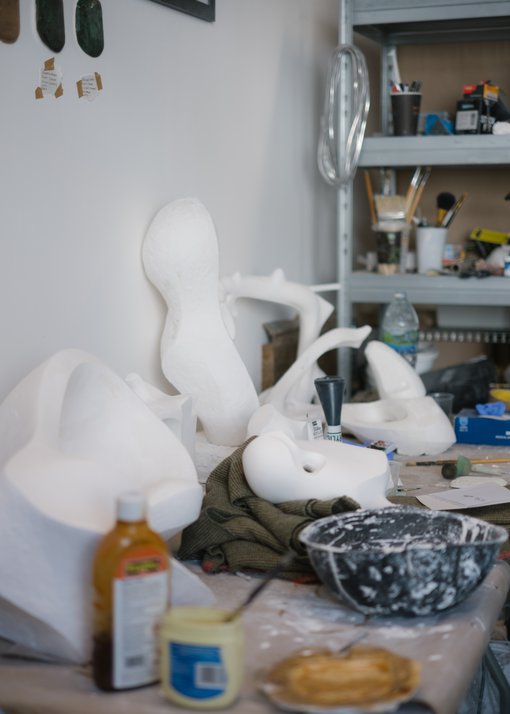
‘The work is not constructed in a linear or predetermined way, but unfolds through a negotiation between intuition, material, and process.’
- Lydia Smith
What role does small scale models play in your practice, especially in developing and problem solving?
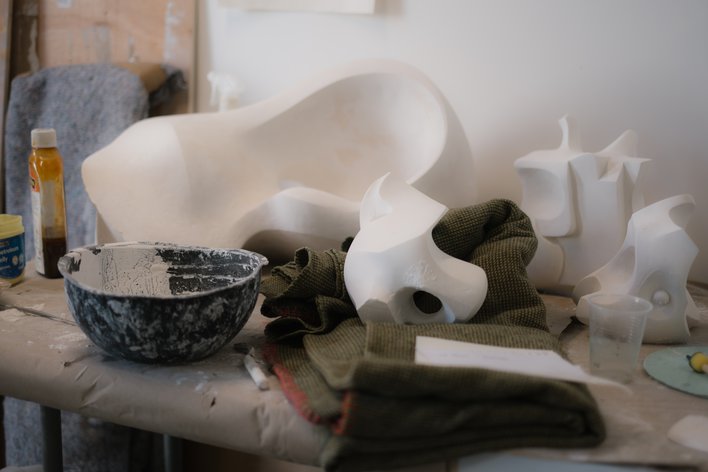
Scale models enter my practice primarily in the context of site-specific or commissioned work, where there is a defined spatial condition to respond to. Working at a reduced scale allows me to visualise how a form might operate within an environment, particularly in relation to proportion and spatial tension.
While this introduces a level of constraint, it doesn’t replace my intuitive process. Instead, it becomes a way of negotiating between the site’s parameters and the evolution of form. The small-scale model serves as both a testing ground and a translator, allowing me to maintain a sense of flow while beginning to understand how the work might extend into space.
The final large-scale work always develops its own voice, but it is born from the language established in the model. Something is always lost or gained in that translation; each version holds its own energy and presence, related yet distinct.
Geometry and emerging technologies often carry associations with precision and control. How do these elements intersect with your intuitive, unconscious-led process, and what role do they play in shaping the final form of your work?
The approach I take with technology is deliberately open-ended. I use a vintage gaming console to scan my sculptures, which produces warped, distorted forms rather than accurate translations. These misreadings become a starting point. I select what feels compelling, rework the forms, and translate them back into the physical world through prints, works on paper, or new sculptures.
For me, scanning is another way of relinquishing control. It allows technology to interpret the work according to its own logic, introducing a distance between myself and the object. I then re-engage with what it produces, analysing and responding before letting go again.
In this process, authorship becomes fluid, something that is lost and re-formed repeatedly as the work moves between material and digital states.
Do you have any upcoming projects you would like to share with us?
I’m currently focused on developing a new body of work in the studio. Alongside this, I’ve been having a series of conversations that are beginning to shape where the work might extend next.
Scale models enter my practice primarily in the context of site-specific or commissioned work, where there is a defined spatial condition to respond to. Working at a reduced scale allows me to visualise how a form might operate within an environment, particularly in relation to proportion and spatial tension.
While this introduces a level of constraint, it doesn’t replace my intuitive process. Instead, it becomes a way of negotiating between the site’s parameters and the evolution of form. The small-scale model serves as both a testing ground and a translator, allowing me to maintain a sense of flow while beginning to understand how the work might extend into space.
The final large-scale work always develops its own voice, but it is born from the language established in the model. Something is always lost or gained in that translation; each version holds its own energy and presence, related yet distinct.
Geometry and emerging technologies often carry associations with precision and control. How do these elements intersect with your intuitive, unconscious-led process, and what role do they play in shaping the final form of your work?
The approach I take with technology is deliberately open-ended. I use a vintage gaming console to scan my sculptures, which produces warped, distorted forms rather than accurate translations. These misreadings become a starting point. I select what feels compelling, rework the forms, and translate them back into the physical world through prints, works on paper, or new sculptures.
For me, scanning is another way of relinquishing control. It allows technology to interpret the work according to its own logic, introducing a distance between myself and the object. I then re-engage with what it produces, analysing and responding before letting go again.
In this process, authorship becomes fluid, something that is lost and re-formed repeatedly as the work moves between material and digital states.
Do you have any upcoming projects you would like to share with us?
I’m currently focused on developing a new body of work in the studio. Alongside this, I’ve been having a series of conversations that are beginning to shape where the work might extend next.
‘The approach I take with technology is deliberately open-ended. I use a vintage gaming console to scan my sculptures, which produces warped, distorted forms rather than accurate translations.’
- Lydia Smith
You explore human connection through ancient belief systems and technological progress. How do these ideas translate into bronze, a material so tied to history and permanence?
Bronze carries a historical weight that I’m deeply aware of. Since the Bronze Age, it has been used to shape tools, weapons, and ritual objects , forms that defined how we lived, related to the land, and understood one another. It is bound to both human development and our relationship with the natural world, carrying touch, labour and belief.
That history aligns closely with my interest in human connection. When I work with bronze, I’m conscious that it already holds how identity and presence have been constructed over time. It is not simply a material of permanence; it carries memory.
What draws me to it is how that permanence can hold the instability of my process. Bronze allows my shifting forms to be fixed and held, becoming a point where something ancient and something still emerging meet.
We discussed in our studio visit that you do not listen to music during your making process. How does silence help you stay present while allowing the unconscious to guide your process?
I don’t listen to music while I work because sound carries its own frequency and emotional register. It introduces another signal into the space, one that interrupts the state I enter when working with clay. The process depends on total attentiveness to the material, where nothing else can enter without displacing what is emerging.
In that state, the relationship with the clay becomes more immediate. It feels as though the material is asking something of me, and my role is to listen and respond. External sound doesn’t just distract; it feeds the dialogue with something imposed from outside.
Silence allows me to access and sustain this condition. It creates a space where the unconscious can surface more clearly, and where the exchange between me and the material can unfold without interruption.
Bronze carries a historical weight that I’m deeply aware of. Since the Bronze Age, it has been used to shape tools, weapons, and ritual objects , forms that defined how we lived, related to the land, and understood one another. It is bound to both human development and our relationship with the natural world, carrying touch, labour and belief.
That history aligns closely with my interest in human connection. When I work with bronze, I’m conscious that it already holds how identity and presence have been constructed over time. It is not simply a material of permanence; it carries memory.
What draws me to it is how that permanence can hold the instability of my process. Bronze allows my shifting forms to be fixed and held, becoming a point where something ancient and something still emerging meet.
We discussed in our studio visit that you do not listen to music during your making process. How does silence help you stay present while allowing the unconscious to guide your process?
I don’t listen to music while I work because sound carries its own frequency and emotional register. It introduces another signal into the space, one that interrupts the state I enter when working with clay. The process depends on total attentiveness to the material, where nothing else can enter without displacing what is emerging.
In that state, the relationship with the clay becomes more immediate. It feels as though the material is asking something of me, and my role is to listen and respond. External sound doesn’t just distract; it feeds the dialogue with something imposed from outside.
Silence allows me to access and sustain this condition. It creates a space where the unconscious can surface more clearly, and where the exchange between me and the material can unfold without interruption.
Want to be part of our network? Submit your work and join Artiq's growing community of artists.