article In conversation with
Tonye Ekine
In conversation with
Tonye Ekine
Across questions of selfhood, symbolism, and artistic
risk, Tonye Ekine unpacks the emotional and cultural
narratives narratives at the core of his practice.
risk, Tonye Ekine unpacks the emotional and cultural
narratives narratives at the core of his practice.
Across questions of selfhood, symbolism, and artistic
risk, Tonye Ekine unpacks the emotional and cultural
narratives narratives at the core of his practice.
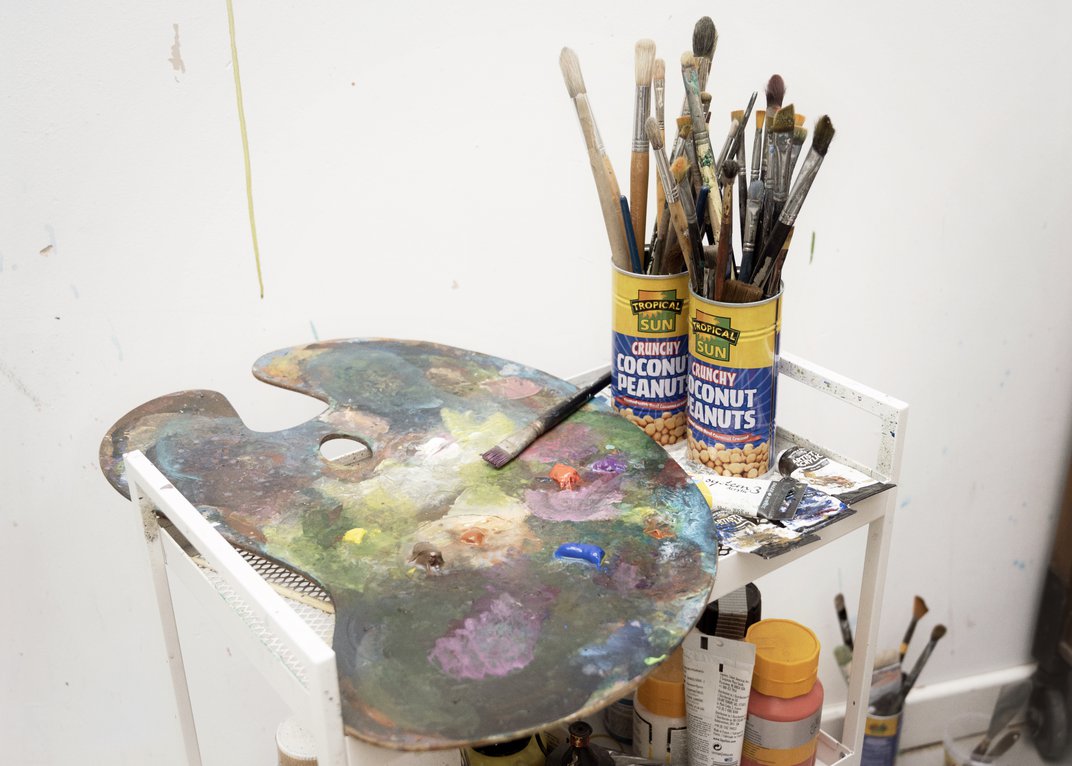
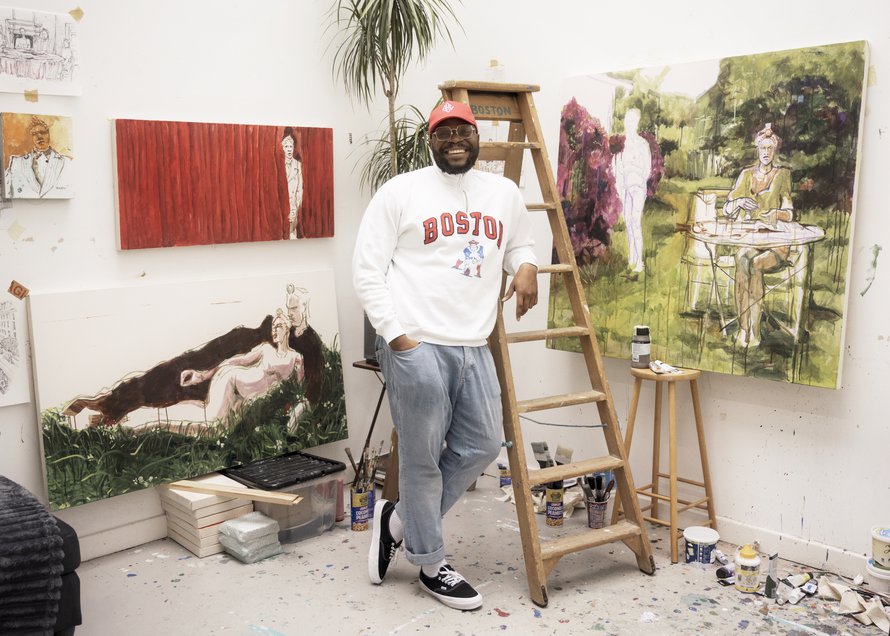
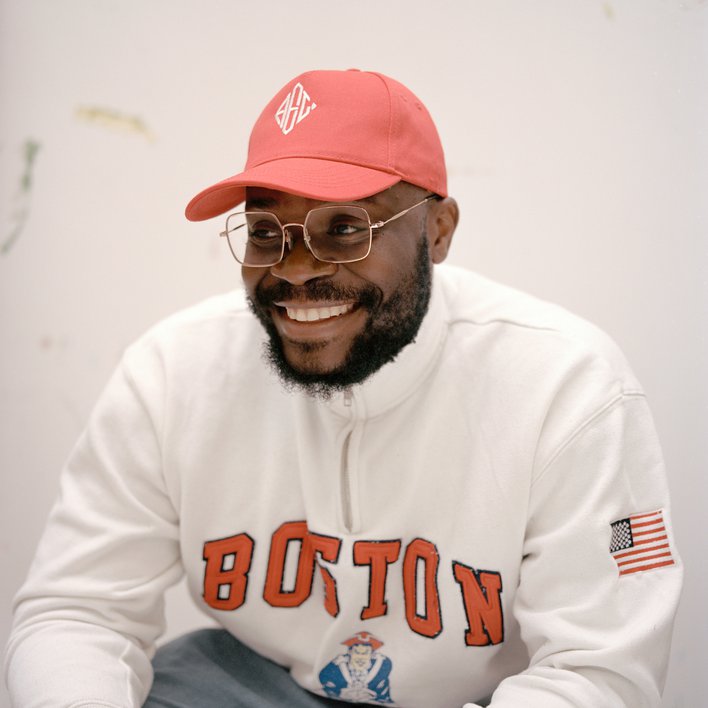
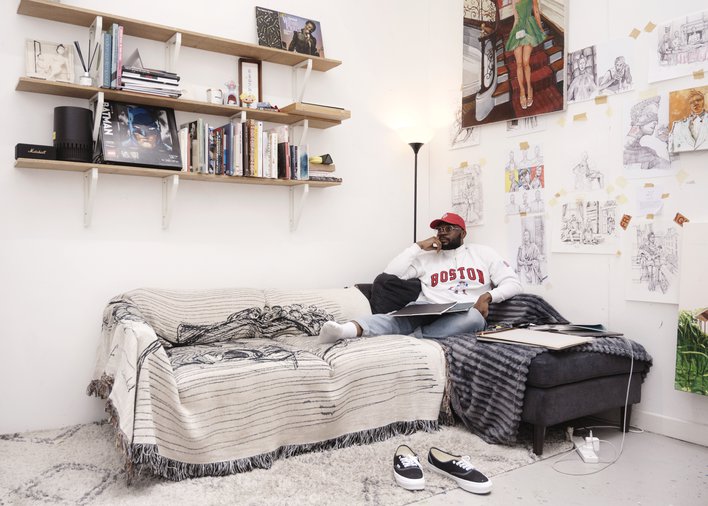
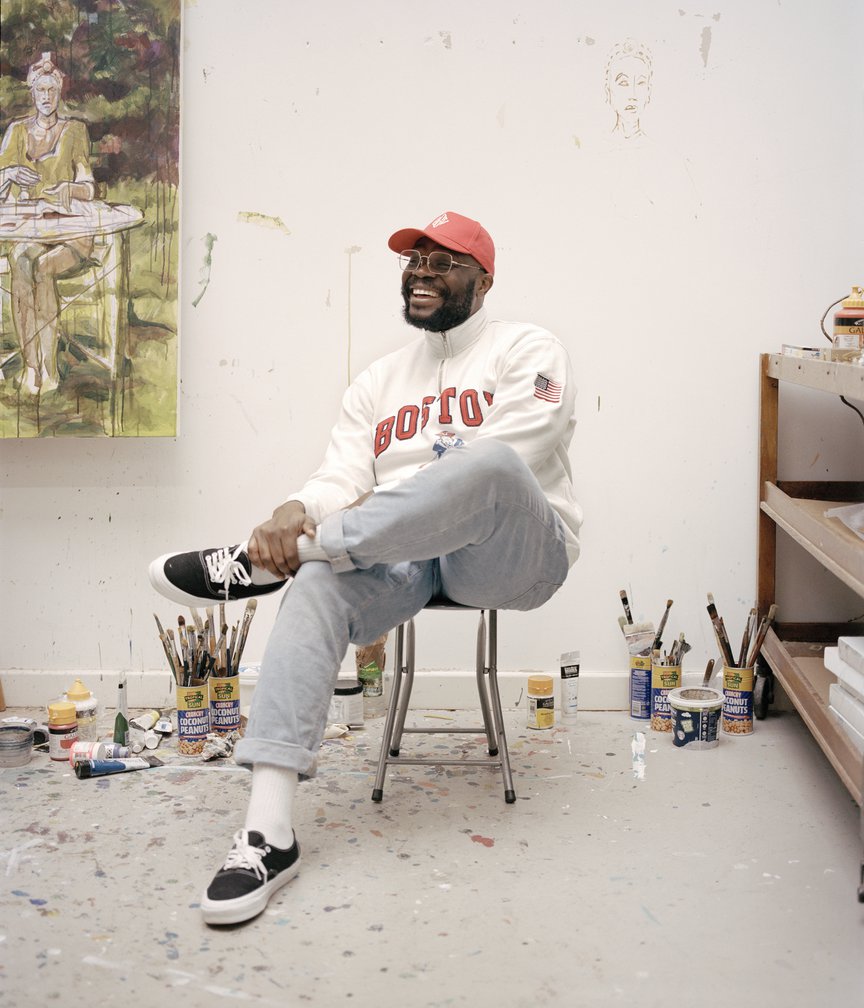
Tonye Ekine is a London-based Nigerian artist whose figurative practice reimagines African mask traditions to explore identity, emotion, and contemporary social experience. Through staged, immersive narratives, he invites audiences to reflect on personal and collective realities. Featured in our collections for a global pension plan, we visited Tonye in his North-London studio to chat masks, making, and his obsession with coconut peanuts.
‘I’ve always been expressive as a person, so it naturally shows in my work.’
- Tonye Ekine
Could you share more about the role the Ife Bronze mask holds in your work? What has drawn you to it as a consistent presence in your practice?
In and of itself, the Ife bronze head is a homepage to my mom, my mom’s father, and the artist who created the mask, but was never documented. The patronage and mileage of the mask already play a different role historically, even without me doing anything. I’m more interested in the psychology of masks, which connects to a larger conversation, especially because of my personal experiences with people and their masks. I think I am hyper-fixated on what could be a mask. In 2026, this could be going through art school, navigating relationships, life, countries, industries, society, and people’s intentions. That’s what I’m reflecting on with the mask. So, the mask appears, but it’s not the headline. It’s like the sound system at a concert; you need it, but you’re there for the music coming through the speakers. Same with art: it’s about the stories, not just one element.
How does your use of the Ife Bronze mask enable you to engage with contemporary conversations around identity?
The mask already carries its own history and layered meanings, but what I’m really interested in is the psychology behind it. That’s something we can all relate to. With Covid not too long ago, we literally wore masks, but we’ve also always worn them metaphorically. Now we have modern versions: avatars, digital identities, and Bitmojis. As technology grows, we’re creating more versions of ourselves. So, the question becomes: who are you, or who are we really? What makes you you? What makes you tick, or smile? In discovering yourself, what do you portray to others at work or at home? That’s where my work sits in this ongoing conversation. It’s something we’ll keep navigating as people, especially in this world. In a more academic setting, it’s almost about creating a scene where I am presenting stories that existed at the same time, not in isolation, connecting the past, present, and future.
In and of itself, the Ife bronze head is a homepage to my mom, my mom’s father, and the artist who created the mask, but was never documented. The patronage and mileage of the mask already play a different role historically, even without me doing anything. I’m more interested in the psychology of masks, which connects to a larger conversation, especially because of my personal experiences with people and their masks. I think I am hyper-fixated on what could be a mask. In 2026, this could be going through art school, navigating relationships, life, countries, industries, society, and people’s intentions. That’s what I’m reflecting on with the mask. So, the mask appears, but it’s not the headline. It’s like the sound system at a concert; you need it, but you’re there for the music coming through the speakers. Same with art: it’s about the stories, not just one element.
How does your use of the Ife Bronze mask enable you to engage with contemporary conversations around identity?
The mask already carries its own history and layered meanings, but what I’m really interested in is the psychology behind it. That’s something we can all relate to. With Covid not too long ago, we literally wore masks, but we’ve also always worn them metaphorically. Now we have modern versions: avatars, digital identities, and Bitmojis. As technology grows, we’re creating more versions of ourselves. So, the question becomes: who are you, or who are we really? What makes you you? What makes you tick, or smile? In discovering yourself, what do you portray to others at work or at home? That’s where my work sits in this ongoing conversation. It’s something we’ll keep navigating as people, especially in this world. In a more academic setting, it’s almost about creating a scene where I am presenting stories that existed at the same time, not in isolation, connecting the past, present, and future.
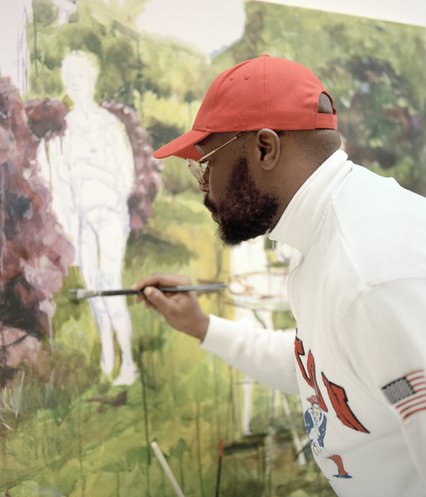
What motivated your move from hyper-realism toward a more expressive style, and how has this shift changed what you’re able to communicate in your work?
I wouldn’t say I was ever strictly hyper-realistic. I was trained in a traditional art school system where you learn the rules, draw the body, and understand form before finding your own voice. I also had tutors who loved the Renaissance movement and the creation of the illusion of 3D on 2D surfaces. You learn to build, then break things down again. I’ve always been expressive as a person, so it naturally shows in my work. I’m less interested in perfect realism and more in the emotion of how something feels. I’d rather capture a mood than obsess over the exact color of a fingernail. That freedom lets me follow the story or idea, and maybe one day I’ll dive into Rembrandt-style lighting, or Peter Paul Rubens’ dramatic, animated, and illustrative scenes. That’s part of growth. For me, it’s always about choosing whatever best communicates the feeling or picture I am trying to tell.
While embracing a more gestural style, how do you know when to stop working into a piece?
Painting feels like a dance right now. It’s less about ego or rendering perfectly, and more about emotion. Honestly, I don’t always know when to stop. I go by feeling, and it changes with each piece. It’s actually harder than doing something realistic. I’m constantly asking myself, “Does this detail add to the story, or take away from it?” It’s a new, uncomfortable space, but I’m leaning into it. I’ve ruined a few canvases already, and I’m ready to ruin a lot more.
I wouldn’t say I was ever strictly hyper-realistic. I was trained in a traditional art school system where you learn the rules, draw the body, and understand form before finding your own voice. I also had tutors who loved the Renaissance movement and the creation of the illusion of 3D on 2D surfaces. You learn to build, then break things down again. I’ve always been expressive as a person, so it naturally shows in my work. I’m less interested in perfect realism and more in the emotion of how something feels. I’d rather capture a mood than obsess over the exact color of a fingernail. That freedom lets me follow the story or idea, and maybe one day I’ll dive into Rembrandt-style lighting, or Peter Paul Rubens’ dramatic, animated, and illustrative scenes. That’s part of growth. For me, it’s always about choosing whatever best communicates the feeling or picture I am trying to tell.
While embracing a more gestural style, how do you know when to stop working into a piece?
Painting feels like a dance right now. It’s less about ego or rendering perfectly, and more about emotion. Honestly, I don’t always know when to stop. I go by feeling, and it changes with each piece. It’s actually harder than doing something realistic. I’m constantly asking myself, “Does this detail add to the story, or take away from it?” It’s a new, uncomfortable space, but I’m leaning into it. I’ve ruined a few canvases already, and I’m ready to ruin a lot more.
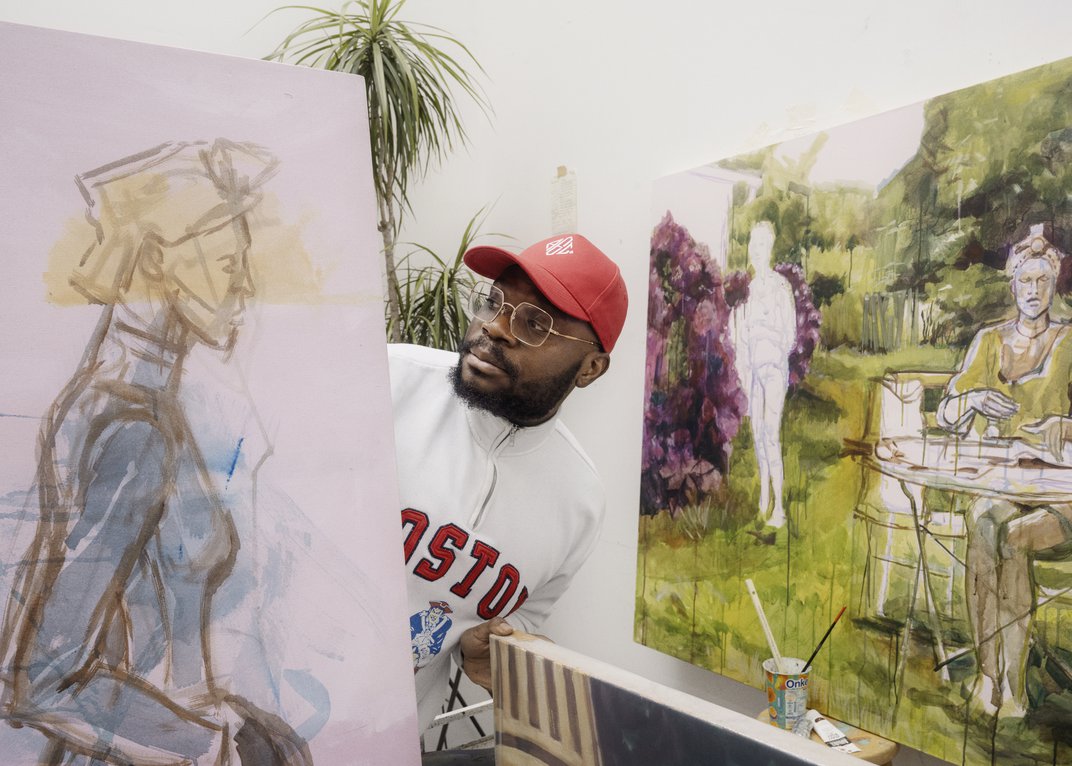
‘Painting feels like a dance right now. It’s less about ego or rendering perfectly, and more about emotion. Honestly, I don’t always know when to stop.’
- Tonye Ekine
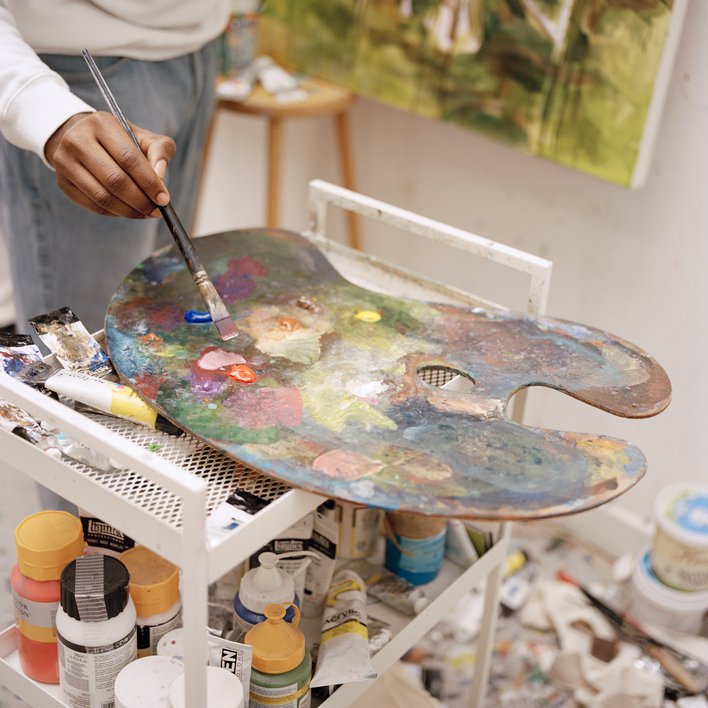
How do fashion logos and high-fashion references operate within your work as tools for exploring identity, status, and cultural narrative?
It’s layered, just like we are. You know how what you wear each day reflects a mood you are trying to convey at that moment. Think about it: depending on the colours you choose, all black, leather, or something else, you are either passing a message, embodying something, or masking an emotion. As a quick experiment, just look at your phone. When you take a selfie, count how many logos you see or brands you wear. It’s everywhere. So, if I’m a mirror reflecting society and people, why wouldn’t that show up? It’s part of the visual language of our world. Then you layer in culture, status, upbringing, consumerism, and capitalism, and it all starts to say something much bigger. So yeah… it has a sense of familiarity that people can engage with, encouraging them to sit longer with the work. It’s also a timestamp of an era, much like architecture.
Do you have any upcoming projects you would like to share with us?
Nothing too fixed right now. Staying positive, making work, staying in my own flow, and seeing what unfolds.
It’s layered, just like we are. You know how what you wear each day reflects a mood you are trying to convey at that moment. Think about it: depending on the colours you choose, all black, leather, or something else, you are either passing a message, embodying something, or masking an emotion. As a quick experiment, just look at your phone. When you take a selfie, count how many logos you see or brands you wear. It’s everywhere. So, if I’m a mirror reflecting society and people, why wouldn’t that show up? It’s part of the visual language of our world. Then you layer in culture, status, upbringing, consumerism, and capitalism, and it all starts to say something much bigger. So yeah… it has a sense of familiarity that people can engage with, encouraging them to sit longer with the work. It’s also a timestamp of an era, much like architecture.
Do you have any upcoming projects you would like to share with us?
Nothing too fixed right now. Staying positive, making work, staying in my own flow, and seeing what unfolds.
Want to be part of our network? Submit your work and join Artiq's growing community of artists.