article In conversation with Zoë Wilkinson, winner of The Pump House Residency 2025
In conversation with Zoë Wilkinson, winner of The Pump House Residency 2025
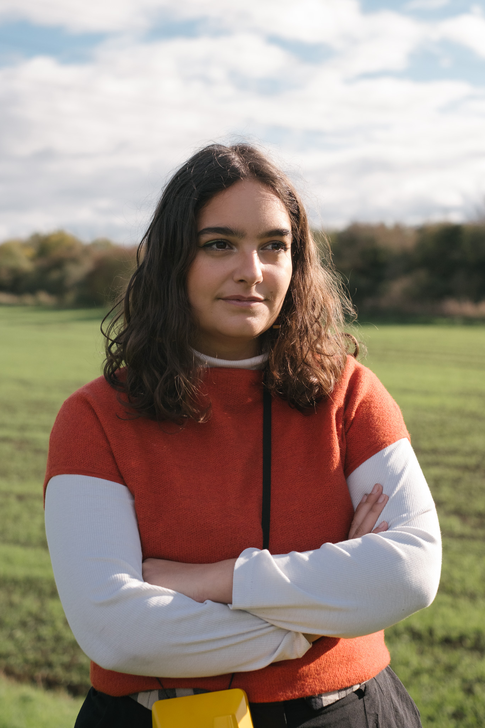
After a competitive selection process,
2025 winner Zoë Wilkinson reflects on her
residency at The Pump House Art Studio.
2025 winner Zoë Wilkinson reflects on her
residency at The Pump House Art Studio.
After a competitive selection process,
2025 winner Zoë Wilkinson reflects on her
residency at The Pump House Art Studio.
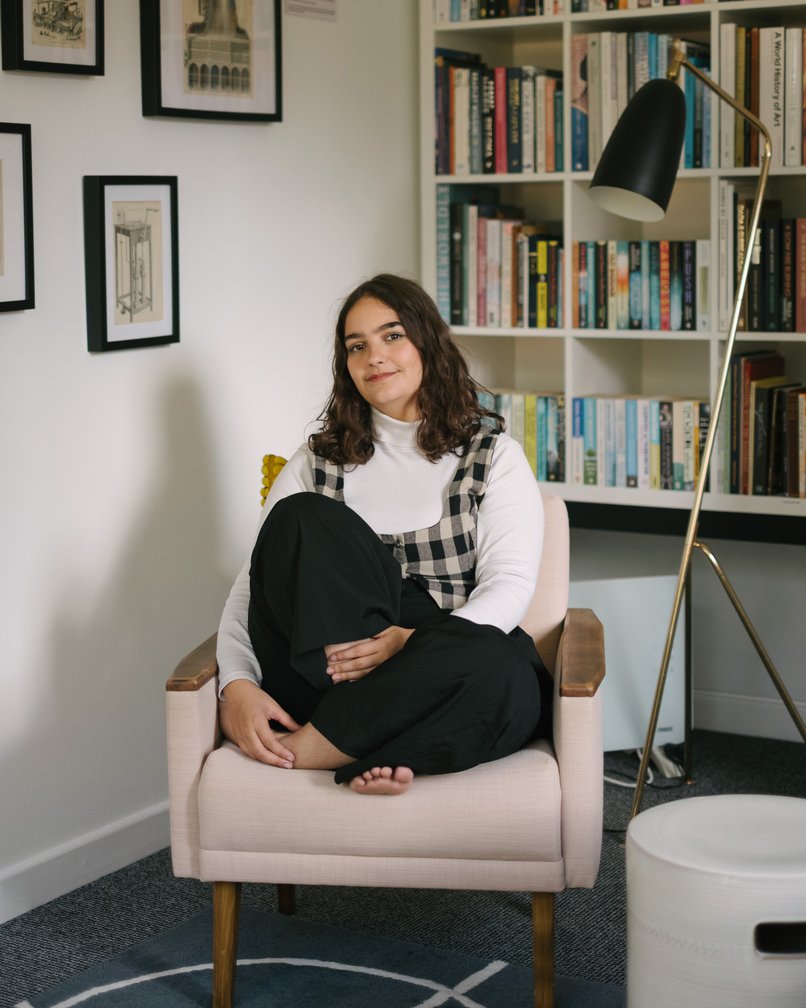
Open to artists within our network, The Pump House Residency offers a unique, one-week stay at The Pump House Art Studio, a fully equipped creative space complete with historic Victorian print press.
Located in the rural village of Misterton, Nottinghamshire, this Grade II listed former pump house is lovingly owned and managed by Nicholas Pryke and Claire Elliott. With strong roots in the creative industries, Nic and Claire share Artiq’s commitment to nurturing emerging artistic talent.
After a competitive open call, the third edition of the residency was awarded to Zoë Wilkinson, a current Royal Academy student. Zoë used the residency to explore her familial connections to the Nottinghamshire landscape, drawing inspiration from the Pump House’s unique setting to deepen her research into the relationship between land and water. We sat down with Zoë to discuss her artistic practice and learn more about her experience of this inspiring, week-long residency.
Located in the rural village of Misterton, Nottinghamshire, this Grade II listed former pump house is lovingly owned and managed by Nicholas Pryke and Claire Elliott. With strong roots in the creative industries, Nic and Claire share Artiq’s commitment to nurturing emerging artistic talent.
After a competitive open call, the third edition of the residency was awarded to Zoë Wilkinson, a current Royal Academy student. Zoë used the residency to explore her familial connections to the Nottinghamshire landscape, drawing inspiration from the Pump House’s unique setting to deepen her research into the relationship between land and water. We sat down with Zoë to discuss her artistic practice and learn more about her experience of this inspiring, week-long residency.
Artiq During your time at the Pump House you proposed a long river walk. Could you talk about how water and movement functions in your work
Zoë I am fascinated by water because it feels like a liminal space. In my practice, I see water (particularly rivers and the sea) as an almost homely space. Being half Guyanese and half British, both countries where water is so important, I find water to be a space that connects my two identities. I’m also interested by the inbetween-ness of water, when it cuts through land as a river or divides islands as the sea. Water’s power to shape the land, and through this our lives, as well as its symbolic existence as a transitory space is something that I find compelling. Something about water also seems more magical and folkloric than land. In the Caribbean, there is so much mythologisation about the sea as a place of both liberation and oppression. The Trent also has so much folklore and myth in its history that I was able to draw inspiration from during the residency.
Artiq Tell us more about how your work engages with storytelling and world building as well as your own family archive, shared memory and history. Could you share how this manifested in your walk and through the charcoal drawings created while in residency?
Zoë My practice draws from a Caribbean Gothic, which I use to explore the Caribbean through the lens of my life growing up in the UK. As I have never been to Guyana, I use family photographs, greenhouses and shared memories to create my imagined homeland. So far my practice has explored my identity through the lens of my mother’s family history in the Caribbean. However, during the Pump House residency I was able to live and breathe the air of Nottinghamshire where my father was born and raised. Walking through the land, for 23 miles, with him felt like a necessary step in my practice that considers my mixed heritage.
Zoë I am fascinated by water because it feels like a liminal space. In my practice, I see water (particularly rivers and the sea) as an almost homely space. Being half Guyanese and half British, both countries where water is so important, I find water to be a space that connects my two identities. I’m also interested by the inbetween-ness of water, when it cuts through land as a river or divides islands as the sea. Water’s power to shape the land, and through this our lives, as well as its symbolic existence as a transitory space is something that I find compelling. Something about water also seems more magical and folkloric than land. In the Caribbean, there is so much mythologisation about the sea as a place of both liberation and oppression. The Trent also has so much folklore and myth in its history that I was able to draw inspiration from during the residency.
Artiq Tell us more about how your work engages with storytelling and world building as well as your own family archive, shared memory and history. Could you share how this manifested in your walk and through the charcoal drawings created while in residency?
Zoë My practice draws from a Caribbean Gothic, which I use to explore the Caribbean through the lens of my life growing up in the UK. As I have never been to Guyana, I use family photographs, greenhouses and shared memories to create my imagined homeland. So far my practice has explored my identity through the lens of my mother’s family history in the Caribbean. However, during the Pump House residency I was able to live and breathe the air of Nottinghamshire where my father was born and raised. Walking through the land, for 23 miles, with him felt like a necessary step in my practice that considers my mixed heritage.
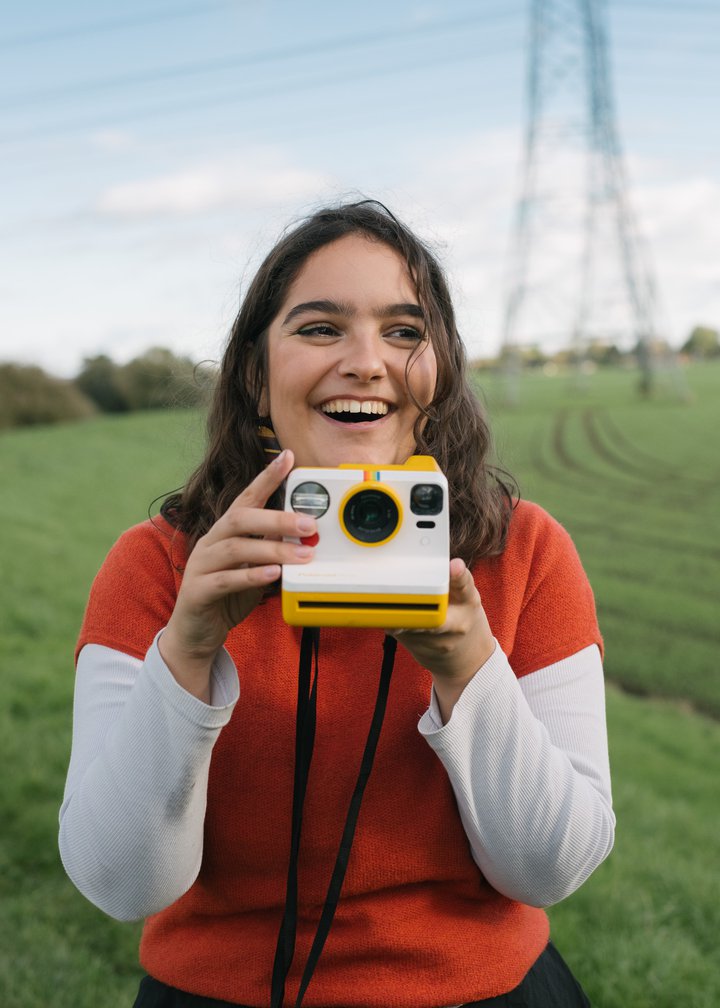
Artiq Your work emphasizes material texture and the interaction of the artwork with light, environment and the viewer. How do particular materials (charcoal from driftwood, sugar-cane fabric) carry meaning in your process?
Zoë Materiality is a really important part of my work. My practice is one that explores race, landscape and the legacies of colonialism. I try to decolonise my practice wherever I can, considering why I use materials and the history of the materials I use. Instead of canvas, a material that has been used historically in the West for paintings that subjugate women and people of colour, I use sugarcane fabric to reference my family histories in indentured labour.
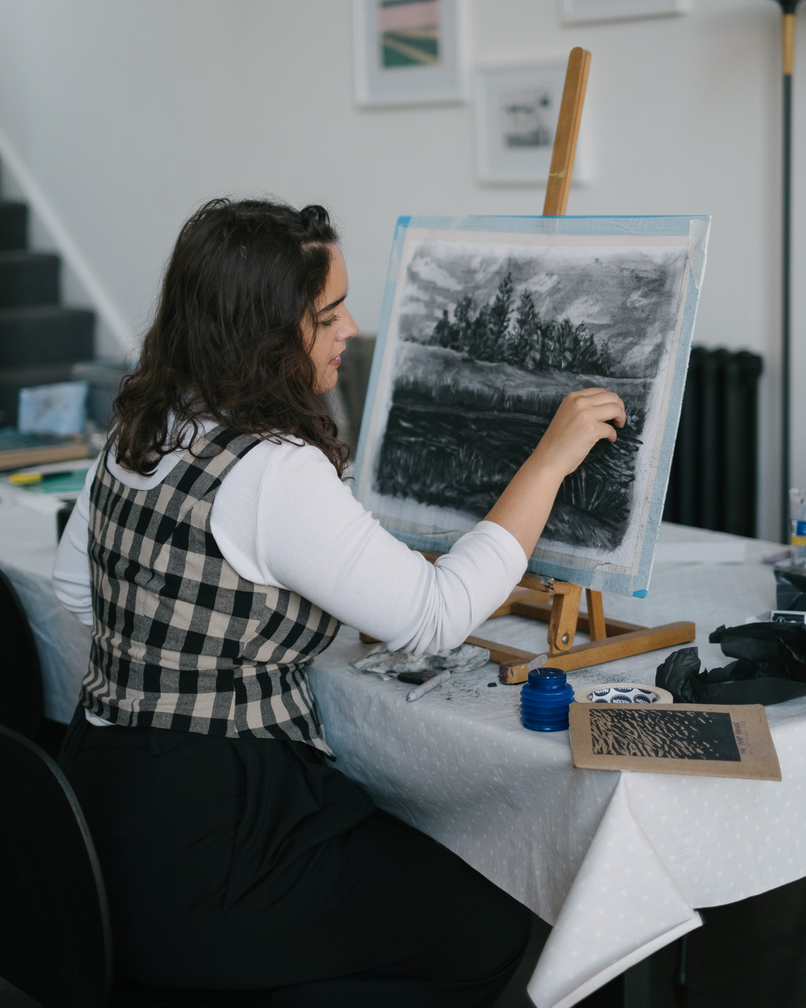
Charcoal as a material fascinates me because it comes from the land. The transition of wood to charcoal through fire is a process that feels both magical and violent. I often make my own charcoal, which I collect from driftwood. I love the mystery as to where the driftwood has washed ashore from.
Working with charcoal is such an intuitive and instinctual process that it feels like the perfect medium to conjure my imagined world. When I’m drawing, the charcoal feels almost like an extension of my brain because I can swipe away or add marks as quickly as I think of them. My charcoal drawings become like palimpsests, recording the journey of my drawing from beginning to end.
Zoë Materiality is a really important part of my work. My practice is one that explores race, landscape and the legacies of colonialism. I try to decolonise my practice wherever I can, considering why I use materials and the history of the materials I use. Instead of canvas, a material that has been used historically in the West for paintings that subjugate women and people of colour, I use sugarcane fabric to reference my family histories in indentured labour.
Charcoal as a material fascinates me because it comes from the land. The transition of wood to charcoal through fire is a process that feels both magical and violent. I often make my own charcoal, which I collect from driftwood. I love the mystery as to where the driftwood has washed ashore from.
Working with charcoal is such an intuitive and instinctual process that it feels like the perfect medium to conjure my imagined world. When I’m drawing, the charcoal feels almost like an extension of my brain because I can swipe away or add marks as quickly as I think of them. My charcoal drawings become like palimpsests, recording the journey of my drawing from beginning to end.
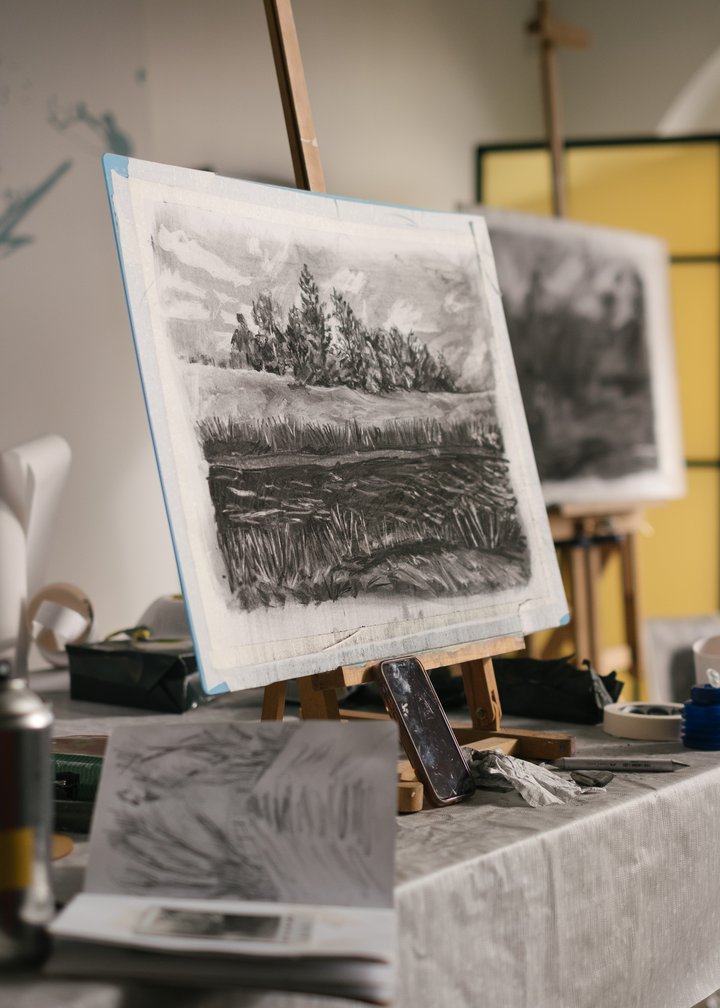
Artiq Could you describe how your field observations feed into your studio work? How did the surrounding environment of Nottinghamshire inspire you?
Zoë There were many things in the Nottinghamshire landscape that inspired me. The land round the Pump House is incredibly flat, almost eerily so. Being there in October, when all the leaves are changing and mist is coming down, makes the land take on a gothic quality. It was so different to the deadened landscape in London where it feels like people control the land. In rural Nottinghamshire it felt like the land was this powerful living thing that was in control of everything.
Being in the countryside at the political moment when I went to the Pump House was also something that inspired my work. On the 23 mile walk I passed more England flags than I could count. In the flat empty landscape I felt safe but when it came to walking through the villages strewn with flags, I felt a sense of hostility and disquiet that made me feel as if the county where my father was born and raised was not somewhere that I could feel at home.
Artiq Alongside your artwork, you are also working on a novel. Could you share about the interplay between written text and the visual image in your work? How does writing inform your painting (or vice versa)?
Zoë With my writing and my visual art, I find that they both come from the same place. Sometimes I will be blocked in my writing whilst simultaneously creating lots of paintings. Then, after a while, I feel a sort of yearning to go back to writing. The interplay between writing and art is a symbiotic one for me.
In my sugarcane paintings, I incorporate pieces of text from my novel in progress which helps to draw the two worlds together. When I am drawing or painting, I also discover more about the world I am writing about in my novel. I think of the two things, writing and art, as almost like my two homelands in real life, connected by the sea and existing in the same world.
Zoë There were many things in the Nottinghamshire landscape that inspired me. The land round the Pump House is incredibly flat, almost eerily so. Being there in October, when all the leaves are changing and mist is coming down, makes the land take on a gothic quality. It was so different to the deadened landscape in London where it feels like people control the land. In rural Nottinghamshire it felt like the land was this powerful living thing that was in control of everything.
Being in the countryside at the political moment when I went to the Pump House was also something that inspired my work. On the 23 mile walk I passed more England flags than I could count. In the flat empty landscape I felt safe but when it came to walking through the villages strewn with flags, I felt a sense of hostility and disquiet that made me feel as if the county where my father was born and raised was not somewhere that I could feel at home.
Artiq Alongside your artwork, you are also working on a novel. Could you share about the interplay between written text and the visual image in your work? How does writing inform your painting (or vice versa)?
Zoë With my writing and my visual art, I find that they both come from the same place. Sometimes I will be blocked in my writing whilst simultaneously creating lots of paintings. Then, after a while, I feel a sort of yearning to go back to writing. The interplay between writing and art is a symbiotic one for me.
In my sugarcane paintings, I incorporate pieces of text from my novel in progress which helps to draw the two worlds together. When I am drawing or painting, I also discover more about the world I am writing about in my novel. I think of the two things, writing and art, as almost like my two homelands in real life, connected by the sea and existing in the same world.
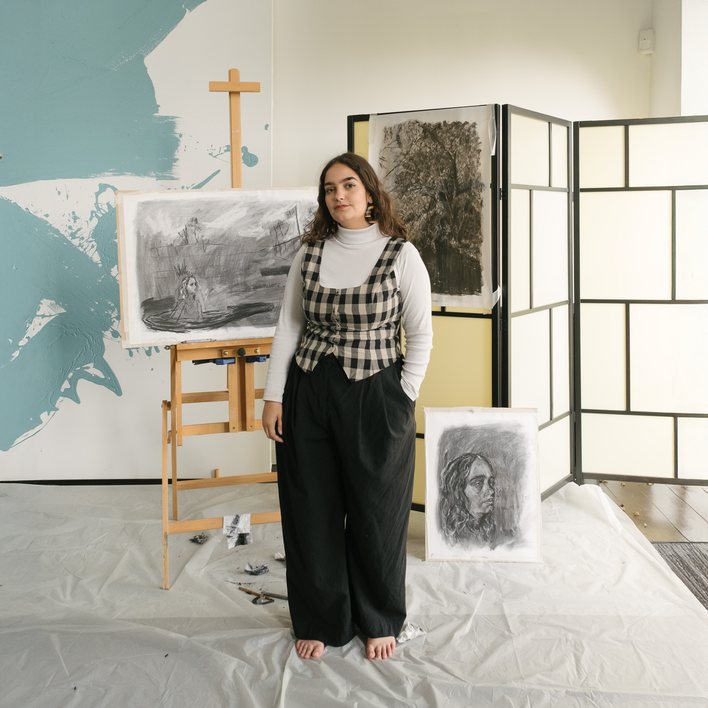
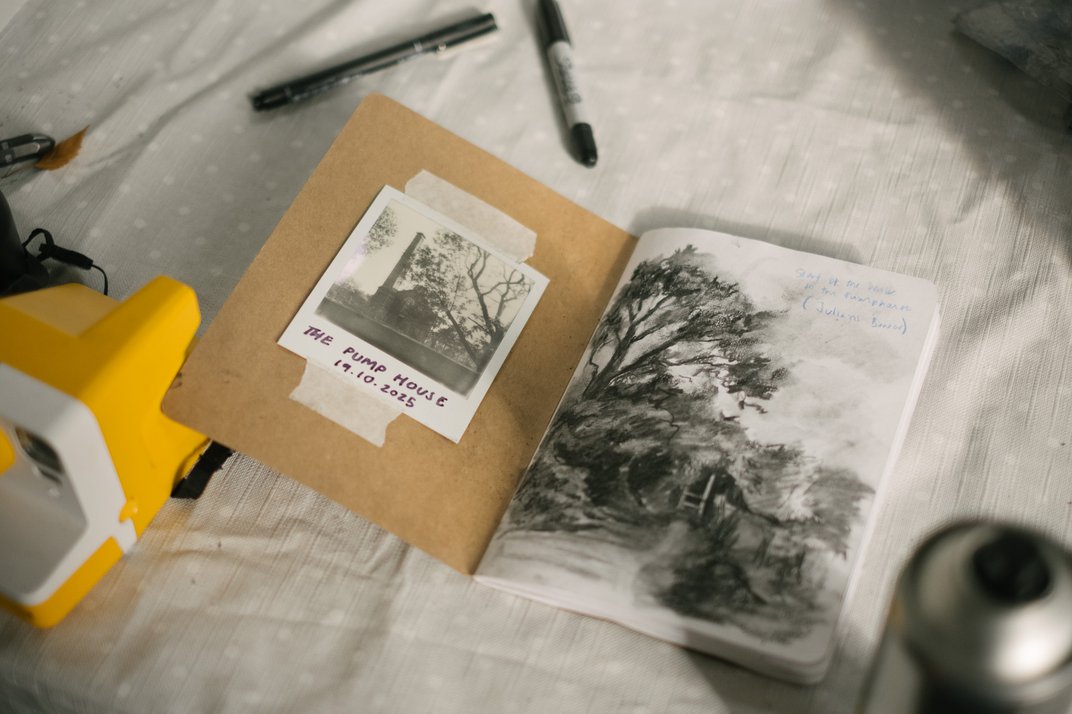
Artiq You kept a meticulous sketchbook while in residency, which in itself is a piece of art and record. Can you tell us more about how you approach your sketchbook practice as well as your own research and personal archive?
Zoë The sketchbook is so important to everything I do. I think because my practice is one that draws heavily from my imagination, I need somewhere physical to work through all my thoughts and ideas. Having all my thoughts written down both in text and drawings helps me to track where my ideas come from. I record almost everything I do which means that when I feel an idea has run out of steam I can go back to the beginning and tug on some of the threads I might have let slip in the rush of creating.
I think of my sketchbook as a finished artwork itself and because they are so personal and diaristic, I feel more attached to them then my actual artworks. I visited an artist’s studio recently and she had sketchbooks going back to the 1980’s and she still looks at them to retrace old ideas. I hope someday I will have 40 years of sketchbooks too!
Artiq Looking ahead, how do you envision the evolution of your practice? Anything upcoming you’d like to share?
Zoë In January, I’m going on a three month residency in Guyana. It will be the first time I’ve ever visited my mothers homeland so, after having the privilege to spend a week in Nottinghamshire where my father grew up on the Pump House residency, it feels like the perfect step in my practice. I’m excited to finally be in the place that I have yearned for through my entire practice. I think the residency will recontextualise my practice by giving me another anchor from which my imagined word can drift.
I’m so grateful to have been on the Pump House residency and I can already feel it becoming an integral point in my practice as it allowed me, for the first time, to develop my relationship to English rural landscape which has always fascinated me.
Zoë The sketchbook is so important to everything I do. I think because my practice is one that draws heavily from my imagination, I need somewhere physical to work through all my thoughts and ideas. Having all my thoughts written down both in text and drawings helps me to track where my ideas come from. I record almost everything I do which means that when I feel an idea has run out of steam I can go back to the beginning and tug on some of the threads I might have let slip in the rush of creating.
I think of my sketchbook as a finished artwork itself and because they are so personal and diaristic, I feel more attached to them then my actual artworks. I visited an artist’s studio recently and she had sketchbooks going back to the 1980’s and she still looks at them to retrace old ideas. I hope someday I will have 40 years of sketchbooks too!
Artiq Looking ahead, how do you envision the evolution of your practice? Anything upcoming you’d like to share?
Zoë In January, I’m going on a three month residency in Guyana. It will be the first time I’ve ever visited my mothers homeland so, after having the privilege to spend a week in Nottinghamshire where my father grew up on the Pump House residency, it feels like the perfect step in my practice. I’m excited to finally be in the place that I have yearned for through my entire practice. I think the residency will recontextualise my practice by giving me another anchor from which my imagined word can drift.
I’m so grateful to have been on the Pump House residency and I can already feel it becoming an integral point in my practice as it allowed me, for the first time, to develop my relationship to English rural landscape which has always fascinated me.